Sweet corn is one of the most widely consumed vegetables across the world. Its mild sweetness, bright color, and adaptability make it suitable for everything from home cooking to industrial food processing. Whether added to soups, salads, or snacks, sweet corn continues to be a reliable and familiar ingredient.
Fresh sweet corn, however, is highly perishable. Once harvested, it begins losing moisture, sweetness, and nutrients within a short time. This makes preservation methods essential, especially when corn needs to be stored, transported, or used over long periods.
Recommended Read : is dried corn good for you?
Different preservation techniques affect more than just shelf life. They influence nutritional retention, taste, texture, and how convenient the ingredient is to use in daily cooking or specialized applications. Understanding these differences helps consumers and food businesses make better choices.
Among preserved options, freeze-dried and canned sweet corn are the most common. Each serves a different purpose and suits different needs. This blog compares both methods across nutrition, shelf life, texture, convenience, and cost.
Also Read : Best foods to freeze dry
What Is Freeze-Dried Sweet Corn?
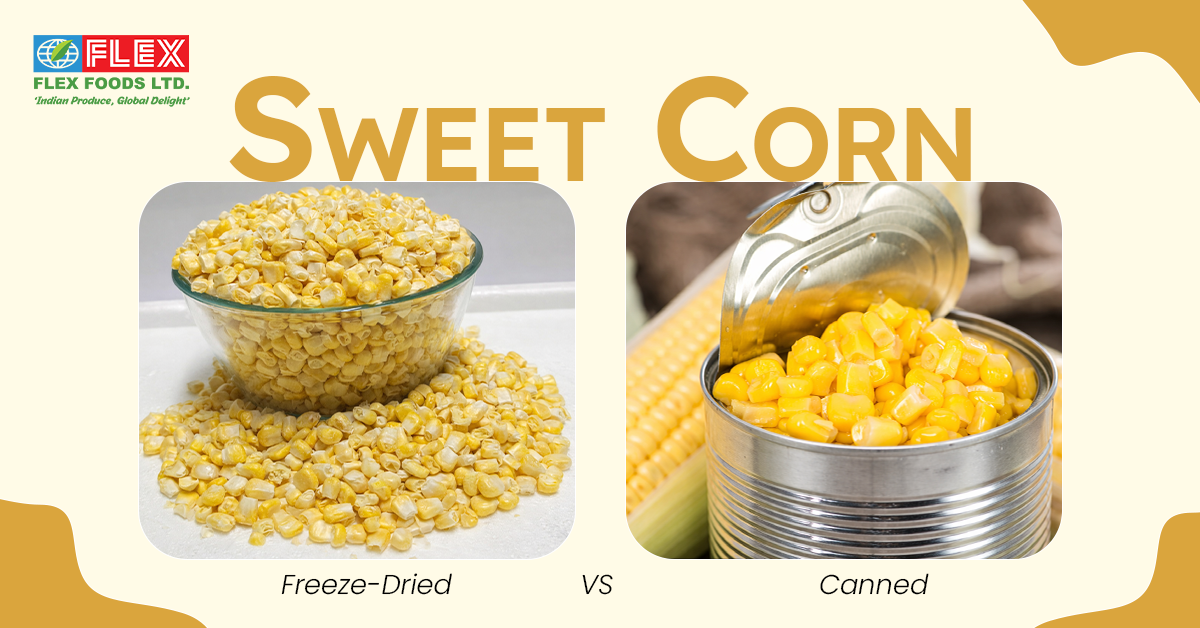
Freeze dried sweet corn is produced using a low-temperature dehydration process designed to preserve the original qualities of the vegetable. The corn is first frozen and then placed under vacuum conditions. In this environment, ice turns directly into vapor, removing moisture without damaging the structure.
Because the process avoids high heat, most nutrients remain intact. Vitamins, minerals, and natural sugars are preserved far more effectively than in traditional heat-based methods. The flavor also stays concentrated, resulting in a taste that closely resembles fresh corn once rehydrated.
This method creates a lightweight, shelf-stable product. With almost all moisture removed, the risk of spoilage drops significantly. When stored correctly, freeze dried products can last for many years without refrigeration.
Freeze-Dried sweet corn is commonly used in soups, salads, snack mixes, ready meals, and emergency food supplies. It is especially valued in situations where long shelf life, portability, and nutrition matter. Flexfoods Limited offers freeze-dried corn designed to meet these needs across consumer and commercial segments.
To understand its applications in detail: Innovative Applications of Freeze-Dried Sweet Corn
What Is Canned Sweet Corn?
Canned sweet corn is preserved using a heat-based canning process. The corn is cooked and sealed in airtight containers, usually with water or brine. The sealed cans are then heated to destroy bacteria and extend shelf life.
This process has been trusted for decades because of its safety and reliability. Since the corn is fully cooked, it can be consumed directly from the can. This makes canned sweet corn extremely convenient for everyday cooking.
Canned corn is widely used in curries, soups, stews, salads, and side dishes. Its soft texture blends easily into recipes, especially where a cooked consistency is preferred. It also requires no soaking or rehydration.
From a nutritional standpoint, canned vegetables still offer value. Fiber and minerals remain stable, though some heat-sensitive vitamins may reduce during processing. According to the Canned Food Alliance, canned foods can still be part of a balanced diet when consumed thoughtfully.
Nutrition Comparison: Freeze-Dried vs Canned Sweet Corn
Nutrient Retention
Freeze-drying is one of the most effective methods for preserving nutrients. The low-temperature process minimizes damage to vitamins, antioxidants, and bioactive compounds. As a result, freeze-dried corn often retains a nutritional profile close to that of fresh corn.
Canning relies on high heat to ensure food safety. While this effectively eliminates harmful microorganisms, it can also reduce certain vitamins, especially vitamin C and some B vitamins. Minerals and fiber, however, are largely unaffected by heat.
For those prioritizing maximum nutrient retention, freeze-dried corn often has an advantage. For general dietary needs, canned corn remains a practical and nutritious option.
Fiber & Other Nutrients
Both freeze-dried and canned sweet corn are good sources of dietary fiber. Fiber supports digestion, promotes satiety, and helps regulate blood sugar levels. This makes sweet corn beneficial across many diets.
Sweet corn also contains antioxidants such as lutein and zeaxanthin. These compounds are known for supporting eye health and reducing oxidative stress. Preserving these antioxidants depends largely on the processing method.
Freeze-drying helps retain these sensitive compounds more effectively. Because the structure remains intact, the nutritional profile stays closer to fresh produce. This is one reason freeze-dried vegetables are often favored in nutrition-focused products.
Interestingly, freeze-drying is also widely used for other sensitive plant-based ingredients such as freeze dried herbs, where aroma, color, and nutrients must be preserved without heat damage.
Shelf Life & Storage
Freeze-Dried Sweet Corn
One of the strongest advantages of freeze dried sweet corn is its shelf life. When stored in airtight, moisture-free conditions, it can last for decades. This makes it ideal for long-term storage and emergency preparedness.
No refrigeration is required. The freeze dried product remains stable at room temperature as long as it is protected from humidity and oxygen. This reduces storage costs and logistical challenges.
The lightweight nature of freeze-dried corn also improves transportation efficiency. It is easier to store in bulk without occupying excessive space. These qualities make it popular in both consumer and industrial applications.
For brands focused on resilience and sustainability, freeze-dried corn offers a reliable solution. Flexfood designs its products with these long-term storage benefits in mind.
Canned Sweet Corn
Canned sweet corn also offers a long shelf life, typically ranging from two to five years. It remains safe to consume as long as the can is intact and properly stored. However, its shelf life is shorter than freeze-dried alternatives.
Cans must be protected from dents, rust, and swelling. Damaged cans can compromise food safety and must be discarded. Storage conditions play a key role in maintaining quality.
Canned products are heavier and bulkier. This increases storage and transportation costs compared to freeze-dried foods. Despite this, their affordability keeps them widely accessible.
Texture & Taste Comparison
Taste Profile
Freeze-dried corn retains much of its natural sweetness. Because water is removed without heat, the flavor becomes more concentrated. When rehydrated, it delivers a clean, near-fresh taste.
Canned sweet corn has a softer, cooked flavor. The taste can be influenced by the brine or salt used during processing. Some consumers prefer this mellow, ready-to-eat profile.
Flavor preference often depends on usage. Freeze-dried corn works well where freshness matters. Canned corn suits dishes where cooked consistency is expected.
Texture Differences
In its dry form, freeze-dried corn is crisp and light. This makes it suitable for snack applications without rehydration. Once water is added, it regains a tender yet slightly firm texture.
Canned corn is soft straight out of the can. It blends easily into recipes and requires no additional steps. This makes it convenient for quick meals.
The choice often depends on flexibility. Freeze-dried corn adapts to multiple textures. Canned corn prioritizes immediate usability.
Convenience & Use Cases
Freeze-dried sweet corn is used for portability. Its lightweight nature makes it suitable for camping, trekking, and emergency kits. It only requires water to become usable.
Canned sweet corn is designed for everyday convenience. It fits easily into routine cooking and meal prep. No rehydration or planning is required.
In soups and stews, both options perform well. Freeze-dried corn is preferred when storage space matters. Canned corn works best for speed and simplicity.
In the broader preserved foods category, freeze-dried corn often sits alongside shelf-stable vegetables and IQF frozen vegetables, each serving different logistical and culinary needs.
Cost & Practical Considerations
Freeze-dried foods generally cost more per serving. The technology involved is advanced and energy-intensive. This increases production costs.
However, the price reflects extended shelf life and nutritional preservation. For long-term storage or specialized use, the value often justifies the cost. Waste is also reduced due to longer usability.
Canned sweet corn remains one of the most economical vegetables available. Its affordability makes it accessible for daily consumption. This keeps it popular across households and food service operations.
Choosing between the two depends on priorities. Storage needs, usage frequency, and nutritional goals all influence the decision. For guidance, see:
https://www.flexfoodsltd.com/blog/the-best-and-worst-foods-to-freeze-dry.phpWhich Is Better?
| Feature | Freeze-Dried Sweet Corn | Canned Sweet Corn |
|---|---|---|
| Shelf Life | Very long | Moderate, several years |
| Nutrient Retention | High | Moderate |
| Taste | Near-fresh, concentrated | Soft, cooked |
| Texture | Crisp or rehydrated | Soft, ready-to-eat |
| Convenience | Ideal for storage and travel | Ideal for daily cooking |
Both options serve distinct purposes. The better choice depends on how and where the corn will be used.
- For nutrition and long-term storage, freeze-dried corn stands out.
- For affordability and instant use, canned corn remains practical.
For additional insight, refer to:
https://www.flexfoodsltd.com/blog/the-benefits-of-freeze-dried-sweet-corn-for-your-diet.phpConclusion
Freeze-dried and canned sweet corn are not competitors but complements. Each addresses different needs across storage, nutrition, and convenience. Understanding these differences allows for smarter choices.
Freeze-dried corn excels in nutrient retention, shelf life, and portability. It suits emergency storage, outdoor use, and nutrition-focused products. Canned corn wins on cost and everyday convenience.
Flexfood offers freeze-dried solutions designed for long-term reliability and quality. Customers can choose the format that aligns best with their lifestyle, business needs, or storage goals.
Frequently Asked Questions
Is freeze-dried sweet corn healthier than canned?
Freeze-dried corn generally retains more vitamins due to low-temperature processing, while canned corn still provides fiber and minerals.
How long does freeze-dried corn last compared to canned corn?
Freeze-dried corn can last decades under proper storage, whereas canned corn usually lasts a few years.
Can freeze-dried corn be rehydrated like fresh corn?
Yes, it rehydrates easily and closely resembles fresh freeze dried sweet corn in taste and texture.
Is canned sweet corn safe to eat daily?
Yes, when consumed as part of a balanced diet and with attention to sodium content.
Which is better for emergency food storage?
Freeze-dried sweet corn is better suited due to its long shelf life and lightweight nature.