The global market for frozen fruits is growing fast. Food manufacturers, restaurants, and exporters want consistent quality, long shelf life, and easy-to-use mango pieces. With more consumers choosing ready-to-eat foods and smoothies, frozen mango has become essential across industries.
But not all frozen mangoes are the same. The method used to freeze mango affects its texture, taste, color, and overall performance. This is why understanding IQF mango and regular frozen mango is important. Although both look similar in packets, their internal quality can be very different.
IQF technology, in particular, is changing quality standards. It offers better retention of shape, nutrition, and freshness, making it popular among large-scale food businesses.
Learn more about: best foods to freeze dry
What Is IQF Mango?
IQF stands for Individual Quick Freezing. It is a technology that freezes each piece of food separately at extremely low temperatures. As a result, mango cubes or slices stay loose and non-sticky.
How is IQF Mango Processed?
IQF processing uses ultra-low temperatures and fast airflow to freeze every mango piece in seconds.
- The freezing happens rapidly.
- Each fruit piece gets frozen individually rather than in a clump.
Because the process is quick, it prevents the formation of large ice crystals and keeps the fruit closer to its natural state.
Key Characteristics of IQF Mango
IQF mango is known for its standout quality features:
- Pieces never stick together.
- It keeps natural color, texture, and flavor intact.
- Nutritional loss is minimal due to the rapid freeze.
This makes it a premium choice for businesses that depend on consistent results.
What Is Regular Frozen Mango?
Processing Method
Regular frozen mango goes through slow batch freezing. The mango pieces are frozen together in bulk, which takes more time.
Slower freezing creates bigger ice crystals. These crystals break down the mango’s internal cells, changing the texture once thawed.
Characteristics of Regular Frozen Mango
Because of the slower process, regular frozen mango often:
- Clumps together inside the pack.
- Feels softer when used.
- May lose a little color or flavor over time.
Even with these differences, it remains a useful product for everyday home cooking.
Recommended Read : Are frozen vegetables healthy
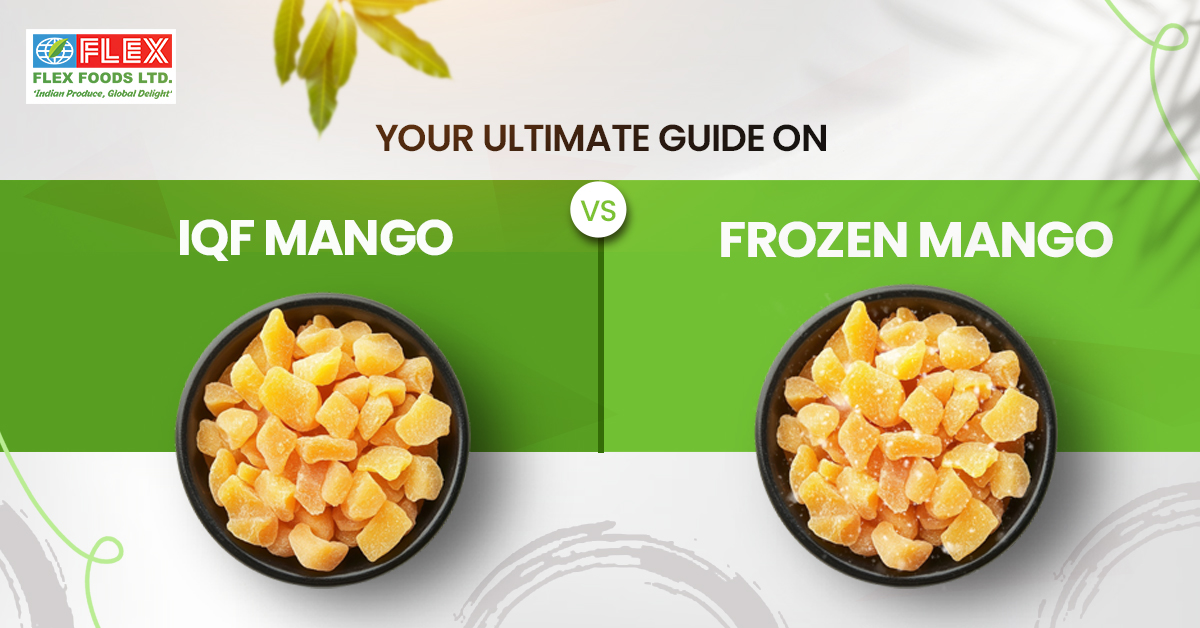
IQF Mango vs Frozen Mango: Side-by-Side Comparison
1. Texture & Shape
IQF mango keeps a firm bite and holds its shape well. Regular frozen mango becomes softer after thawing and may look slightly crushed.
2. Taste & Aroma
IQF’s fast freezing preserves freshness. The aroma and sweetness stay natural. Regular frozen mango still tastes good, but its flavor may reduce slightly due to ice crystal damage.
3. Freezing Speed & Crystal Size
With IQF, freezing happens in seconds, creating tiny ice crystals that do not harm the mango’s structure. Regular freezing takes much longer, creating larger crystals that affect texture.
4. Color Retention
IQF mango usually has a bright, natural color. The structure remains intact, so the fruit looks fresher. Regular frozen mango may show slight discoloration due to slower freezing.
5. Nutritional Value
IQF technology helps the mango retain more nutrients. Regular frozen mango still contains nutrients just like dehydrated parsley, but may lose a small percentage because of the slow process.
6. Shelf Life
Both have long shelf life, but IQF mango stays visually appealing and consistent for longer periods.
7. Pricing (Cost Difference)
IQF mango costs more. The machinery, energy usage, and technology increase production cost. Regular frozen mango is more affordable and widely available.
8. Best Use Cases (Industrial vs Home Use)
IQF mango works best for industries that need perfect shape, stable texture, and consistent quality. Regular frozen mango is great for home kitchens where slight texture variations are acceptable.
Benefits of IQF Mango for Food Manufacturers
Consistent Size and Quality
Food companies rely on uniform pieces. IQF mango provides consistent size, making it ideal for machinery, automated food lines, or recipes that need precision.
No Clumping = Easy Handling in Production
Since the pieces remain separate, businesses can measure them easily, mix them smoothly into blends, and scale production without quality drops.
Better for Export and Bulk Orders
Exporters choose IQF mango because it can travel long distances without damage. It stays attractive, has longer stability, and meets strict international standards.
Ideal for Smoothies, Bakery, Desserts, Beverages
IQF mango fits perfectly into commercial recipes. Smoothies taste fresher, bakery fillings remain thick, and beverages stay bright in color.
Benefits of Regular Frozen Mango for Consumers
More Affordable
Regular frozen mango fits household budgets. It provides good value for daily cooking.
Easily Available in Retail Stores
Most supermarkets stock frozen mango packs in their freezer section, making it convenient for consumers.
Good for Basic Household Use
It works well for homemade shakes, chutneys, jams, and simple desserts. Texture softness is not an issue in most home recipes.
Which One Should You Choose? (IQF vs Frozen Mango)
For Food & Beverage Companies → IQF Mango
If your business needs consistent results, IQF mango is the superior option. It saves time, reduces wastage, and offers better quality control.
For Home Consumers → Regular Frozen Mango
For household cooking and basic recipes, regular frozen mango is enough. It is pocket-friendly and easy to find.
For Exporters & Bulk Buyers → IQF Mango Is Superior
Exporters want reliability. IQF mango provides exactly that—better stability, shape, and long-term quality.
Popular Applications of IQF Mango
The versatility of IQF mango is one of its biggest strengths. It is widely used in:
- Smoothies & beverages
- Frozen desserts
- Ready-to-eat snacks
- Bakery fillings
- Dairy & yogurt products
- Ice cream & gelato
- Fruit blends
Because the pieces stay separate and retain quality, IQF mango performs well in recipes requiring texture and visual appeal.
Recommended Read : What is thawing process
Conclusion – IQF Mango Offers Superior Quality
Same like freeze-dried mushrooms, IQF mango delivers exceptional results. It keeps the fruit’s natural texture, taste, and color intact. It also offers higher nutrient retention and easier handling. These advantages explain why IQF mango is becoming the top choice for large-scale businesses and exporters.
Regular frozen mango, while not as premium, remains useful for home needs due to its affordability and wide availability.
To put it simply:
- Businesses benefit most from IQF mango.
- Households can stick to regular frozen mango.
- Exporters prefer IQF mango for reliability.
As global demand for processed fruits continues to rise, technologies like IQF will shape future food standards. Even complementary categories—such as Freeze dried Fruits, IQF frozen vegetables, and freeze dried herbs—are rising in popularity because they offer convenience, extended shelf life, and consistent quality.
Flex Food’s IQF mango stands out today not just as a frozen fruit but as a product of advanced technology that protects nature’s best qualities.
Frequently Asked Questions
Q:1 What makes IQF mango different from regular frozen mango?
IQF mango is frozen very quickly, so each piece stays separate, firm, and colourful. Regular frozen mango is frozen slowly, which makes pieces stick together and become softer.
Q:2 Is IQF mango healthier than regular frozen mango?
IQF mango usually retains more nutrients because the fast-freezing method protects the fruit’s natural structure. Regular frozen mango may lose a small amount of nutrients due to slower freezing.
Q:3 Why is IQF mango more expensive?
IQF technology requires advanced equipment, more energy, and a faster freezing process. These factors increase production cost, making IQF mango slightly more expensive than regular frozen mango.
Q:4 Which type of mango is better for smoothies?
IQF mango is better for commercial smoothies because it stays firm and blends smoothly without becoming mushy. For home smoothies, both types work well.
Q:5 Can I use regular frozen mango for baking or desserts?
Yes, you can. However, IQF mango gives better results in bakery items and desserts because it holds its shape and color even after cooking.