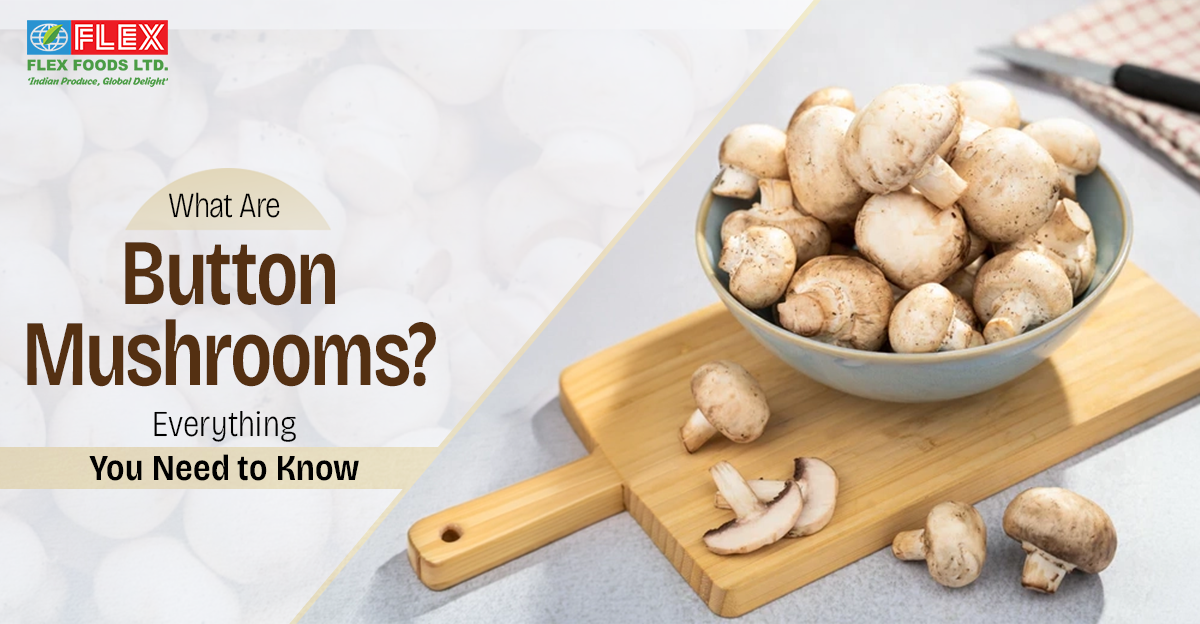
Button mushrooms hold the title of the most consumed mushroom variety across the globe, appearing in everything from home kitchens to industrial food production lines. Their mild flavour and firm texture have made them a staple ingredient in salads, soups, pastas, and ready-to-eat meals. Health-conscious consumers increasingly choose this mushroom for its low calorie count and rich nutrient profile, placing it firmly within modern balanced diets. Beyond fresh retail, button mushrooms play a growing role in the food processing and frozen food industries, where they are preserved, packaged, and distributed at scale.
This blog covers everything a reader needs to know about button mushrooms, starting with their scientific identity and moving through nutrition, selection, cleaning, cooking, and storage. It also explores their place within the wider food industry, including fresh retail, frozen products, and export markets. Readers interested in quick recipe ideas and practical buying tips will find dedicated sections further along. Button mushrooms (Agaricus bisporus) are the most widely cultivated mushrooms worldwide, and white button, cremini, and portobello mushrooms are simply the same species harvested at different stages of maturity.
Learn more about the freeze dried mushroom snack
What Are Button Mushrooms?
Button mushrooms belong to the species Agaricus bisporus, a member of the Agaricaceae family known for producing some of the most commercially important edible fungi. This species originated in the grasslands of Europe and North America before spreading globally through commercial cultivation. Farmers grow button mushrooms in controlled, temperature-regulated environments using composted substrate, which allows for consistent year-round supply. Because of this reliable cultivation process, button mushrooms remain available and affordable in nearly every major food market.
The name comes directly from the mushroom's compact, rounded cap, which resembles a small button before it opens fully. Growers harvest these mushrooms early, while the cap is still tightly closed around the stem, which keeps the flavour mild and the texture firm. Their smooth white colour comes from a lack of pigmentation compared to other mushroom varieties, and this appearance is what most consumers picture when they think of a standard grocery-store mushroom. This early harvesting stage is precisely what separates button mushrooms from their more mature relatives like cremini and portobello.
Are White Mushrooms and Button Mushrooms the Same?
| White Button | Cremini | Portobello |
|---|---|---|
| Young stage | Medium maturity | Fully mature |
| Mild flavour | Earthier | Rich umami |
| White colour | Brown | Dark brown |
White button mushrooms and standard white mushrooms sold in stores refer to the same product, so there is no real distinction between the two names in everyday use. Cremini mushrooms are simply the same species left to grow slightly longer, developing a light brown colour and a deeper, earthier flavour. Portobello mushrooms represent the fully mature stage, with a wide flat cap and a dense, meaty texture suited to grilling. Understanding this growth progression helps shoppers choose the right mushroom stage for their recipe rather than assuming they are buying entirely different products.
Read more : What does blanching vegetables mean?
Button Mushroom Nutrition Facts
Button mushrooms are naturally low in calories and provide meaningful amounts of B vitamins, potassium, selenium, and antioxidants in every serving. This nutrient density makes them useful for anyone building a diet around whole foods rather than processed ingredients. The high water content of button mushrooms also contributes to their low calorie count while still offering volume and texture in a dish. Selenium and B vitamins in particular support metabolic function, making mushrooms a practical addition to everyday meals.
Nutritionists often recommend button mushrooms because they are low calorie, fat free, and cholesterol free, which suits a wide range of dietary goals. Their antioxidant content helps offset oxidative stress, an area of growing interest among health-conscious consumers. The high water content also means mushrooms add bulk to meals without adding significant calories, which is useful for weight management. These combined qualities explain why button mushrooms show up so frequently in nutrition-focused meal plans and clean eating guides.
To know more about are frozen vegetables healthy?
How to Select Fresh Button Mushrooms?
Choosing fresh button mushrooms comes down to a short checklist that most shoppers can apply in seconds at the store. Buyers should look for the following signs of quality:
- Firm texture
- Closed caps
- White appearance
- No dark spots
- No slimy surface
Fresh mushrooms should be firm with smooth caps and no signs of shriveling or slime, since these are the earliest indicators of spoilage. A mushroom that feels soft or spongy has likely been sitting too long, and its flavour will be noticeably weaker. Retailers and importers dealing in bulk should apply the same checklist during quality control, since consistent freshness directly affects shelf life and customer satisfaction. For consumers buying in smaller quantities, a quick visual and tactile check at the point of purchase is usually enough to avoid disappointment at home.
How to Clean Button Mushrooms Properly?
A common myth suggests that washing mushrooms ruins their texture by causing them to soak up excessive water. Modern guidance shows that rinsing mushrooms briefly before use is acceptable and does not significantly increase water absorption, contrary to what many home cooks believe. A quick rinse under cold water followed by patting dry with a clean towel removes surface dirt without affecting texture during cooking. This method works well for both home kitchens and small-scale food service operations.
For consumers who prefer a dry-cleaning method, a soft brush or damp cloth can wipe away debris just as effectively. Either approach is acceptable, and the choice mostly comes down to personal preference rather than any measurable difference in cooking results. Mushrooms destined for sautéing or roasting can handle a brief rinse without turning soggy, since excess moisture evaporates quickly under heat. This flexibility makes cleaning one of the simpler steps in preparing button mushrooms for any recipe.
Best Ways to Cook Button Mushrooms
Button mushrooms adapt well to nearly every cooking method, which is part of why they appear across so many cuisines. Sautéing and stir frying bring out a rich, savoury flavour quickly, while roasting and air frying develop a deeper caramelised edge with minimal oil. Grilling works particularly well for larger caps, giving them a smoky char that pairs nicely with marinades. These dry-heat methods all take advantage of the mushroom's natural moisture, which helps it brown evenly without drying out.
Beyond standalone preparations, button mushrooms integrate easily into soups, pasta sauces, pizza toppings, and salads. In soups, they release flavour slowly and absorb the surrounding broth, adding depth without overpowering other ingredients. On pizza and in pasta, their mild taste balances stronger elements like cheese, garlic, or tomato-based sauces. In salads, thinly sliced raw or lightly sautéed mushrooms add texture and an earthy note that complements leafy greens.
Delicious Recipes Using Button Mushrooms
Home cooks looking for practical ideas can turn to a handful of reliable, well-tested recipes built around button mushrooms. Mushroom pasta and garlic butter mushrooms remain two of the simplest options, requiring only a handful of pantry staples and a short cooking time. Mushroom soup offers a comforting option for colder months, while mushroom pizza and stuffed mushrooms work well for entertaining guests. Each of these recipes highlights the mushroom's ability to absorb flavour from garlic, butter, herbs, and cheese.
For those looking beyond Western dishes, button mushrooms also fit naturally into fried rice, stir fried vegetables, and mushroom omelettes. Fried rice benefits from the mushroom's texture, which holds up well against high heat and quick tossing. Stir fried vegetable dishes gain extra body when mushrooms are added alongside peppers, onions, and leafy greens. A simple mushroom omelette, meanwhile, makes a quick and satisfying breakfast that works equally well for lunch or a light dinner.
How to Store Button Mushrooms?
Whole mushrooms keep best when stored in the refrigerator without sealed plastic trapping excess moisture, since trapped humidity speeds up spoilage. A paper bag or a loosely covered container allows air to circulate while still protecting the mushrooms from drying out completely. Stored this way, fresh button mushrooms typically last five to seven days in the refrigerator. Keeping them away from strong-smelling foods also helps preserve their natural flavour during storage.
Freezing is possible but works best after mushrooms have been sautéed or blanched first, since raw freezing can leave them watery once thawed. Common storage mistakes include sealing mushrooms in airtight plastic bags or leaving them at room temperature for extended periods. Both of these habits accelerate spoilage and reduce the usable shelf life significantly. For longer-term preservation without these drawbacks, many households and food businesses in India are turning to freeze dried food in India, from reputed brands like Flex Foods, which retains flavour and nutrients far longer than fresh storage methods alone.
Button Mushrooms in the Global Food Industry
Button mushrooms play a significant role across multiple segments of the food industry, starting with the fresh retail market where they remain a top-selling vegetable in grocery stores worldwide. Beyond fresh sales, frozen foods manufacturers rely heavily on mushrooms as a convenient, long-lasting ingredient for vegetable mixes and ready meals. Ready-to-eat meal producers value mushrooms for their ability to hold texture through reheating, making them a common addition to frozen entrees. The pizza industry also depends on a steady mushroom supply, since sliced mushrooms remain one of the most popular toppings globally.
Food service businesses, including restaurants and catering companies, use button mushrooms extensively due to their versatility and consistent availability. On the export side, countries with strong mushroom cultivation industries ship both fresh and processed mushrooms to international markets, including dried and preserved formats. Demand for freeze-dried mushroom products has grown steadily, particularly among manufacturers seeking shelf-stable ingredients for soups, seasoning blends, and instant meals. Alongside this, air-dried herbs in India are increasingly paired with dried mushroom products in spice blends and packaged food kits, reflecting a broader shift toward preserved, export-friendly ingredients.
Conclusion
Button mushrooms stand out as a versatile, nutrient-rich ingredient suited to both home cooking and large-scale food production. Their mild flavour, low calorie profile, and adaptability across cooking methods explain why they remain a kitchen staple worldwide. From fresh retail shelves to frozen food lines and export markets, this single species supports an enormous range of culinary and commercial applications. Understanding how to select, clean, cook, and store button mushrooms properly ensures readers get the most flavour and nutrition out of every batch.
Whether preparing a simple sauté at home or sourcing mushrooms for commercial food production, the fundamentals covered in this guide apply across the board. Readers are encouraged to experiment with the recipes shared above, apply proper storage techniques, and keep the nutritional benefits in mind when planning meals. As demand grows for preserved and export-ready formats, button mushrooms will likely continue expanding their footprint across new product categories. With the right knowledge in hand, both home cooks and food industry professionals can make the most of this widely loved ingredient.
Frequently Asked Questions (FAQ)
What are button mushrooms?
Button mushrooms are the young, unopened stage of Agaricus bisporus, known for their mild flavour and firm white caps.
Are white mushrooms and button mushrooms the same?
Yes, white mushrooms and button mushrooms refer to the same product sold under two common names.
Can button mushrooms be eaten raw?
Yes, thinly sliced raw button mushrooms are commonly added to salads and are safe to eat uncooked.
Are button mushrooms healthy?
Yes, they are low in calories, fat free, cholesterol free, and rich in potassium, selenium, and B vitamins.
How long do button mushrooms last?
Fresh button mushrooms typically last five to seven days when refrigerated in a paper bag or loosely covered container.
Can you freeze button mushrooms?
Yes, though sautéing or blanching them first helps preserve texture better than freezing them raw.
What do button mushrooms taste like?
They have a mild, slightly earthy flavour that becomes richer and more savoury once cooked.
Are button mushrooms good for weight loss?
Yes, their low calorie count and high water content make them a filling, low-energy addition to meals.
How do you know if mushrooms have gone bad?
Signs of spoilage include a slimy surface, dark spots, a strong odour, or a soft, shriveled texture.
Which is healthier: button or cremini mushrooms?
Both offer similar nutrition, though cremini mushrooms contain slightly higher levels of certain antioxidants due to their longer growth period.