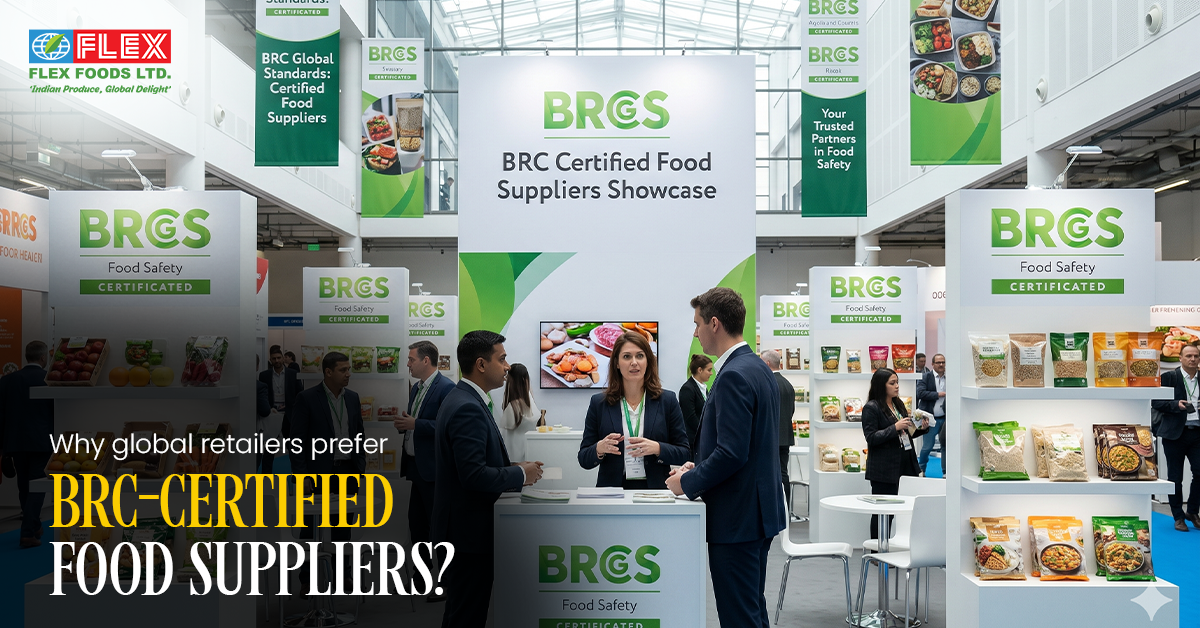
The global food industry operates under constant pressure. One contamination scandal can destroy a brand overnight. Retailers know this all too well, which explains their obsession with supplier certification. Among the various food safety standards available, BRC certification has emerged as the gold standard—a non-negotiable requirement for suppliers aiming to crack international markets.
But what makes BRC so special? Why do major retail chains across Europe, the UK, and North America insist on this particular certification? The answer lies in risk management, consumer protection, and the economics of global supply chains.
Learn more about best foods to freeze dry
What Is BRC Certification?
BRC certification began as a retailer-driven initiative. Developed by the British Retail Consortium, it was designed to standardize food safety protocols across diverse suppliers. The problem was simple: retailers were conducting hundreds of individual audits, each with different criteria. This fragmented approach wasted resources and created confusion.
The solution? A unified standard recognized by the Global Food Safety Initiative (GFSI). BRC certification now covers four critical areas:
- Food safety management through HACCP-based systems
- Quality assurance protocols that exceed basic compliance
- Legal compliance with international food regulations
- Operational control ensuring consistency at every production stage
What distinguishes BRC from other certifications is its comprehensiveness. It's not merely a checklist exercise. Auditors examine everything from raw material sourcing to finished product storage, from employee hygiene protocols to machinery maintenance schedules. The standard assumes nothing and verifies everything.
Companies like Flex Foods, which specialize in advanced food processing technologies, understand this rigor intimately. Their production facilities must demonstrate absolute control over every variable that could affect food safety. This requirement becomes even more critical when dealing with products like IQF mango or sophisticated freeze dried food in India.
Why Global Retailers Demand BRC Certification?
1. Ensures Food Safety & Consumer Protection
Retailers face an uncomfortable reality: they're legally responsible for the products they sell, even if they didn't manufacture them. This creates enormous pressure to vet suppliers thoroughly.
BRC certification provides systematic assurance. The standard mandates HACCP-based risk assessment, which means suppliers must identify every conceivable contamination point and implement controls. Temperature monitoring, allergen management, pest control, cleaning validation—nothing escapes scrutiny.
Consider economics. A single product recall can cost millions in logistics alone, not counting legal fees, compensation claims, and lost sales. Worse still is the reputational damage. Consumers remember food safety failures. Trust, once broken, takes years to rebuild.
BRC-certified suppliers dramatically reduce this risk. The certification proves they've implemented industrial-grade safety systems, trained staff properly, and established traceability that can track any ingredient back to its source within hours.
2. Global Recognition & Market Access
Here's where BRC becomes genuinely valuable for suppliers. The certification opens doors simultaneously across multiple markets. One audit. Global acceptance.
EU retailers recognize it. UK supermarket chains require it. American importers trust it. Australian distributors accept it. This universality eliminates redundant certification costs and accelerates market entry.
For exporters of specialized products—particularly premium categories like freeze-dried food in India—this global recognition translates directly into competitive advantage. Instead of obtaining separate certifications for each market, suppliers can leverage BRC to negotiate with buyers across continents.
The time savings alone are substantial. Certification processes typically take months. With BRC, suppliers complete one comprehensive audit rather than three or four market-specific assessments.
3. Mandatory Requirement for Many Retailers
Let's be direct: BRC isn't optional for suppliers targeting major retail chains. Tesco, Sainsbury's, Carrefour, Aldi—these retailers list BRC certification as a baseline supplier requirement, not a preference.
The mandate is particularly strict in European markets. UK retailers, following several high-profile food scandals, now refuse to onboard uncertified suppliers regardless of price competitiveness or product quality. The certification has become the entry ticket to retail distribution.
This non-negotiable status creates a clear dividing line in the supplier market. Certified companies access premium distribution channels. Uncertified suppliers remain locked out, relegated to lower-tier markets with thinner margins and higher churn.
4. Builds Trust & Brand Credibility
Beyond regulatory compliance, BRC certification functions as a powerful trust signal in B2B relationships. Procurement managers handling millions in purchasing decisions need confidence. Certification provides that reassurance.
Think about the buyer's perspective. They're evaluating dozens of potential suppliers, often for products they don't personally consume. Technical specifications help, but food safety isn't theoretical—it's about preventing hospitalization or death. BRC certification tells buyers: "This supplier takes safety seriously enough to subject themselves to rigorous third-party auditing."
This credibility extends to brand positioning. Suppliers can legitimately market themselves as internationally certified, which resonates particularly well when targeting health-conscious consumers or premium market segments.
The certification also stabilizes long-term relationships. Buyers prefer continuity. Switching suppliers involves qualification costs, recipe adjustments, and operational disruptions. BRC certification suggests operational maturity, reducing the perceived risk of supplier failure.
5. Reduces Audit Burden for Retailers
Retailers historically conducted their own supplier audits. This approach created massive inefficiencies. Each retailer maintained audit teams, developed proprietary checklists, and scheduled inspections separately.
BRC certification eliminated this redundancy. Retailers now accept BRC audits in place of their own inspections, saving enormous time and cost. Instead of hosting five different retail audit teams annually, suppliers undergo one comprehensive BRC assessment.
For retailers, this consolidation means procurement teams can focus on strategic supplier development rather than basic compliance verification. The operational savings scale beautifully—a retailer working with hundreds of suppliers avoids thousands of individual audit days.
6. Risk Management & Supply Chain Reliability
Modern retail supply chains span continents. A UK supermarket might source products from Southeast Asian processors, using ingredients from African farms, packed in South American facilities. This complexity creates vulnerability.
BRC certification provides standardization across this complexity. Whether a supplier operates in India, Thailand, or Brazil, the certification guarantees equivalent safety protocols. This consistency is invaluable for retailers managing global procurement.
The standard also emphasizes traceability and recall procedures. Certified suppliers must demonstrate they can track any batch from raw material to finished product. If problems emerge, they can identify affected inventory quickly and execute targeted recalls rather than broad, expensive withdrawals.
Key Benefits of BRC Certification for Food Suppliers
Suppliers often view certification as a cost center. Smart suppliers recognize it as a growth investment. The benefits extend far beyond satisfying retailer requirements.
- Export market access expands immediately. Countries with strict import regulations often accept GFSI-recognized standards like BRC, simplifying customs clearance and reducing administrative friction.
- Competitive advantage in tenders becomes tangible. When multiple suppliers bid for retail contracts, BRC certification often serves as an automatic qualifier. Uncertified competitors don't even reach the negotiation stage.
- Operational efficiency improvements emerge from the certification process itself. The rigorous documentation requirements force suppliers to standardize procedures, identify inefficiencies, and eliminate waste. Many companies report cost savings that offset certification expenses within 18 months.
- Process optimization happens organically. BRC audits expose weak points in quality control, highlighting areas where prevention systems can replace expensive rework or disposal.
- Customer retention strengthens as buyers gain confidence. Retailers dealing with certified suppliers experience fewer quality complaints, reduced returns, and more consistent product specifications.
Read more about freeze dried vegetables
How BRC Certification Impacts Buying Decisions?
Retailer Perspective
Procurement managers face intense pressure. They must balance cost control with quality assurance, delivery reliability with flexibility, and vendor relationships with competitive bidding.
BRC certification simplifies their decision matrix. The standard provides objective verification of supplier capability, reducing the investigative burden. Buyers can focus on pricing, logistics, and product innovation rather than spending weeks verifying basic competence.
Risk reduction drives this preference. Every supplier relationship carries potential downside. BRC certification doesn't eliminate risk, but it substantially lowers the probability of catastrophic failures that trigger recalls, lawsuits, or regulatory penalties.
Consumer Perspective
Most consumers never see BRC logos on products. Yet they benefit enormously from the standard's existence. The certification ensures that the frozen mango chunks in their smoothie or the dried strawberries in their cereal meet stringent safety requirements.
Transparency increases through improved traceability. If consumers question ingredient sources, BRC-certified suppliers can provide detailed documentation showing exactly where components originated and how they were processed.
Product consistency improves because certification requires standardized procedures. Consumers buying their favorite frozen meals expect identical taste and texture each time. BRC protocols ensure production variables remain tightly controlled.
Industries That Require BRC Certification
BRC certification applies across the food supply chain, but certain sectors face especially strong pressure:
- Food processing companies producing retail-ready products find certification virtually mandatory. Whether manufacturing sauces, prepared meals, or snack foods, BRC opens retail distribution channels.
- Frozen food operations must demonstrate exceptional temperature control and cold chain management. The certification validates these critical capabilities, essential for products ranging from vegetables to seafood.
- Ready-to-eat meals carry heightened food safety risks. BRC protocols address the specific challenges of products consumed without further cooking, where contamination leads directly to illness.
- Packaging manufacturers supplying food-contact materials increasingly face BRC requirements. Retailers recognize that packaging failures can contaminate otherwise safe products.
- Storage and distribution facilities that handle food products find certification advantageous. Third-party logistics providers use BRC to demonstrate capability when bidding for retail contracts.
Recommended Read : How to export dehydrated vegetables from india
Challenges in Achieving BRC Certification
Certification isn't simple. Suppliers face substantial hurdles during preparation and implementation.
- Documentation requirements overwhelm many first-time applicants. BRC demands written procedures for every significant process, supported by records proving consistent implementation. Companies without established quality systems face months of policy development.
- Infrastructure upgrades often prove necessary. Facilities designed decades ago may lack proper separation between raw and cooked areas, adequate pest control barriers, or sufficient hand-washing stations. Physical modifications can cost hundreds of thousands.
- Staff training consumes significant resources. Every employee must understand their role in food safety. From production workers to maintenance technicians, everyone needs training documentation and demonstrated competence.
- Audit preparation creates intense pressure. BRC audits are thorough, typically lasting 1-2 days depending on facility size. Auditors examine documentation, observe processes, interview staff, and inspect equipment. Any non-conformances must be corrected before certification issues.
- Continuous compliance represents the ongoing challenge. Certification isn't permanent—it requires annual audits and continuous adherence to protocols. Complacency between audits risks failure and lost certification.
Future of BRC Certification in Global Food Trade (2026+)
The certification landscape is changing, and therefore, several trends will shape BRC's future role.
- Regulatory pressure is intensifying globally. Governments increasingly reference GFSI standards in food safety regulations, making certifications like BRC de facto legal requirements rather than voluntary market differentiators.
- Sustainability integration is accelerating. Future BRC versions will likely incorporate environmental metrics, carbon footprint tracking, and ethical sourcing verification. Retailers face consumer pressure on sustainability; they'll extend these expectations to suppliers.
- Digital transformation is revolutionizing audits. Blockchain-based traceability, IoT sensor networks, and AI-powered compliance monitoring will complement traditional physical audits. BRC protocols will evolve to recognize and standardize these technologies.
- Traceability requirements will become more granular. Consumers want to know not just that food is safe, but where it originated, how it was grown, and who handled it. BRC certification will expand to validate these extended transparency claims.
- Export importance will grow as developing economies seek premium market access. Certifications like BRC provide credibility that helps emerging market suppliers compete in high-value European and North American retail channels.
How to select product for export from india
How to Choose a BRC-Certified Supplier?
Certification alone doesn't guarantee supplier excellence. Buyers should evaluate several additional factors.
- Verify certification validity through the BRC Directory. Certificates have expiration dates; confirm the supplier's status is current, not expired or suspended.
- Review the audit grade carefully. AA and AAA grades indicate superior compliance. Lower grades suggest the supplier met minimum requirements but demonstrated weaknesses during assessment.
- Check certification scope. BRC certificates specify which products and processes are covered. Ensure the items you're purchasing fall within the certified scope.
- Assess traceability capabilities beyond basic requirements. Request sample trace-back exercises showing how quickly the supplier can identify ingredient sources for specific production batches.
- Evaluate the continuous improvement culture. Ask about non-conformances found in recent audits and how the supplier addressed them. Companies that view audits as learning opportunities typically outperform those treating them as obstacles.
- Inspect facilities personally when possible. Certification provides baseline assurance, but direct observation reveals operational culture, employee engagement, and facility condition in ways audits don't capture.
Frequently Asked Questions
Is BRC certification mandatory for selling to retailers?
For major UK and EU retailers, yes—BRC or an equivalent GFSI-recognized standard is typically required. Some smaller retailers may not mandate certification, but competitive pressure makes it practically necessary.
How long does BRC certification take?
Implementation timelines vary by company readiness. Well-prepared facilities can achieve certification within 6-8 months. Companies starting from scratch may need 12-18 months to develop systems, train staff, and complete pre-audit gap assessments.
How does BRC certification benefit consumers?
Consumers receive safer products with better quality consistency. The standard ensures rigorous contamination prevention, accurate labeling, and traceable ingredients—reducing food safety incidents that lead to illness or recalls.
Can small companies get BRC certified?
Absolutely. While the standard is rigorous, it's scalable. Small producers may find certification challenging due to resource constraints, but many successfully certify by focusing on core requirements and building systems gradually.
What happens if a certified supplier fails an audit?
BRC issues non-conformances requiring corrective action. Minor issues allow certification to continue with required fixes. Major non-conformances may result in grade reduction or certification suspension until problems are resolved.