The global food industry stands at a critical juncture. Consumer expectations have never been higher, regulatory frameworks grow more stringent by the year, and the demand for safe, traceable food products continues to surge across international markets. In this landscape, BRC certification has emerged as the gold standard, a benchmark that separates industry leaders from those struggling to keep pace.
For manufacturers of frozen vegetables in India and producers of freeze dried mango, understanding BRC certification isn't optional anymore. It's essential. Whether you're shipping freeze dried fruits to European retailers or supplying private-label brands in the Middle East, this certification opens doors that might otherwise remain firmly closed.
Learn more about the are frozen vegetables healthy
Understanding BRC Certification: More Than Just a Checkmark
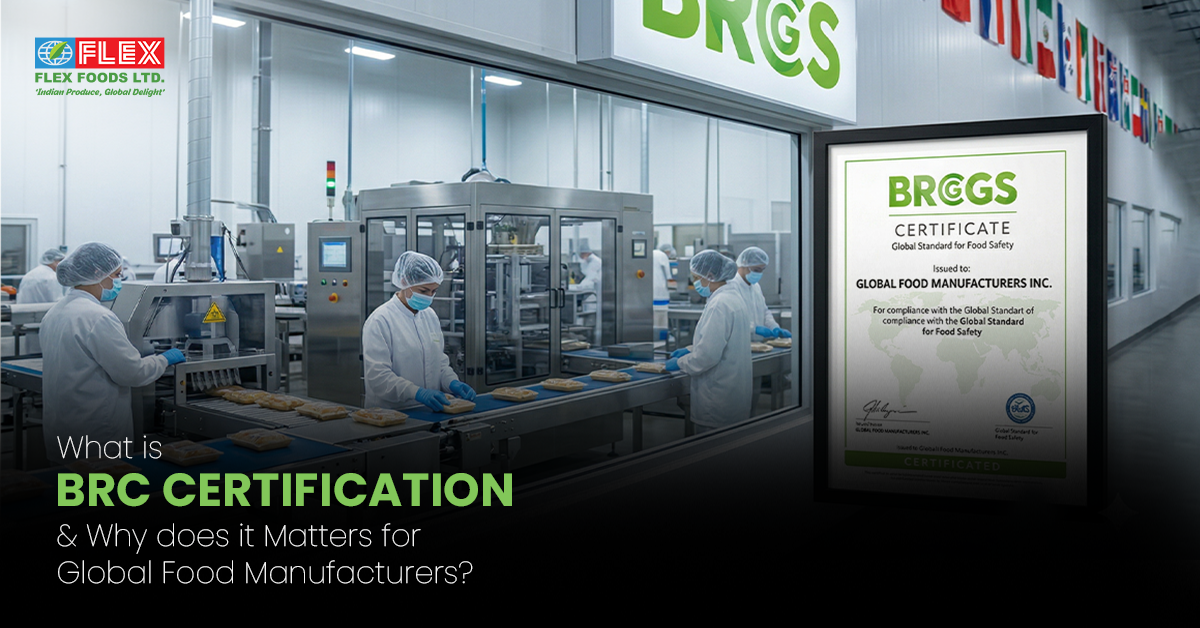
BRC certification formally known as the BRC Global Standard for Food Safety represents a comprehensive framework developed initially by the British Retail Consortium. What began as a localized initiative has transformed into a globally recognized system, now operating under the BRCGS (Brand Reputation through Compliance Global Standards) umbrella.
The certification does something remarkable. It standardizes food safety practices across diverse manufacturing environments, creating a common language that retailers, importers, and regulatory bodies worldwide understand and trust. From facilities producing frozen vegetables destined for London supermarkets to operations specializing in freeze dried mango for export, BRC provides the roadmap.
But here's what makes it genuinely powerful: BRC certification aligns with the Global Food Safety Initiative (GFSI), which means recognition in one market often translates to acceptance in dozens of others. One audit, multiple doors opened.
Why Global Food Manufacturers Can't Ignore BRC Certification Anymore
The numbers tell a compelling story. European retailers increasingly mandate BRC certification for their suppliers. UK importers won't even consider partnerships without it. Meanwhile, markets in the United States, Middle East, and Asia-Pacific regions are following suit, recognizing the rigorous standards this certification demands.
Consider the manufacturer of frozen vegetables in India eyeing expansion into European retail chains. Without BRC certification, their products won't make it past procurement teams, regardless of quality or competitive pricing. The certification has become the entry ticket, the non-negotiable requirement that supersedes almost every other consideration.
Brand reputation matters enormously in today's transparent marketplace. Consumers demand accountability, traceability, and assurance that the food they purchase meets the highest safety standards. BRC certification provides exactly that assurance. When contamination scares make headlines or product recalls damage competitors, certified manufacturers stand protected by their documented commitment to excellence.
The competitive advantage extends beyond mere market access. Suppliers with BRC certification often receive preferred status, better contract terms, and long-term partnerships that create stability in an otherwise volatile industry. For producers of freeze dried fruits and other value-added products, this preferential treatment can mean the difference between thriving and merely surviving.
The Core Requirements: What BRC Certification Actually Demands
Achieving BRC certification requires commitment across multiple operational dimensions. This isn't about checking boxes on a form, it demands fundamental transformation in how food manufacturers approach safety, quality, and compliance.
Food Safety Management Systems Form the Foundation
At the heart of BRC requirements lies the implementation of Hazard Analysis and Critical Control Points (HACCP). Every manufacturer must identify potential hazards—biological, chemical, physical—and establish critical control points where these risks can be managed or eliminated.
For facilities handling frozen vegetables, this means rigorous monitoring at every stage: from raw material reception through processing, freezing, storage, and dispatch. Temperature controls become critical control points. Cross-contamination prevention measures must be documented, implemented, and continuously verified.
Producers of freeze dried mango face their own unique challenges. The drying process itself requires precise control. Moisture levels must be monitored constantly. Storage conditions need careful management to prevent rehydration or contamination. Each step demands documentation, verification, and continuous improvement.
Senior Management Must Lead, Not Just Approve
BRC certification recognizes a fundamental truth: food safety culture starts at the top. Senior management can't simply delegate responsibility; they must actively participate, demonstrate commitment, and allocate resources necessary for maintaining standards.
This means establishing clear policies, ensuring accountability flows through organizational hierarchies, and creating environments where every employee understands their role in food safety. Leadership involvement isn't ceremonial; it's operational and visible.
Operational Controls and Site Standards Define Excellence
Facility design matters enormously. Equipment maintenance schedules can't be suggested; they must be mandatory and documented. Hygiene standards need enforcement at every level, from production floors to storage areas to dispatch zones.
Pest control programs require regular monitoring, documentation, and preventive measures that go beyond reactive responses. Contamination risks must be identified proactively, with controls implemented before problems emerge rather than after incidents occur.
For manufacturers of freeze dried fruits, maintaining dedicated processing areas, preventing cross-contamination between different fruit varieties, and ensuring equipment cleanliness between production runs become critical operational requirements.
Product Control and Traceability: Following the Journey
Modern food safety demands complete traceability. Where did ingredients originate? Which suppliers provided raw materials? When were products processed? Where did the finished goods ship?
BRC certification requires robust systems that can answer these questions instantly. Ingredient sourcing needs documented approval processes. Supplier verification can't be assumed—it must be confirmed through audits, certifications, and ongoing monitoring.
Labeling compliance, packaging integrity, and allergen management represent additional layers of control that BRC standards mandate. Every product leaving a certified facility carries with it a documented history that regulators and retailers can verify.
Read more :coriander vs parsley
Navigating the Certification Process: A Roadmap to Success
The journey toward BRC certification follows a structured path, though the timeline varies based on current operational maturity and resource availability.
Phase One: Gap Analysis and Honest Assessment
Before implementation begins, manufacturers must understand where they currently stand. Comprehensive gap analysis compares existing practices against BRC requirements, identifying areas needing improvement, documentation gaps, and systemic weaknesses.
This phase demands brutal honesty. Overlooking deficiencies during gap analysis only creates problems during the certification audit. Smart manufacturers engage experienced consultants who bring fresh perspectives and deep knowledge of BRC standards.
Phase Two: Implementation and System Development
Closing gaps requires developing documentation, implementing new procedures, and often upgrading infrastructure. For some manufacturers of Indian frozen vegetables, this might mean investing in advanced temperature monitoring systems, improving cold storage facilities, or redesigning processing flows to minimize contamination risks.
Standard operating procedures need creation or revision. Record-keeping systems require establishment. Quality control checkpoints must be instituted throughout production processes. This phase is resource-intensive but absolutely essential.
Phase Three: Internal Audits and Staff Training
Before inviting external auditors, manufacturers must verify their own compliance. Internal audits identify remaining weaknesses, test new procedures, and ensure documentation accurately reflects actual practices.
Simultaneously, staff training programs must ensure every employee understands their role in maintaining food safety standards. From production workers to quality managers to senior leadership, everyone needs training appropriate to their responsibilities.
Phase Four: The Certification Audit
Accredited certification bodies conduct thorough audits, examining documentation, observing operations, interviewing staff, and verifying compliance across all BRC requirements. Auditors assess both technical compliance and cultural commitment to food safety.
The grading system rewards excellence while identifying areas needing improvement. AA grade represents the highest achievement—full compliance with zero non-conformities. A grade indicates minor non-conformities that need addressing. Lower grades may require follow-up audits or corrective action plans.
Phase Five: Maintaining Certification Through Continuous Improvement
Certification isn't a destination—it's an ongoing journey. Annual audits verify continued compliance. Unannounced audits test whether standards persist when manufacturers aren't specifically prepared for scrutiny.
Continuous monitoring, regular internal audits, and commitment to improvement separate truly excellent manufacturers from those merely maintaining minimum standards.
Industry Applications: Who Benefits Most from BRC Certification?
While BRC certification benefits all food manufacturers, certain segments gain particularly significant advantages.
Processors of frozen vegetables targeting export markets find BRC certification essential. European retailers specifically require it. Middle Eastern importers increasingly prefer certified suppliers. Even domestic premium retail chains now favor BRC-certified products.
Producers of freeze dried mango and other freeze dried fruits compete in sophisticated markets where quality, safety, and traceability aren't differentiators—they're prerequisites. BRC certification provides the credibility necessary for premium positioning and access to high-value contracts.
Beverage manufacturers, ingredient suppliers, food packaging companies, and private-label producers all gain market access, credibility, and competitive advantages through BRC certification.
BRC Certification Versus Other Standards: Understanding the Landscape
The food safety certification landscape includes multiple standards, each with specific strengths and market recognition.
ISO 22000 provides a broader food safety management framework but lacks the retail-specific focus that BRC offers. FSSC 22000 combines ISO 22000 with additional requirements and enjoys growing recognition, particularly in certain markets and product categories.
IFS Food Standard, developed by European retailers, competes directly with BRC in some markets. However, BRC maintains stronger recognition in the UK and many Commonwealth markets, while both standards enjoy acceptance across Europe.
For manufacturers of frozen vegetables or freeze dried fruits, BRC often provides the broadest market access, particularly when targeting European, Middle Eastern, and premium Asian markets.
Overcoming Certification Challenges: Practical Strategies
Achieving BRC certification presents real challenges that manufacturers must acknowledge and address strategically.
Documentation requirements can overwhelm organizations lacking robust quality management systems. The solution? Start early, build systems incrementally, and don't try accomplishing everything simultaneously.
Infrastructure upgrades may require significant capital investment. Manufacturers should conduct cost-benefit analyses, prioritizing upgrades that address critical non-conformities while planning longer-term improvements for enhancement areas.
Staff training demands time and resources but delivers returns far beyond certification requirements. Well-trained employees make fewer mistakes, identify problems earlier, and contribute to continuous improvement cultures.
Engaging experienced certification consultants accelerates the process while avoiding costly mistakes. Their expertise in BRC standards, familiarity with auditor expectations, and ability to identify efficient compliance pathways justify their fees many times over.
The Future of Food Safety Certification: Trends Shaping Tomorrow
Food safety certification continues evolving, driven by technology, consumer expectations, and regulatory developments.
Digital traceability systems leveraging blockchain and IoT sensors are transforming how manufacturers track products through supply chains. BRC standards will increasingly incorporate these technologies, rewarding early adopters with competitive advantages.
Sustainability and ethical sourcing have moved from optional considerations to mandatory requirements in many markets. Future BRC iterations will likely integrate environmental and social responsibility more explicitly into certification criteria.
Retailer compliance standards continue tightening. What represents excellence today becomes the minimum tomorrow. Manufacturers committed to long-term success must embrace continuous improvement rather than viewing certification as a one-time achievement.
Conclusion: BRC Certification as Strategic Investment
For manufacturers of frozen vegetables, producers of freeze dried mango, and all food manufacturers targeting global markets, BRC certification represents far more than regulatory compliance.
It's a strategic investment in market access, brand reputation, operational excellence, and long-term competitive advantage. The certification opens doors to European retailers, Middle Eastern importers, and premium markets worldwide. It provides assurance to consumers demanding transparency and safety. It creates operational efficiencies that reduce costs while improving quality.
Beginning the certification journey might feel overwhelming, but breaking it into manageable phases makes the process achievable. Start by conducting a preliminary self-assessment using BRC's published standards. Identify your strongest areas and your most significant gaps. This honest evaluation provides the foundation for everything that follows.
Next, secure senior management commitment—not just approval, but active involvement. Schedule quarterly reviews where leadership examines food safety metrics, discusses challenges, and allocates resources for improvements. This visible commitment cascades throughout the organization, creating the culture necessary for sustained compliance.
Consider partnering with manufacturers who've successfully achieved certification. Their insights into practical challenges, auditor expectations, and efficient compliance strategies can save months of trial and error. Industry associations often facilitate these connections, creating peer learning opportunities that benefit everyone involved.
The path to BRC certification demands dedication, but the rewards—market access, enhanced reputation, operational excellence, and competitive differentiation—make it one of the most valuable investments food manufacturers can make in today's global marketplace.
Frequently Asked Questions
What is BRC certification in the food industry?
BRC certification is a globally recognized food safety standard developed by the British Retail Consortium, now operated as BRCGS. It ensures manufacturers meet rigorous safety, quality, and operational standards. The certification is GFSI-recognized and required by major retailers worldwide for supplier approval and market access.
Who needs BRC certification?
Food manufacturers, processors, and packagers exporting to European and UK markets need BRC certification. This includes producers of frozen vegetables, freeze-dried fruits, beverages, ingredients, and private-label products. Retailers increasingly require it from suppliers, making it essential for global market access and competitive positioning.
Is BRC certification mandatory for food exporters?
BRC certification isn't legally mandatory but is commercially essential. Most European retailers, UK supermarkets, and many international buyers require it from suppliers. Without certification, food exporters face significant market access barriers, losing opportunities to certified competitors. It's become an industry prerequisite rather than optional.
How long does BRC certification take?
BRC certification typically takes 6-12 months depending on current compliance levels. The process includes gap analysis (1-2 months), implementation (3-6 months), internal audits and training (1-2 months), and the certification audit. Well-prepared facilities with existing quality systems may achieve certification faster.
What is the cost of BRC certification?
BRC certification costs vary depending on facility size, current compliance level, required infrastructure upgrades, and consultant fees. Costs include audit fees, documentation development, staff training, equipment upgrades, and ongoing compliance maintenance. Annual re-certification audits add recurring expenses.
Is BRC certification the same as HACCP certification?
No, BRC certification is more comprehensive than HACCP. While HACCP focuses specifically on hazard analysis and critical control points, BRC includes HACCP as one component plus additional requirements: facility standards, traceability systems, management commitment, staff training, and operational controls, providing broader food safety assurance.