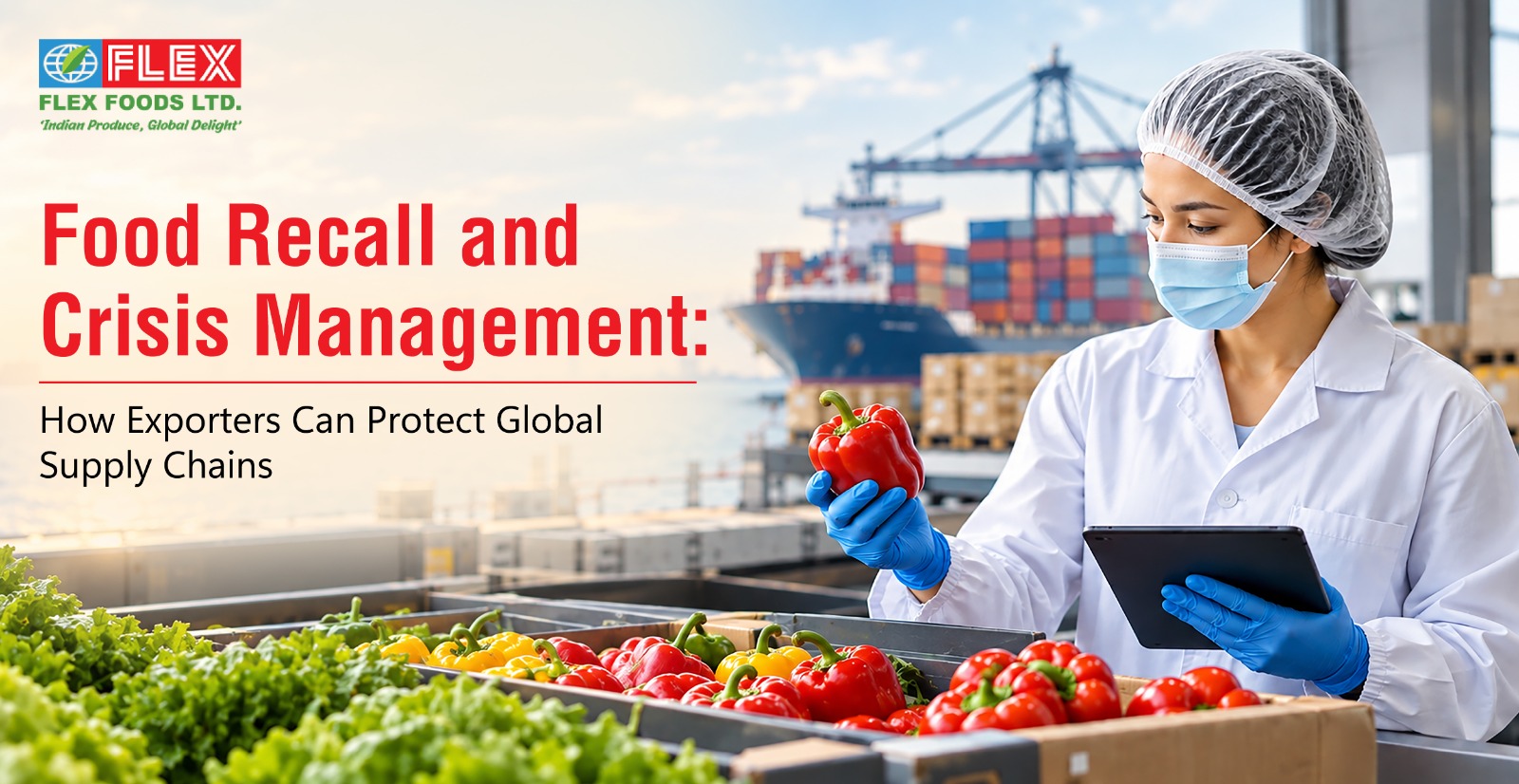
A food recall is a controlled process for identifying, removing, and managing potentially unsafe or non-compliant food products from the supply chain. For exporters, effective recall management depends on strong traceability, lot-level identification, supplier controls, documentation, regulatory communication, and a predefined crisis-response plan. Every link in the chain carries a share of the responsibility. When one link fails, the entire shipment can be at risk.
Exporters face a harder version of this challenge than domestic sellers. They deal with multiple countries and regulations, long and complex distribution chains, and differing import requirements at every border. Many distributors and buyers touch the same shipment before it reaches a shelf, which makes tracing a single issue more difficult. Port delays, customs holds, and reputational damage can multiply the cost of even a small recall.
Learn more about the thawing meaning
What Is a Food Recall?
A food recall happens when a product already in the market is found to be unsafe or mislabeled and must be corrected or removed. This differs from a food withdrawal, which usually involves a commercial or quality concern rather than a safety risk. A market withdrawal is similar but tends to involve lower consumer risk and less regulatory involvement. Exporters should understand these distinctions because each one triggers a different internal response.
Why Food Recalls Are a Major Risk for Global Exporters?
The consequences of a recall extend well beyond pulling a product off a shelf. Food safety risks include microbial contamination, foreign materials, chemical residues, and undeclared allergens. Regulatory risks can involve import rejection, product detention, or a suspension of supply into a market. Financial losses come from product destruction, reverse logistics, replacement shipments, and testing costs.
Reputation risk is often the longest lasting consequence for an exporter. A single recall can lead to negative media coverage, a loss of buyer confidence, and fewer repeat orders from key markets. Supply chain risks also follow closely behind, since a recall can interrupt distribution and disrupt production schedules. Suppliers connected to the affected batch may face their own investigation, which slows recovery for everyone involved.
Know more about importance of blanching
What Causes Food Recalls?
Most recalls trace back to a handful of recurring causes. Microbial contamination from pathogens such as Salmonella, Listeria, or E. coli remains one of the most common triggers worldwide. Foreign material contamination, including metal, glass, plastic, or stones, is another frequent cause that often points to a processing or packaging failure. Chemical contamination, whether from residues, cleaning agents, or undeclared substances, adds another layer of risk that exporters must monitor closely.
Labelling errors cause a surprising share of recalls even when the product itself is safe. A missing allergen declaration, an incorrect expiry date, or a wrong batch number can all trigger a formal recall in strict markets. Quality and processing failures, such as inadequate drying, poor storage conditions, or temperature abuse, also contribute heavily for processed and dried food exporters. These issues are usually preventable with tighter process controls and more consistent quality checks.
Why Traceability Is the Foundation of Food Recall Management?
Traceability allows a business to follow food and ingredients through every stage of the supply chain, from supplier to raw material to production batch to final customer. The European Union treats traceability as central to public health protection, since it allows an unsafe product to be identified and removed quickly. Exporters who lack this visibility often discover an issue too late to contain it efficiently. Strong traceability turns a potential crisis into a manageable, limited event.
One-step-back and one-step-forward traceability means an exporter can always identify where ingredients came from and where the finished batch was shipped. This depends on consistent lot and batch identification across production, packaging, and shipment records. Codex guidance highlights the importance of clear lot identification and efficient procedures for recalling implicated batches quickly. Without this discipline, a recall can spread far wider than the original problem required.
How Does a Food Recall Process Work?
A structured recall generally begins with identifying the issue, whether through internal testing, a customer complaint, or a regulatory notice. The next step is a risk assessment that considers the hazard, its severity, and the markets affected. Once the affected lots are confirmed through traceability records, the exporter should stop distribution immediately across production, warehousing, and shipping. Relevant stakeholders, including importers, distributors, and regulators, must then be notified without delay.
After containment, the focus shifts to recovering the product and investigating the root cause using tools such as the 5 Whys or a HACCP review. Corrective and preventive actions follow, which may include process changes, supplier controls, or additional staff training. The final step is verifying that the recall was effective by tracking recovered inventory and completed corrective actions. Skipping this verification stage is a common reason recalls resurface later.
Building a Food Recall Crisis Management Plan
A cross-functional recall team gives an exporter the speed it needs during a real incident. This team typically includes food safety and quality staff, production, supply chain, export logistics, regulatory affairs, and communications. Clear roles prevent confusion when decisions need to happen quickly under pressure. Management should also be included so that crisis decisions are made with full authority.
Assigning specific responsibilities in advance saves valuable time once a recall begins. The QA team usually leads the risk assessment, while the supply chain team handles product tracing across warehouses and shipments. The export team manages communication with buyers and importers, and the regulatory team handles authority notifications. Communications staff should be responsible for any external messaging to keep the response consistent.
How Technology Can Improve Food Traceability and Recall Management?
Digital batch tracking and ERP integration give exporters real-time visibility into where every lot has traveled. Barcode and QR-code systems make it faster to scan and confirm affected products at any point in the chain. Cloud-based traceability platforms allow suppliers, processors, and buyers to share data without delays caused by manual paperwork. Automated recall alerts can notify the right teams the moment a flagged batch is detected.
Real-time inventory visibility also helps exporters understand how much affected product remains before it reaches a customer. Data integration across suppliers and buyers means a single system can answer the most important recall question quickly. That question is simple: what product was affected, which batch was involved, where did it go, and who received it. Exporters working with frozen vegetables in India increasingly rely on this kind of integrated tracking to manage multiple export markets at once.
How Exporters Can Prepare for a Food Safety Crisis Before It Happens?
Preparation is far less costly than reacting to a crisis after it starts. Exporters should maintain end-to-end traceability, run mock recall exercises, and keep supplier records fully updated. Strengthening HACCP-based controls and testing products regularly can catch problems before they reach a shipment. Monitoring export market requirements is equally important, since rules can change from one destination to another.
A written crisis communication protocol ensures that the right message reaches the right audience without delay. Regularly auditing high-risk suppliers reduces the chance that a contamination issue originates outside the exporter's own facility. Accurate batch-level documentation supports every other step in this process, since a fast recall depends entirely on accurate records. Reviewing recall procedures periodically keeps the whole system aligned with current regulations and business operations.
Common Food Recall Management Mistakes Exporters Should Avoid
Poor batch identification is one of the most damaging mistakes an exporter can make, since it slows every later step. Incomplete supplier records create blind spots that make root cause analysis far more difficult. Skipping mock recall testing means a business only discovers its weaknesses during a real emergency. Slow internal communication often causes a small issue to spread before anyone outside the company even knows about it.
Treating a recall as only a quality issue, rather than a supply chain and reputation issue, leads to incomplete responses. Ignoring export-country requirements can result in a shipment being rejected even after the immediate safety issue is resolved. Weak root-cause analysis often means the same problem repeats a few months later. Focusing only on removing the product, without fixing the underlying cause, wastes the opportunity a recall provides for real improvement.
Recommended Read : Defrosting methods
Food Recall Preparedness Checklist for Exporters
Use this list as a starting point for building a stronger recall system.
- Supplier traceability records
- Batch and lot identificationM
- Production and laboratory testing records
- HACCP documentation
- Warehouse and shipment tracking
- Customer and distributor database
- Assigned recall team and crisis communication plan
- Completed mock recall and documented CAPA process
Conclusion
For global food exporters, food safety is not limited to production. It extends across sourcing, processing, packaging, storage, logistics, and distribution. A strong traceability and crisis-management system enables exporters to identify risks faster, contain affected products, and protect relationships with international buyers. This kind of discipline matters across product categories, from IQF mango to dried staples and everyday vegetables.
Flex Foods Limited operates with this same supply-chain discipline across its export-oriented processing operations. As one of the established freeze-dried vegetables manufacturers in India, the company focuses on consistent quality controls, batch-level documentation, and reliable sourcing to support long-term relationships with international buyers. That combination of traceability and preparedness is what allows food exporters to manage risk without losing the trust their markets depend on.
Frequently Asked Questions
What is food recall management?
It is the structured process of identifying, containing, and correcting a food safety or compliance issue after a product has entered the supply chain. It relies on traceability, documentation, and a predefined crisis response plan.
What is the difference between a food recall and a food withdrawal?
A recall responds to a safety or compliance risk, while a withdrawal usually addresses a commercial or quality concern with lower consumer risk. Regulatory involvement is typically higher for a formal recall.
How long should exporters keep traceability records?
Retention periods vary depending on the applicable regulation, the product type, and the destination market. Exporters should confirm specific requirements with each market rather than relying on a single universal timeline.
How can technology improve food recall management?
Digital batch tracking, cloud-based traceability, and automated alerts allow exporters to identify affected products and locations far faster than manual systems. This speed directly reduces the scope and cost of a recall.
What is the difference between food recall and food withdrawal?
Food recall is the process of removing food from the market because it may be unsafe, contaminated, or non-compliant and could pose a health risk to consumers. Food withdrawal is the removal of food from the market for reasons that generally do not involve a safety risk, such as quality issues, labeling errors, or regulatory concerns.