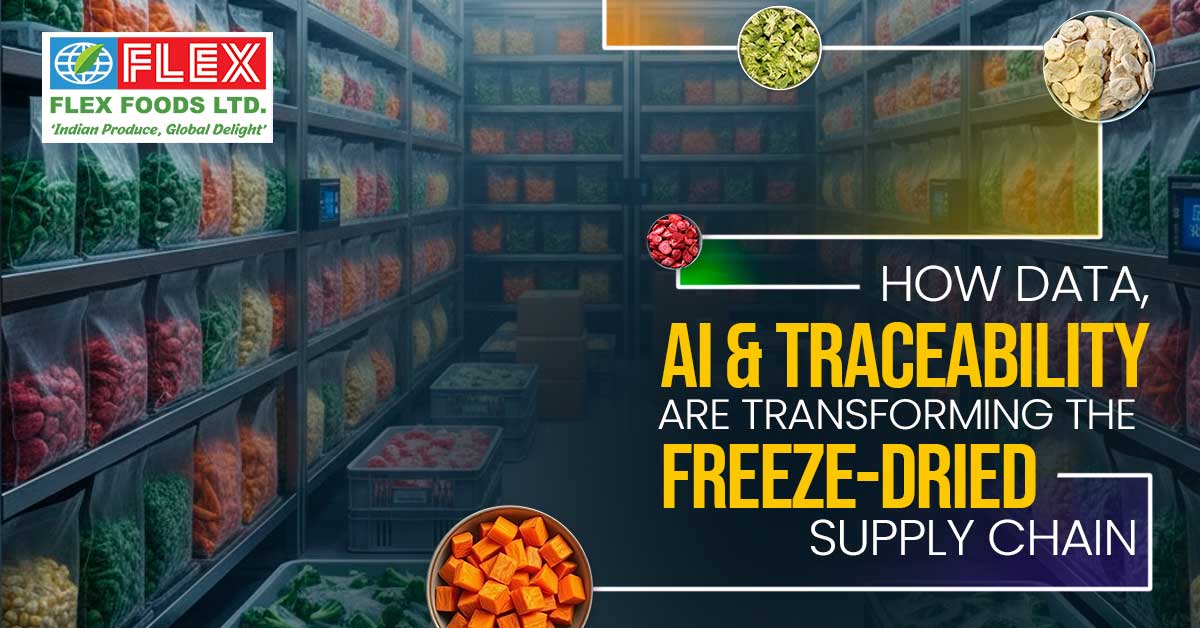
The freeze-dried food industry is stuck in the past. Right now, thousands of kilograms of premium freeze-dried products are being wasted due to inefficient supply chains. Shipments arrive late or damaged. Quality inconsistencies plague production batches. Traceability gaps leave companies vulnerable to compliance issues and food safety disasters. Inventory management relies on guesswork rather than data. Procurement teams struggle with unpredictable supplier performance. Meanwhile, customer demands for transparency and quality keep rising while profit margins keep shrinking.
Every inefficiency costs you real money. A contaminated batch can destroy your brand reputation overnight. Lost shipments mean lost revenue and broken customer relationships. Poor inventory forecasting leads to either costly overstocking or devastating stockouts. Your competitors who modernize their supply chains will capture market share while you struggle with outdated processes. In an industry where freshness, quality, and safety are non-negotiable, operating without data-driven systems isn't just inefficient—it's dangerous. You're one supply chain failure away from a crisis that could sink your business.
Technology is revolutionizing freeze-dried supply chains. Data analytics, artificial intelligence, and comprehensive traceability systems are transforming how products move from farm to consumer. Companies embracing these innovations are cutting costs, improving quality, reducing waste, and building competitive advantages that traditional operators simply cannot match. The good news? This technology is more accessible than ever before. You don't need to be a multinational corporation to benefit from smart supply chain management.
Also Read : Sustainable freeze-dried fruit sourcing
Let us show you exactly how these technologies are reshaping the freeze-dried food industry and how you can implement them to transform your operations.
The Unique Complexity of Freeze-Dried Logistics
The freeze-dried food supply chain faces challenges that conventional food processing never encounters. Temperature and moisture control aren't just important—they're absolutely critical. Even slight variations during storage or transport can degrade product quality. A container of freeze-dried mushroom exposed to humidity during shipping can become unusable, representing thousands of dollars in losses.
Quality consistency presents another massive hurdle. Agricultural raw materials vary naturally based on growing conditions, harvest timing, and seasonal factors. Maintaining consistent quality in products like dehydrated parsley requires sophisticated monitoring and quality control processes that manual systems simply cannot provide.
Lead times stretch longer than most food products. Freeze-drying takes time, and coordinating raw material procurement with production schedules and customer orders demands precision planning. Traditional manual methods buckle under this complexity.
Regulatory compliance grows more stringent annually. Food safety regulations, import-export documentation, and traceability requirements create administrative burdens that drain resources and create liability risks. The market for freeze dried food in India and globally continues expanding rapidly. Consumer demand for convenient, shelf-stable, nutritious foods is exploding. Companies that can't scale their operations efficiently will miss this massive growth opportunity.
Big Data Transforms Guesswork Into Strategy
Data analytics transforms opaque supply chains into transparent, predictable systems. Instead of reacting to problems, companies now predict and prevent them.
Demand forecasting becomes remarkably accurate. By analyzing historical sales data, seasonal patterns, market trends, and even weather forecasts, AI systems predict future demand with precision traditional methods can't match. This means ordering the right quantities of raw materials, scheduling production optimally, and maintaining ideal inventory levels.
Quality prediction uses data from every production batch. Systems track raw material characteristics, processing parameters, environmental conditions, and final product specifications. Machine learning identifies patterns that indicate potential quality issues before they occur. If certain mushroom varieties from specific regions consistently produce superior freeze-dried results, your system flags this intelligence for procurement decisions.
Supplier performance gets quantified objectively. Delivery punctuality, product quality consistency, pricing stability, and responsiveness all become measurable metrics. Instead of relying on gut feelings or incomplete information, you make supplier decisions based on comprehensive data that reveals patterns invisible to human observation.
Waste reduction happens through pattern recognition. Data reveals exactly where losses occur—whether from spoilage during storage, damage during transport, or quality rejections. Once identified, these issues can be systematically addressed rather than accepted as inevitable costs of doing business.
Route optimization for logistics uses real-time data on traffic, weather, fuel costs, and delivery windows. AI calculates the most efficient routes, reducing transportation costs while ensuring products arrive in optimal condition. The beauty of data-driven operations is continuous improvement. Every transaction, shipment, and production run generates insights that make future operations more efficient.
Artificial Intelligence: Your 24/7 Supply Chain Brain
Artificial intelligence doesn't just report what happened—it predicts what will happen and recommends optimal actions.
Predictive maintenance for freeze-drying equipment uses sensor data to identify potential failures before breakdowns occur. When machines operate continuously processing high-value products, unplanned downtime is catastrophically expensive. AI monitors equipment health constantly, scheduling maintenance proactively rather than reactively.
Dynamic pricing optimization helps businesses respond to market conditions in real-time. AI analyzes competitor pricing, raw material costs, demand fluctuations, and inventory levels to recommend optimal pricing strategies that maximize revenue and market share simultaneously.
Automated inventory management eliminates human error and inefficiency. AI systems monitor stock levels across multiple warehouses, automatically triggering reorders when levels hit predetermined thresholds. They account for lead times, seasonal demand variations, and upcoming orders to ensure you never overstock or run out.
Quality control automation uses computer vision to inspect products faster and more consistently than human inspectors. AI can detect discoloration, moisture content issues, size variations, and contamination at speeds impossible for manual inspection while maintaining perfect consistency across millions of units.
Supply chain risk management monitors global events that might disrupt your operations. Political instability in growing regions, weather events affecting crops, transportation strikes, or regulatory changes all get flagged with impact assessments and contingency recommendations. AI systems learn continuously. The longer they operate, the smarter they become, constantly refining predictions and recommendations based on new data.
Blockchain: The Immutable Truth About Your Products
Traceability has evolved from nice-to-have to absolutely essential. Consumers, regulators, and business partners demand complete visibility into product journeys. Blockchain technology creates immutable records of every supply chain transaction.
When raw parsley arrives at your facility, its origin, growing conditions, harvest date, and quality certifications get recorded on the blockchain. Every processing step, quality check, storage location, and shipment gets logged permanently and transparently.
Food safety incidents become manageable rather than catastrophic. If contamination occurs, blockchain allows instant identification of affected batches. You know exactly which raw materials were used, when processing occurred, where products were shipped, and which customers received them. What once took weeks of investigation now takes minutes, potentially saving your entire business.
Authenticity verification protects premium products from fraud. High-quality freeze-dried foods command premium prices, making them targets for counterfeiters. Blockchain proves authenticity, giving customers confidence they're receiving genuine products and protecting your brand reputation from imitators.
Regulatory compliance becomes straightforward rather than nightmarish. When auditors or regulators request documentation, blockchain provides complete, verifiable records instantly. No more scrambling through paperwork or piecing together information from multiple systems while inspectors wait impatiently.
Sustainability credentials can be proven rather than merely claimed. If you source from organic farms or sustainable operations, blockchain verifies these claims throughout the supply chain. Consumers increasingly pay premiums for verified sustainable products, turning your ethical choices into competitive advantages.
Smart contracts automate transactions when conditions are met. When a shipment arrives at its destination in good condition within the specified timeframe, payment releases automatically. This reduces administrative overhead and eliminates payment disputes that drain time and damage relationships.
Recommended Read : How do you freeze dry food
Real-Time Visibility Through IoT Sensors
Internet of Things sensors provide continuous visibility into product conditions throughout the supply chain, transforming blind spots into clear windows.
- Temperature and humidity monitoring happens 24/7 without human intervention. Sensors in storage facilities, transport containers, and warehouses continuously report environmental conditions. If temperatures rise or humidity increases beyond safe thresholds, alerts trigger immediately, allowing corrective action before products are damaged.
- Location tracking shows exactly where every shipment is in real-time. No more wondering when deliveries will arrive or if shipments are on schedule. GPS-enabled trackers provide precise locations, estimated arrival times, and route verification that eliminates uncertainty from logistics planning.
- Shock and tilt sensors detect mishandling during transport. Freeze-dried products are often fragile despite their durability advantages. Sensors record any impacts, drops, or improper handling, providing accountability and identifying improvement opportunities with carriers.
- Weight sensors in storage areas automatically track inventory levels. As products are added or removed, systems update inventory counts in real-time, eliminating manual counting errors and discrepancies that create chaos during audits.
This constant flow of real-time data enables proactive management. Problems get identified and addressed before they escalate into expensive failures that damage customer relationships and brand reputation.
Practical Implementation Without Breaking the Bank
You don't need massive budgets to benefit from supply chain technology. Smart implementation starts with priorities and scales over time based on results.
Small operations should begin with basic traceability and inventory management systems. Cloud-based solutions require minimal upfront investment while delivering immediate benefits. Start documenting your supply chain digitally, even if it's just spreadsheets synchronized across devices. Graduate to purpose-built software as volumes grow.
Medium-sized businesses benefit most from integrating multiple systems. Connect your inventory management with procurement, production scheduling, and shipping logistics. Look for platforms that offer AI-powered analytics without requiring data science teams. Many modern solutions provide accessible dashboards that translate complex data into actionable insights.
Large enterprises should pursue comprehensive end-to-end integration. Invest in custom solutions that connect every touchpoint from raw material sourcing through final delivery. Build dedicated teams that focus on extracting maximum value from supply chain data. The scale of operations justifies significant technology investments that deliver proportional returns.
Regardless of size, start with your biggest pain points. If quality inconsistency causes the most problems, prioritize quality tracking systems. If inventory management creates chaos, implement automated inventory solutions first. Build momentum with early wins before tackling more complex integrations.
Recommended Read : Are frozen vegetables healthy
The Future Is Already Here
Technology isn't coming to transform the freeze-dried supply chain—it's already happening. Companies implementing data analytics, AI, and traceability systems today are building insurmountable competitive advantages. They operate more efficiently, deliver higher quality, respond faster to market changes, and scale more effectively than traditional competitors.
The question isn't whether to adopt these technologies. It's how quickly you can implement them before competitors leave you behind. Start small if necessary, but start now. Every day without these systems costs you money, opportunities, and market position
The freeze-dried industry stands at a transformative moment. Those who embrace technology like Flex Foods will dominate the next decade. Those who resist will struggle to survive. Choose your path wisely, and remember—your supply chain is either your greatest competitive advantage or your most expensive liability. Technology determines which it becomes.
Frequently Asked Questions
Q1. How much does it cost to implement AI and traceability systems in a freeze-dried supply chain?
Costs vary dramatically based on business size and needs. However, most companies recover investments within 12-18 months through efficiency gains, waste reduction, and improved quality control that directly impact profitability.
Q2. Can small freeze-dried food businesses benefit from these technologies, or are they only for large corporations?
Small businesses actually benefit tremendously from these technologies. Cloud-based platforms democratize access to enterprise-level capabilities without massive upfront investments. Even basic digital traceability and inventory management deliver significant improvements over manual systems. Start with affordable, scalable solutions addressing your biggest pain points. Many providers offer tiered pricing that grows with your business, making advanced technology accessible regardless of company size.
Q3. How long does it take to see measurable results after implementing supply chain technology?
Most businesses see initial improvements within 30-60 days of implementation. Inventory accuracy improves almost immediately. Quality tracking benefits appear within the first production cycles. However, maximum benefits emerge after 6-12 months when AI systems accumulate sufficient data for accurate predictions. The timeline depends on implementation complexity, staff training, and data quality. Companies report 15-40% efficiency gains within the first year across various metrics.
Q4. What happens to my data privacy and security when using blockchain and cloud-based systems?
Reputable supply chain platforms prioritize security through encryption, secure authentication, and compliance certifications. Blockchain's decentralized nature actually enhances security—no single point of failure exists. Choose providers with ISO certifications, SOC 2 compliance, and clear data policies. You control who accesses your information. Most platforms offer private blockchain options where only authorized partners view data. Regular security audits and updates protect against emerging threats consistently.
Q5. Do I need technical expertise or a dedicated IT team to manage these systems?
Modern supply chain platforms are designed for business users, not IT specialists. Most feature intuitive dashboards, automated alerts, and simple interfaces requiring minimal technical knowledge. Initial setup might need consulting support, but daily operations are straightforward. Many providers offer training, customer support, and managed services. Your team focuses on business decisions while the technology handles complex calculations. Technical expertise helps but isn't mandatory for successful implementation and operation.