Food waste remains one of the most pressing challenges in modern food systems, affecting producers, distributors, and retailers alike. Large quantities of food are lost due to spoilage, improper storage, and delays during transportation. Perishable products are especially vulnerable, as they require strict temperature control and rapid movement across the supply chain. These losses not only impact profitability but also contribute to environmental stress and resource depletion.
As supply chains grow longer and more complex, the risk of waste increases at every stage. Variations in climate, infrastructure gaps, and inconsistent cold-chain availability worsen the situation further. Many regions struggle to balance food availability with preservation efficiency. This has driven the need for preservation technologies that can extend shelf life without compromising food quality.
What is Freeze-Drying?
Freeze drying, also known as lyophilization, removes moisture from food while preserving its original structure. The process begins by freezing the food and then reducing surrounding pressure to allow frozen water to sublimate directly into vapor. This method avoids the damaging effects of heat, which often degrade nutrients and texture. As a result, the food retains its original shape, flavor profile, and nutritional value.
Unlike conventional drying methods, freeze-drying significantly slows microbial growth and enzymatic activity. The near-total removal of moisture creates an environment unsuitable for spoilage organisms. This makes the preserved food highly stable over long periods. From a storage perspective, this stability is a major advantage for manufacturers and distributors.
Learn more about best things to freeze dry
Extending Shelf Life and Preventing Spoilage
One of the most significant benefits of freeze-drying is its ability to extend shelf life dramatically. Foods that would normally spoil within days can remain stable for months or even years when properly packaged. This extended shelf life reduces the urgency of rapid distribution and minimizes losses caused by delays. It also allows producers to manage inventory more effectively.
Longer shelf life directly translates to lower food waste across the supply chain. Retailers can stock products without worrying about quick expiration, and consumers can store food longer without fear of spoilage. This flexibility reduces the volume of discarded food at both commercial and household levels. Over time, these reductions contribute to more sustainable food systems.
Reducing Dependence on Cold Chain Logistics
Cold chain logistics are expensive and energy-intensive, requiring constant temperature monitoring and specialized infrastructure. Refrigerated transport, cold storage facilities, and backup systems significantly increase operational costs. Any disruption in the cold chain can lead to rapid spoilage and total product loss. Freeze-drying helps eliminate many of these risks by making refrigeration unnecessary for storage and transport.
Without the need for cold storage, logistics operations become simpler and more reliable. Products can be transported through standard shipping methods without temperature control. This opens access to remote and infra
structure-limited markets that were previously difficult to serve. The reduction in cold chain dependence also lowers energy consumption and carbon emissions.
Read more : does freeze dried food retain nutrients
Lower Transportation and Storage Costs
Freeze dried foods in India are significantly lighter than their fresh or frozen counterparts due to moisture removal. Reduced weight leads to lower transportation costs, especially in long-distance and international shipping. Packaging requirements are also less complex, as there is no need for insulated or refrigerated containers. These savings accumulate quickly at scale.
Storage costs are similarly reduced because freeze-dried products such as dehydrated parsley require less space and no refrigeration. Warehouses can store higher volumes without investing in cold storage infrastructure. Inventory management becomes easier, with fewer losses from expired or damaged goods. These operational efficiencies directly improve profit margins for food businesses.
Improving Supply Chain Flexibility and Planning
Freeze-drying allows food producers to process surplus harvests that might otherwise go to waste. Seasonal fluctuations in supply can be managed by preserving excess production during peak periods. This creates a buffer that stabilizes supply throughout the year. Producers gain greater control over production planning and demand forecasting.
Supply chain flexibility also improves at the distribution and retail levels. Products can be shipped based on demand rather than urgency, reducing last-minute logistics pressures. This adaptability is particularly valuable during disruptions such as weather events or transportation delays. Overall, freeze-drying enables a more resilient and responsive supply chain.
Supporting Sustainability and Resource Efficiency
Reducing food waste is closely linked to sustainability goals across the food industry. Every unit of food saved represents conserved water, energy, and agricultural inputs. Freeze-drying supports this by preserving food at its peak quality and preventing unnecessary disposal. Over time, these efficiencies contribute to lower environmental impact.
The reduced need for refrigeration and faster transport also lowers greenhouse gas emissions. Energy savings from simplified logistics compound across large distribution networks. When combined with responsible sourcing and packaging, freeze-drying becomes part of a broader sustainability strategy. This aligns economic benefits with environmental responsibility.
Recommended Read : How to make frozen vegetables taste good
Expanding Market Reach and Product Availability
Freeze dried products such as freeze dried mushrooms can reach markets that lack reliable cold storage infrastructure. This includes rural areas, export destinations, and emergency supply chains. By extending shelf life and simplifying transport, producers can serve a wider customer base. This expanded reach creates new revenue opportunities.
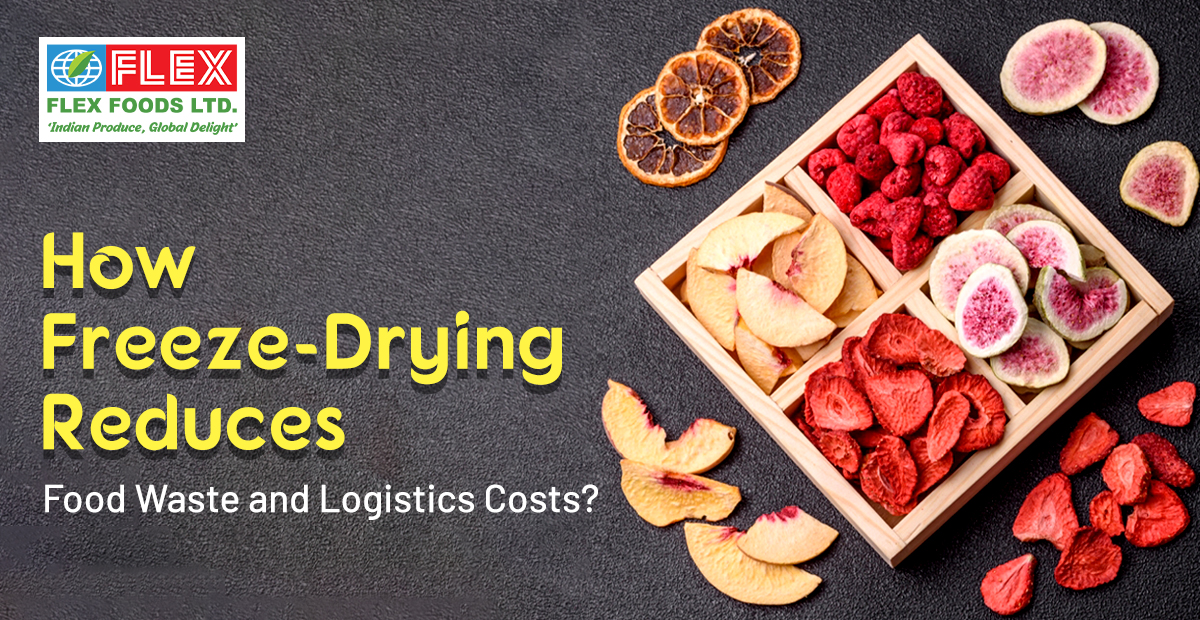
Products such as freeze-dried fruits also appeal to consumers seeking convenience and long-lasting quality. Their lightweight nature makes them suitable for retail, foodservice, and institutional use. With fewer logistical constraints, businesses can explore new distribution models. This market expansion further offsets production and processing costs.
Conclusion
Freeze-drying offers a practical and scalable solution to two major challenges in the food industry: waste reduction and logistics cost control. By extending shelf life, eliminating cold chain dependence, and improving supply chain flexibility, it addresses inefficiencies at multiple levels. The resulting cost savings benefit producers, distributors, and retailers alike.
As food systems continue to evolve, preservation technologies from innovative brands like Flex Foods Limited will play an increasingly important role. Freeze-drying stands out for its ability to preserve quality while enhancing operational efficiency. When implemented strategically, it supports both economic resilience and sustainability goals. This makes it a valuable tool for modern food supply chains.
FAQs
Is freeze-drying suitable for small and mid-sized food producers?
Freeze-drying can be scaled based on production volume, making it accessible beyond large industrial players. Modular equipment and toll-processing options allow smaller producers to adopt the process without heavy upfront investment.
How does freeze-drying affect food safety compliance and regulations?
Freeze-dried products often face fewer compliance challenges due to their low moisture content and extended stability. This can simplify testing, reduce recall risks, and support smoother regulatory approvals across markets.
Can freeze-dried foods support emergency and institutional supply programs?
Yes, freeze-dried foods are widely used in disaster relief, defense, and institutional feeding programs. Their long shelf life and ease of transport make them reliable for long-term stockpiling and rapid deployment.
What role does packaging play in maintaining freeze-dried product quality?
Packaging is critical, as exposure to moisture can compromise product stability. High-barrier materials with proper sealing help preserve texture, flavor, and shelf life over extended storage periods.
Does freeze-drying influence pricing strategies in competitive markets?
Freeze-drying enables flexible pricing by reducing losses and logistics overheads. These efficiencies allow businesses to balance premium positioning with competitive cost structures more effectively.