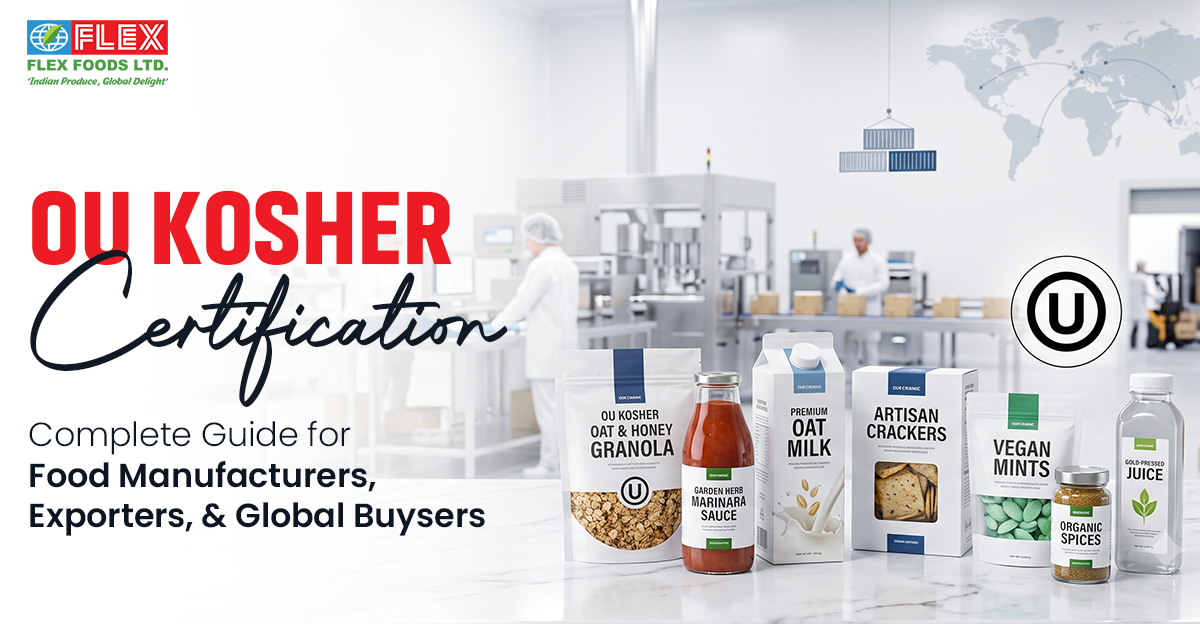
Global demand for certified food products continues to rise across both retail and export markets. International buyers increasingly request kosher-certified products, even when their own consumer base extends well beyond the Jewish community. OU Kosher, run by the Orthodox Union, is one of the world's largest and most widely recognized kosher certification organizations, certifying more than one million products from thousands of companies worldwide. The certification verifies compliance with Jewish dietary laws, known as Kashrut, through detailed reviews of ingredients, equipment, and production processes.
Many manufacturers pursue OU certification not for religious reasons alone, but because it signals broader quality and process discipline to buyers. Retailers and distributors across multiple countries often treat the OU symbol as a trusted marker of consistent manufacturing standards. Understanding how this certification works can open doors to markets that might otherwise remain out of reach. This guide explains who needs OU Kosher Certification, how the process works, and why it matters for exporters and global food brands.
Learn more about what's better freeze drying or dehydrating
What Is OU Kosher Certification?
OU Kosher Certification is a formal verification process confirming that a product meets the requirements of Kashrut, the traditional Jewish dietary laws. The Orthodox Union oversees this certification through a global network of rabbinic supervisors and food scientists. Kosher status depends on approved ingredients, proper equipment use, and controlled production processes rather than any single ingredient alone. Once verified, a product may carry the OU symbol, one of the most recognized kosher marks in the world.
The certification process includes ingredient verification, a detailed review of production methods, and inspection of equipment used across manufacturing. Label approval ensures that kosher symbols are used correctly and consistently on packaging. Ongoing supervision follows initial certification, since kosher status reflects continuous manufacturing compliance rather than a one-time check. This combination of upfront review and continued oversight is what gives the OU symbol its strong reputation for reliability.
To know more about what does blanching vegetables
Why Is OU Kosher Certification Important?
OU Kosher Certification builds trust with international buyers who often use it as a shorthand for quality and process control. It is recognized by retailers worldwide, many of which stock kosher-certified products as a standard part of their shelf offerings. For manufacturers targeting global markets, certification can meaningfully expand export opportunities across regions with strong kosher demand. It also strengthens how buyers perceive a brand's food safety and quality practices overall.
Certification enhances brand credibility, particularly for companies trying to establish themselves in competitive international markets. It supports supply chain transparency, since certification requires detailed documentation of ingredients and processes. Many large buyers include kosher certification as part of their standard procurement requirements before agreeing to a supply contract. Meeting these expectations early can smooth the path toward long-term buyer relationships.
Who Needs OU Kosher Certification?
Certification tends to be relevant across a wide range of food-related businesses:
- Food manufacturers: certification recommended
- Ingredient suppliers: certification recommended
- Food processors: certification recommended
- Beverage manufacturers: certification recommended
- Exporters: certification recommended
- Contract manufacturers: certification recommended
- Private label brands: certification recommended
- Restaurants: usually optional
Each of these business types benefits differently, since ingredient suppliers gain broader buyer acceptance while exporters gain access to markets with strong kosher demand.
Is OU Kosher Certification Mandatory?
OU Kosher Certification is generally not legally mandatory. However, many retailers, distributors, food manufacturers, and international buyers require or strongly prefer products carrying a recognized kosher certification, such as the OU symbol, to meet customer and procurement requirements. This creates a clear distinction between legal requirements and buyer-driven expectations that shape real-world market access. In many export markets, the absence of certification can quietly limit which buyers are willing to place orders.
Retail chains in several regions treat kosher certification as a baseline expectation rather than an optional extra. Ingredient suppliers often need certification simply to be approved as a source for certified manufacturers further down the supply chain. Export markets with significant kosher-observant populations tend to have particularly strong expectations around certification. As a result, while OU certification remains voluntary in a legal sense, it frequently functions as a practical requirement for serious market access.
How Does the OU Kosher Certification Process Work?
The certification process follows a structured sequence of steps.
Step 1: Submit the Application
The process begins when a manufacturer submits an application to the Orthodox Union. This step initiates the review and sets the certification process in motion.
Step 2: Initial Facility Consultation and Inspection
An initial consultation and facility inspection follows, allowing reviewers to understand the manufacturing environment. This step helps identify any early concerns before deeper review begins.
Step 3: Review of Ingredients and Production Process
Reviewers examine ingredient sourcing and the full production process in detail. This step ensures that every input and manufacturing stage aligns with kosher requirements.
Step 4: Assessment by the Rabbinic Coordinator
A Rabbinic Coordinator evaluates the facility's practices against established Kashrut standards. This assessment forms a central part of the overall certification decision.
Step 5: Certification Agreement
Once the assessment is complete, the manufacturer and the Orthodox Union finalize a certification agreement. This agreement outlines the ongoing responsibilities required to maintain certified status.
Step 6: Product Label Approval
Labels are reviewed and approved to ensure correct and consistent use of kosher symbols. Proper label approval helps prevent confusion or misuse of certification marks.
Step 7: Ongoing Inspections and Compliance
Certified facilities undergo periodic inspections to confirm continued compliance. This ongoing oversight is what keeps kosher certification meaningful over time rather than a one-time achievement.
OU Kosher Certification Requirements
Meeting OU requirements involves using only approved ingredients throughout the production process. Ingredient traceability is essential, since certifiers need to confirm the kosher status of every input used. Production equipment undergoes careful review to ensure it has not been used in ways that would compromise kosher status. Cross-contamination controls are closely examined, particularly in facilities that also handle non-kosher products.
Cleaning procedures must meet specific standards to prevent unintended mixing between kosher and non-kosher production runs. Manufacturing documentation needs to be thorough, supporting transparency throughout the certification process. Label compliance ensures that kosher symbols appear accurately and consistently across all packaging. Periodic inspections confirm that these requirements continue to be met well after initial certification is granted.
Documents Required for OU Kosher
Manufacturers typically need to provide company registration details as part of the application process. A complete product list helps certifiers understand the full scope of items requiring review. Detailed ingredient specifications and supplier certificates support the ingredient verification process. A manufacturing flow chart and facility layout give reviewers a clear picture of production and potential contamination risks.
Cleaning standard operating procedures demonstrate how a facility prevents cross-contamination between production runs. Packaging artwork is reviewed to confirm accurate use of kosher symbols. Batch records provide traceability across specific production runs. Quality management documents round out the application, showing how a facility maintains consistent standards over time.
Read more : do freeze dried fruits retain nutrients
Understanding OU Kosher Symbols
The standard OU symbol indicates that a product meets general kosher requirements under Orthodox Union supervision. The OU-D symbol specifically denotes dairy products or those manufactured on equipment shared with dairy items. OU-P indicates that a product meets the additional requirements for Passover, a period with stricter kosher standards. An OU-Meat designation identifies products containing or processed alongside kosher meat.
Each symbol communicates specific information that helps consumers make informed choices based on their dietary practices. Manufacturers must use the correct symbol for each product, since mislabeling can create confusion or compliance issues. Retailers and buyers often look specifically for these distinctions when sourcing products for kosher-observant customers. Clear, accurate symbol usage is therefore a key part of maintaining trust in the certification.
Common Mistakes Manufacturers Should Avoid
A frequent misconception is assuming that vegetarian products automatically qualify as kosher, which is not the case. Using unapproved ingredients, even unintentionally, can jeopardize certification status. Making production process changes without prior approval from certifiers is another common and avoidable error. Incorrect label usage, including applying the wrong kosher symbol, can create compliance problems.
Poor documentation often slows down both initial certification and ongoing inspections. Inadequate equipment segregation between kosher and non-kosher production is a serious and recurring issue. Failing to maintain ongoing compliance after initial certification can put a facility's status at risk. Avoiding these mistakes helps manufacturers preserve both their certification and their reputation with buyers.
Benefits of OU Kosher Certification
Certification opens the door to greater export opportunities across markets with strong kosher demand. Increased retailer acceptance often follows, since many chains prioritize certified products in their sourcing decisions. Consumer trust tends to grow around products carrying a recognized certification mark like OU. Certification can also support premium brand positioning, particularly in competitive international categories.
Improved supply chain credibility often results from the detailed documentation required throughout the certification process. Certified manufacturers frequently gain better access to multinational buyers seeking reliable, well-documented suppliers. A stronger international market presence tends to follow as certification builds confidence among a wider buyer base. Over time, these benefits compound, supporting long-term growth in global markets.
How Flex Foods Limited Supports Global Food Buyers?
Flex Foods Limited operates as an export-focused food manufacturer built around international quality standards. Its food safety systems and quality assurance processes are designed to meet the expectations of demanding global buyers. The company's traceability practices extend across its product range, including freeze dried fruits and other shelf-stable export items. This structured approach reflects a broader commitment to consistent, well-documented food production.
The company's offerings also include dehydrated parsley, reflecting its focus on versatile, export-ready ingredient categories. As one among several freeze dried food manufacturers in India, Flex Foods Limited works to align its processes with the expectations of international buyers and certification bodies.
Conclusion
OU Kosher Certification has become an important tool for food manufacturers and exporters seeking to expand into global markets. While not legally mandatory, it frequently functions as a practical requirement given strong buyer and retailer preferences. Understanding the certification process, requirements, and common pitfalls helps manufacturers approach the journey with clear expectations. Careful documentation and consistent compliance remain central to maintaining certified status over time.
Companies that invest in strong food safety systems and transparent supply chains tend to navigate certification more smoothly. Certification benefits extend beyond religious dietary compliance, often signaling broader quality and process discipline to buyers worldwide. For manufacturers focused on international growth, OU Kosher Certification can serve as a meaningful step toward stronger market access. With the right preparation, it becomes a valuable part of a broader global export strategy.
Frequently Asked Questions
What is OU Kosher Certification?
It is a certification confirming that a product meets Jewish dietary law requirements, verified by the Orthodox Union.
Is OU Kosher Certification mandatory?
No, it is not legally required, though many buyers and retailers strongly prefer or require it.
Who can apply for OU Kosher Certification?
Food manufacturers, processors, ingredient suppliers, and exporters can all apply for certification.
How long does the OU certification process take?
Timelines vary depending on facility complexity, though the process generally involves several structured review stages.
What products can receive OU Kosher Certification?
A wide range of food and beverage products can be certified, provided ingredients and processes meet kosher standards.
How much does OU Kosher Certification cost?
Costs vary based on facility size, product range, and complexity of the certification review.
Does OU certification require annual inspections?
Certified facilities undergo periodic inspections to confirm ongoing compliance with kosher standards.
Can Indian food manufacturers obtain OU Kosher Certification?
Yes, manufacturers in India can apply for and receive certification if they meet the required standards.
Does OU Kosher Certification help with exports?
Yes, it often improves access to international buyers and markets with strong kosher demand.