Walk into any grocery store's herb section, and you'll likely spot bunches of leafy greens that look almost identical. Pick up one labeled parsley, then grab the coriander nearby. At first glance, they could be twins. But bring them close to your nose or taste a single leaf, and you'll immediately understand why these two herbs spark so much confusion in kitchens worldwide.
The parsley vs coriander debate isn't just about naming confusion. These two popular herbs belong to the same botanical family, yet they couldn't be more different when it comes to flavor, aroma, and culinary applications. Some people adore the fresh, citrusy punch of coriander, while others find it tastes like soap. Meanwhile, parsley quietly enhances dishes without overpowering them, making it a safe favorite across countless recipes.
Whether you're trying to figure out which herb to toss into your pasta, what to garnish your curry with, or simply want to stop accidentally buying the wrong bunch at the market, this guide will clear everything up. You'll learn how to identify each herb, understand their unique flavor profiles, discover the best ways to use them in cooking, and even pick up storage tips that keep them fresh longer. Let's settle this green mystery once and for all.
Learn more about how long does parsley last
What is Parsley?
Parsley has been gracing dinner plates for thousands of years. Originally cultivated around the Mediterranean region, this bright green herb now grows in gardens and farms across the globe. Ancient Greeks used it to crown athletic champions, while Romans believed it could absorb wine fumes and prevent intoxication during feasts. Today, we appreciate it for more practical reasons.
This herb packs impressive nutritional value into those delicate leaves. A small handful provides excellent amounts of vitamin K, which supports bone health and proper blood clotting. You'll also get vitamin C for immune function, vitamin A for eye health, and folate that your body needs for cell growth. The stems and leaves contain antioxidants that help fight inflammation.
What makes parsley special in cooking is its clean, slightly peppery flavor with subtle earthy notes. Unlike some herbs that dominate a dish, parsley works as a team player. It brightens other ingredients without stealing the spotlight. That mild bitterness cuts through rich, fatty foods beautifully. Think of it as the herb that makes everything taste more like itself, only better.
Read more : How to use dried parsley
Flat Leaf Parsley vs Curly Parsley
When you're shopping for parsley, you'll encounter two main varieties that look quite different. Flat leaf parsley, also called Italian parsley, has broad, serrated leaves that lie relatively flat. Curly parsley features tightly ruffled, compact leaves that create a frilly appearance. Beyond looks, these two types perform differently in the kitchen.
Flat leaf parsley delivers stronger, more robust flavor. Professional chefs typically prefer it for cooking because its taste holds up better when exposed to heat. The leaves are easier to chop finely, and they don't cling together as much when you're trying to mince them. Italian, Middle Eastern, and Mediterranean dishes almost always call for this variety. Use it in chimichurri sauce, tabbouleh salad, or anywhere the parsley flavor needs to shine through.
Curly parsley tastes milder and slightly more bitter. Its main advantage comes from those decorative ruffles, which make it perfect for garnishing plates. Restaurants love using curly parsley to add visual appeal to finished dishes. The texture also works well in certain preparations where you want some crunch. However, those tight curls can trap dirt and are trickier to wash thoroughly.
For everyday cooking, flat leaf parsley wins. Save the curly variety for when presentation matters or when you need just a hint of parsley flavor. Both types work in salads, though flat leaf integrates better while curly adds interesting texture. Neither is "wrong," but understanding their strengths helps you choose wisely.
What is Coriander?
Here's where things get interesting. In most of the world, coriander refers to the leaves of the Coriandrum sativum plant. Americans call these same leaves cilantro, while using "coriander" only for the dried seeds. This naming confusion creates plenty of grocery store mix-ups and recipe mishaps.
The fresh leaves taste bright, citrusy, and slightly pungent. Some people detect soapy notes due to a genetic variation affecting how they perceive aldehydes in the herb. If you're in that group, no amount of acquired taste will change your mind. For everyone else, coriander leaves add an irreplaceable freshness to dishes. The seeds, harvested after the plant flowers, taste completely different—warm, nutty, and slightly sweet with hints of lemon.
Coriander dominates in cuisines across Asia, Latin America, and the Middle East. Indian cooking uses both leaves and ground seeds extensively. Mexican salsas wouldn't be the same without a generous handful of fresh coriander. Thai curries rely on the roots for deep, earthy flavoring. In North Africa, the seeds flavor tagines and couscous dishes. This herb travels the world better than almost any other.
Regional names add to the confusion. British recipes saying "coriander" mean the fresh leaves. American recipes saying "coriander" mean the seeds, while "cilantro" indicates leaves. When following international recipes, pay attention to context clues about whether you need the fresh herb or dried spice.
Parsley vs Coriander — Key Differences
Understanding these herbs becomes easier when you compare them side by side:
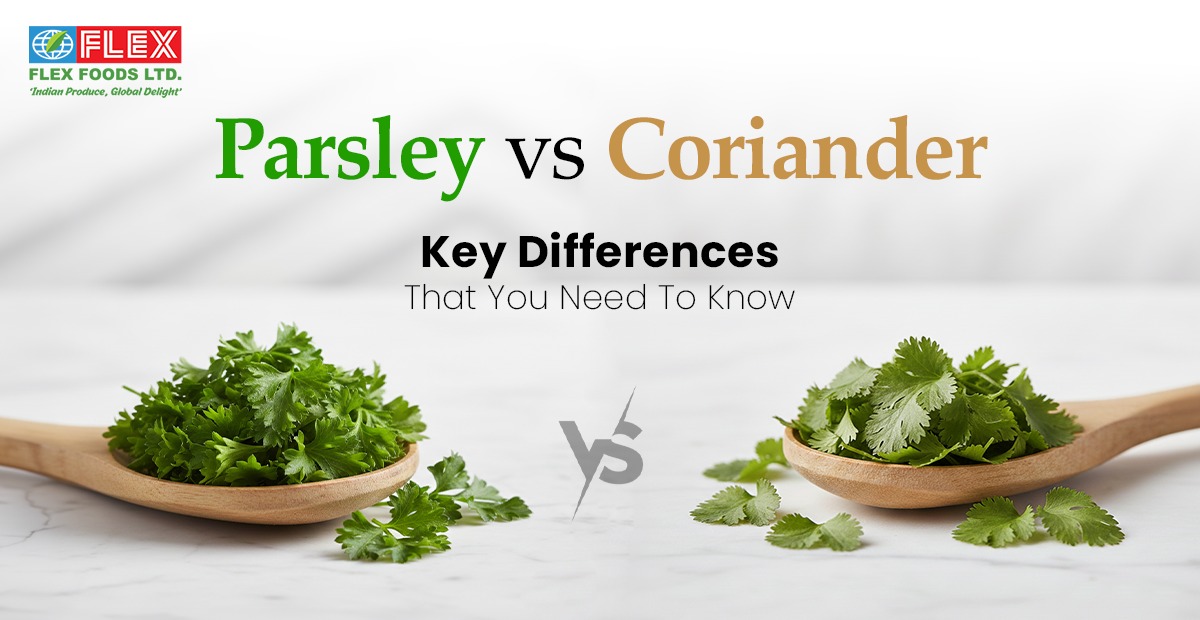
- Appearance: Parsley leaves are darker green, more pointed, and have serrated edges. The stems are typically thicker and more robust. Coriander leaves are lighter, more delicate, with rounded, lacy edges that almost look like they've been cut with decorative scissors. Hold them up to light, and coriander appears more translucent.
- Taste: Parsley offers clean, slightly peppery freshness with earthy undertones. It's mild enough that you can eat generous amounts without overwhelming your palate. Coriander explodes with bright, citrusy flavor that's much more assertive. That boldness means a little goes a long way in most dishes.
- Aroma: Crushing parsley releases a gentle, grassy scent that's pleasant but not particularly strong. Coriander's aroma hits immediately—intensely fresh with those distinctive citrus notes. Some people find it soapy or unpleasant, while others consider it irresistible.
- Culinary uses: Parsley shows up in European cooking, particularly Italian, French, and Greek cuisines. It's essential for making gremolata, persillade, and countless pasta dishes. Coriander anchors Asian, Mexican, and Indian recipes. Think curries, salsas, pho, and chutneys.
- Storage life: Fresh parsley typically lasts about a week in the refrigerator when stored properly. Coriander is more delicate and usually wilts within three to five days. Both herbs freeze reasonably well, though they lose some texture. For longer storage, dehydrated parsley works excellently, maintaining flavor for months. Modern preservation methods like IQF herbs (individually quick frozen) help maintain freshness and convenience.
Health Benefits Comparison
Both herbs bring impressive nutritional credentials to your meals, though they excel in different areas.
Parsley stands out as a vitamin K powerhouse. Just two tablespoons of fresh parsley provide over 100% of your daily vitamin K needs. This nutrient is crucial for blood clotting and bone density. The herb also contains substantial vitamin C, supporting immune function and collagen production. Vitamin A in parsley promotes healthy vision and skin. You'll find decent amounts of folate, important for pregnant women and anyone concerned about heart health.
Coriander leaves offer similar vitamin K benefits, though slightly less concentrated than parsley. Where coriander really shines is in its antioxidant content. These leaves contain quercetin, which may help reduce inflammation and allergic responses. Studies suggest coriander might help regulate blood sugar levels, though more research is needed. The herb has antibacterial properties that have been used in traditional medicine for centuries.
Both herbs support digestive health in different ways. Parsley acts as a natural diuretic, helping your body eliminate excess water. It may reduce bloating and support kidney function. Traditional remedies have long used parsley tea for urinary tract health. Coriander seeds (and to some extent, the leaves) can help settle upset stomachs, reduce gas, and improve digestion. Indian cuisine often includes coriander partly for these digestive benefits.
From an antioxidant perspective, both herbs help fight free radicals that damage cells. The compounds in parsley, including apigenin and luteolin, show promise in laboratory studies for their anti-inflammatory effects. Coriander contains similar protective compounds. Including either herb regularly in your diet contributes to overall wellness.
The real winner? Eating both. They complement each other nutritionally and aren't interchangeable in recipes, so there's no need to choose. Your body benefits from the variety.
When Should You Use Parsley vs Coriander?
Knowing when to reach for each herb transforms your cooking from good to great.
- Western cooking relies heavily on parsley. Italian dishes use it constantly—toss it with pasta, blend it into pesto variations, or make traditional Italian parsley and garlic sauce for seafood. French cuisine creates persillade (parsley and garlic mixture) to finish roasted meats and vegetables. Greek cooking mixes it into salads, rice dishes, and yogurt sauces. Parsley belongs in bouquet garni, that bundle of herbs used to flavor stocks and stews. It's the go-to garnish for potatoes, whether mashed, roasted, or boiled. When making European-style soups, parsley added near the end brightens the entire pot.
- Indian cooking demands coriander leaves throughout. They're stirred into curries just before serving to add fresh flavor. Ground them into chutneys alongside coconut, chilies, and spices. Sprinkle generous amounts over biryani, pulao, and dal. The leaves flavor raita, that cooling yogurt side dish. Even the roots get used—Thai and Vietnamese cooks pound them into curry pastes where they create deep, earthy foundation flavors. Latin American cuisines also depend on coriander. Mexican salsa verde isn't authentic without it. Peruvian aji verde sauce blends coriander with peppers and mayo for an addictive condiment.
- Garnishing vs flavor base represents another key distinction. Curly parsley serves primarily as garnish, adding visual appeal but minimal flavor. Flat leaf parsley works both ways—it can garnish effectively while also contributing real taste when cooked into dishes. Coriander almost always adds significant flavor, whether used as garnish or cooked ingredient. Its appearance is secondary to that punchy taste.
Here's a practical tip: parsley can cook longer without losing all its character, though it's often added toward the end. Coriander leaves should always go in at the last minute. Heat destroys their delicate flavor quickly. Save stems for longer cooking, leaves for finishing.
Can't decide? Some cuisines blend both herbs. Middle Eastern cooking occasionally uses them together, letting parsley provide baseline freshness while coriander adds complexity. Trust your recipe, but also trust your taste buds as you gain experience.
Storage Tips for Fresh, Frozen & Parsley
Proper storage dramatically extends how long these herbs stay fresh and flavorful.
For fresh bunches, start by trimming the stems slightly at an angle. Fill a jar or glass with about an inch of water, then stand the herb bunch upright like flowers in a vase. Cover loosely with a plastic bag and refrigerate. Change the water every couple of days. This method keeps parsley fresh for up to ten days and coriander for about a week.
Alternatively, wrap unwashed herbs loosely in slightly damp paper towels, then seal in a plastic bag with some air inside. Store in your refrigerator's crisper drawer. Don't wash herbs until you're ready to use them—excess moisture encourages spoilage.
Freezing works well when you have more than you can use. Wash and thoroughly dry the leaves. Chop them roughly, then pack into ice cube trays. Cover with a little water or olive oil, then freeze. Pop out the cubes and store in freezer bags. These herb cubes go straight into cooking—perfect for soups, stews, and sauces. They won't work for fresh garnishes, but they're fantastic for cooked dishes.
Dehydrated parsley offers incredible convenience. You can buy it commercially or make your own by hanging bunches upside down in a dark, dry place for about two weeks. Once completely crispy, crumble into airtight containers. Store away from light and heat. Dried parsley won't replicate fresh in salads, but it works beautifully in marinades, rubs, and cooked dishes. The flavor concentrates during drying, so use about one-third the amount compared to fresh.
For the ultimate in preservation, IQF herbs (individually quick frozen herbs) represent modern food technology at its best. This process freezes each leaf separately at extremely low temperatures, preventing ice crystals from damaging cell walls. The result tastes remarkably close to fresh and saves prep time. While more common in commercial kitchens, some specialty stores now offer IQF herbs to home cooks.
Interestingly, preservation technology has advanced across many ingredients. Just as IQF herbs maintain herb quality, freeze-dried mango preserves fruit without refrigeration, offering lightweight, intensely flavored pieces perfect for snacking or rehydrating in recipes. These preservation methods share similar goals—maintaining flavor, nutrition, and convenience.
Common Consumer Mistakes While Buying Parsley
Shopping for parsley seems straightforward until you make these common errors.
- Mistake #1: Buying wilted bunches. Check leaves carefully before purchasing. They should be vibrant green with no yellowing, brown spots, or sliminess. Stems should snap cleanly rather than bend limply. Wilted herbs won't revive much at home.
- Mistake #2: Confusing parsley with coriander. This happens constantly. Parsley has darker, more pointed leaves with sharper edges. Coriander appears lighter, lacier, and more delicate. When in doubt, smell it—coriander's citrusy punch is unmistakable.
- Mistake #3: Choosing curly when you need flavor. If you're cooking rather than garnishing, flat leaf parsley delivers better results. Curly parsley looks pretty but tastes milder. Save it for plate decoration.
- Mistake #4: Buying too much. Fresh herbs spoil quickly. Unless you're preserving them, buy only what you'll use within a week. It's better to make extra trips than waste money on wilted herbs.
- Mistake #5: Not checking organic options. Conventional herbs often carry pesticide residues since you eat the leaves directly. Organic parsley and coriander cost slightly more but reduce chemical exposure. If budget allows, this is a worthwhile upgrade.
- Mistake #6: Ignoring pre-washed packages. Clamshell containers of pre-washed herbs cost more per ounce but last longer than bunches. The packaging protects delicate leaves from crushing, and you skip the washing step. For small households, these make sense.
- Mistake #7: Forgetting frozen or dried alternatives. Fresh isn't always necessary. If you're making soup or sauce, frozen herbs work beautifully at lower cost. Keep dried parsley in your pantry for times when fresh isn't available.
Conclusion
The parsley vs coriander question comes down to understanding that these aren't substitutes—they're distinct herbs with specific roles in cooking. Parsley brings mild, clean freshness that enhances without overwhelming. It belongs in European cuisines, works as both garnish and ingredient, and stores reasonably well. Coriander explodes with bold, citrusy flavor that defines Asian and Latin American dishes but wilts quickly and divides people into lovers and haters.
When shopping, look for vibrant color, fresh aroma, and unwilted leaves. Choose flat leaf parsley for cooking, curly for garnishing. Grab coriander when making salsa, curry, or pho. Store both herbs properly to maximize their short shelf life, or explore preserved options like dehydrated parsley and IQF herbs for convenience.
Your quick selection guide: Making Italian pasta? Parsley. Preparing Mexican salsa? Coriander. Need an attractive garnish that won't overpower? Curly parsley. Want maximum flavor in cooked dishes? Flat leaf parsley. Following an Indian recipe? Definitely coriander. Now you know exactly which green bunch to grab.
FAQ
Can parsley replace coriander?
Not really. While both are green herbs, their flavors differ dramatically. Parsley tastes mild and earthy; coriander is bright and citrusy. Substituting one for the other changes the dish's entire character. In a pinch, use parsley if you dislike coriander's taste, but expect different results.
Which is stronger in taste?
Coriander has a much stronger, more assertive flavor than parsley. Its bold citrus notes hit immediately, while parsley offers subtle, background freshness. A little coriander goes far; you can use parsley generously without overpowering food.
Is flat parsley better than curly?
For cooking, yes. Flat leaf parsley delivers more robust flavor and is easier to chop. Curly parsley works better as garnish due to its decorative appearance. Neither is universally "better"—they serve different purposes.
Which parsley has more flavor: leaf or curly?
Flat leaf (Italian) parsley contains more flavor than curly parsley. The difference is noticeable when tasting them side by side. Curly parsley's mild taste makes it suitable for decoration rather than flavoring.
Which parsley is best for salads and fresh use?
Flat leaf parsley excels in salads. Its tender leaves and stronger flavor contribute more to fresh dishes like tabbouleh. Curly parsley can add visual interest but contributes less taste.
Does curly parsley have any culinary advantages?
Yes—appearance. Those ruffled leaves create attractive garnishes that make plates look professional. Curly parsley also adds a slight textural element when chopped into certain dishes. Its mild flavor won't interfere when you want visual appeal without additional taste.
Which is healthier, curly or flat leaf parsley?
Nutritionally, they're nearly identical. Both provide excellent vitamin K, vitamin C, and antioxidants. Any health differences are negligible. Choose based on culinary needs rather than nutrition.
Are parsley and curly parsley the same?
Yes and no. They're both parsley (Petroselinum crispum), just different varieties. Curly parsley is a specific type. When people say "parsley" without specification, they might mean either variety, though flat leaf is more common in cooking. They're the same plant species with different leaf structures and slightly different flavors.