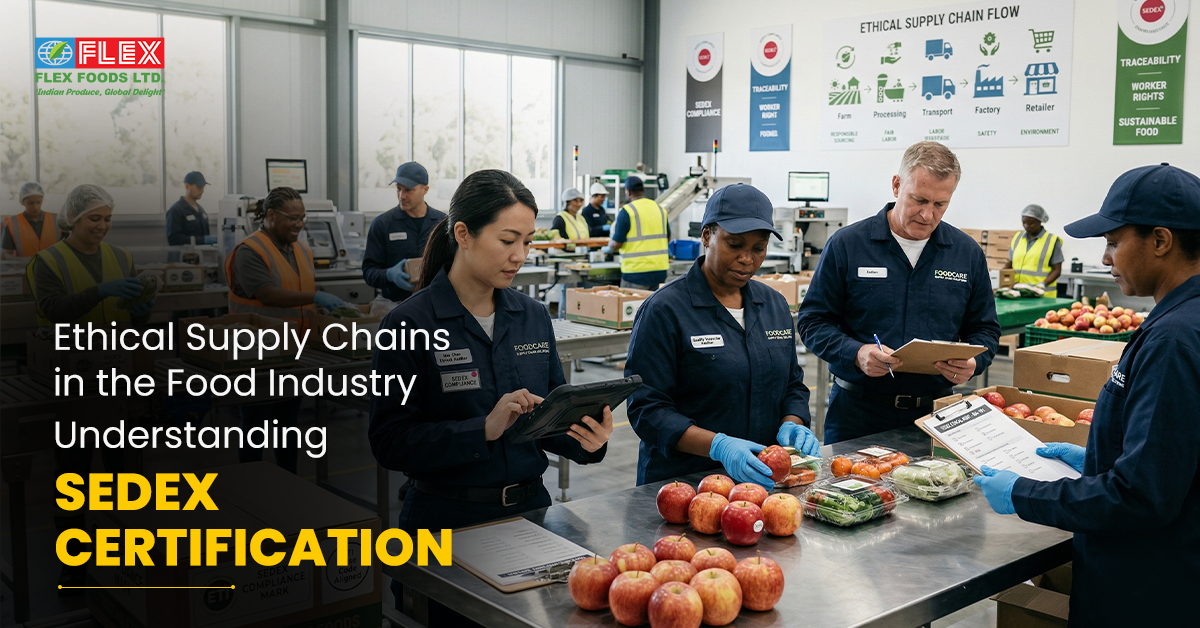
Something fundamental has shifted in how consumers evaluate food products. Price matters, yes. Quality remains important, of course. But increasingly, shoppers demand answers to harder questions: Who picked these ingredients? Were workers paid fairly? Did anyone suffer to bring this product to market?
This shift has transformed ethical sourcing from a nice-to-have corporate value into a non-negotiable business requirement. Food brands can no longer hide behind opaque supply chains or vague sustainability claims. Transparency has become the price of entry into premium markets, and SEDEX provides the framework that makes transparency possible.
For manufacturers of freeze dried food in India, producers of IQF mango, and suppliers of freeze dried herbs, understanding SEDEX isn't just about compliance anymore—it's about survival in markets where ethical standards increasingly determine supplier selection. Major retailers won't stock products from companies that can't demonstrate responsible sourcing. International buyers require proof, not promises, of ethical practices throughout supply chains.
SEDEX, working in conjunction with SMETA audits, offers that proof. The platform enables companies to share ethical data, undergo standardized audits, and demonstrate commitment to responsible business practices that protect workers, communities, and environments across global supply chains.
Learn more about thaw vs defrost
What is SEDEX?
SEDEX—Supplier Ethical Data Exchange—represents something different from traditional certifications. It's not a certificate you hang on a wall. Rather, it's a collaborative platform where suppliers, manufacturers, and buyers share ethical compliance data in standardized formats.
Think of it as LinkedIn for ethical trade, where instead of professional profiles, companies maintain detailed records of labor practices, health and safety protocols, environmental impact, and business ethics. This data becomes accessible to approved buyers and stakeholders, creating unprecedented supply chain transparency.
SEDEX emerged in the early 2000s when UK retailers recognized a problem: each retailer was conducting separate ethical audits of shared suppliers, creating redundant costs and audit fatigue. Why should the same factory undergo five different audits asking essentially the same questions?
The solution? A shared platform where one comprehensive audit could serve multiple buyers. This simple insight has grown into a global network encompassing over 65,000 members across 180 countries, fundamentally transforming how ethical compliance operates in international trade.
Platform, Not Certification: Clearing Up the Confusion
Here's what trips people up: SEDEX itself doesn't certify anyone. The platform hosts data and facilitates information sharing. SMETA—the Sedex Members Ethical Trade Audit—provides the standardized audit methodology that generates the compliance data stored on SEDEX.
This distinction matters enormously. When buyers request "SEDEX certification," they actually mean they want suppliers registered on SEDEX with current SMETA audit results available for review. Understanding this nuance helps manufacturers navigate requirements more effectively.
SMETA Audits: The Engine Driving Ethical Compliance
SMETA audits form the backbone of SEDEX's value proposition. These standardized audits follow consistent methodologies, ensuring comparable results regardless of who conducts the assessment or where the facility operates.
The 2-Pillar audit covers labor standards and health & safety—the fundamental baseline that most buyers require. For producers of freeze-dried food just entering ethical trade programs, this represents the starting point.
The 4-Pillar audit adds environment and business ethics to the assessment. More comprehensive, it demonstrates deeper commitment to responsible practices. Manufacturers of freeze-dried herbs targeting premium European markets often need 4-Pillar audits to meet buyer specifications.
Labor standards scrutiny goes deep. Auditors review employment contracts, payroll records, working hour logs, and overtime calculations. They interview workers—separately from management—asking about conditions, treatment, and whether reality matches documented policies.
Health and safety assessments examine physical facilities, emergency protocols, personal protective equipment availability and use, accident records, and risk management systems. For facilities producing IQF mango, food safety and worker safety intertwine—both require rigorous standards.
Environmental components evaluate waste management, energy consumption, water usage, emissions control, and compliance with local environmental regulations. Business ethics probe transparency, anti-corruption measures, and ethical business conduct.
Read more :Parsley benefits and side effects
Why SEDEX Matters Specifically for Food Industry Operations?
The food industry faces unique ethical challenges that make SEDEX particularly relevant and valuable.
Agricultural supply chains often extend into remote regions where labor exploitation risks run high. Seasonal workers may lack legal protections. Migrant labor faces vulnerability to abuse. Child labor remains a persistent risk in certain commodity crops. SEDEX provides frameworks for identifying and addressing these risks systematically.
Retailers increasingly face pressure from consumers, investors, and regulators to ensure their supply chains operate ethically. They're passing that pressure down to suppliers through mandatory SEDEX participation and regular SMETA audits. For suppliers, resistance means losing business to more compliant competitors.
Why Ethical Compliance Drives Commercial Success?
Beyond avoiding risks, SEDEX participation creates tangible competitive advantages that directly impact business performance.
Major European retailers—Tesco, Sainsbury's, Marks & Spencer—require SEDEX membership from food suppliers. Middle Eastern importers increasingly follow suit. Without SEDEX registration and current SMETA audits, manufacturers simply can't access these lucrative markets.
Indian producers of freeze-dried food eyeing export growth find SEDEX membership non-negotiable for entering premium markets where margins justify the compliance investment. Ethical violations create business continuity risks. Government raids shut down factories. Labor disputes halt production. SMETA audits identify these risks before they explode into crises, allowing proactive remediation.
For companies managing complex supply chains—sourcing freeze-dried herbs from multiple agricultural regions, for example—SEDEX provides systematic risk visibility that informal monitoring can't match.
Consumers pay premiums for products from demonstrably ethical sources. Brands can market their SEDEX participation, differentiating products in crowded markets where price and quality alone no longer suffice for competitive advantage.
SEDEX Certification Process: A Practical Roadmap
Achieving SEDEX compliance and passing SMETA audits requires systematic preparation and commitment across organizational levels.
Registration on the SEDEX platform starts the journey. Companies create profiles, input basic information, and gain access to self-assessment tools. Membership fees vary based on company size and turnover but remain modest compared to audit costs.
The SAQ—Self-Assessment Questionnaire—forces honest evaluation of current practices across labor, health and safety, environment, and business ethics. Smart companies treat SAQ completion as gap analysis, identifying areas needing improvement before external auditors arrive.
Preparation separates successful audits from failures. Documentation must be organized, accessible, and complete. Policies need implementation evidence, not just impressive-sounding statements. Workers require training on their rights and audit processes.
Facilities producing IQF mango might discover seasonal worker documentation gaps or cold storage safety protocol weaknesses through rigorous SAQ completion.
Accredited auditors conduct comprehensive on-site assessments, typically requiring 1-3 days depending on facility size and complexity. They review documents, observe operations, interview workers and management, and assess physical conditions against SMETA criteria.
Most first-time audits identify non-conformities requiring correction. Companies develop corrective action plans addressing identified issues, implementing changes within specified timeframes.
Manufacturers of freeze-dried herbs might need upgraded ventilation systems, enhanced worker training programs, or revised supplier verification procedures based on audit findings. Completed audit reports are uploaded to SEDEX, where approved buyers can access them. Transparency is the point—demonstrating to customers that your operations meet ethical standards they require.
What SEDEX Actually Demands?
SEDEX compliance rests on four foundational pillars, each with specific requirements that food manufacturers must meet.
Freely chosen employment means no forced labor, no bonded labor, no retention of identity documents, and no unreasonable notice requirements. Fair wages require compliance with local minimum wage laws. Working hours must respect local legal limits. Young workers need protection; child labor is absolutely prohibited.
For agricultural operations supplying freeze-dried food, these requirements extend beyond permanent factory workers to seasonal laborers, contract workers, and supply chain partners.
Workplace safety starts with risk assessment. Potential hazards need identification and mitigation. Emergency procedures require documentation, training, and regular drills. Personal protective equipment must be provided free of charge and actually used.
Facilities handling IQF mango face specific considerations: cold storage safety, ammonia refrigeration system management, and food safety protocol integration with worker safety requirements.
Environmental management systems track resource consumption, waste generation, and emissions. Water usage needs monitoring and reduction efforts. Waste management requires proper segregation, storage, and disposal procedures.
Anti-corruption policies prohibit bribery, facilitation payments, and conflicts of interest. Intellectual property must be respected. Honest business practices mean accurate invoicing, truthful marketing, and fair trading.
Recommended Read : difference between parsley and coriander
SEDEX Versus Other Ethical Standards
BRC certification focuses on food safety and quality; SEDEX addresses ethical sourcing and social compliance. Many food manufacturers need both—BRC for product safety credentials, SEDEX for ethical supply chain transparency.
SA8000 provides social accountability certification based on international labor standards. More prescriptive than SEDEX, it certifies specific compliance rather than providing a data-sharing platform.
Fair Trade certification emphasizes farmer welfare and community development, primarily in commodity crops. SEDEX applies more broadly across manufactured products and processed foods, making it relevant for producers of freeze-dried herbs and other value-added products.
Overcoming Common Implementation Challenges
SEDEX implementation presents predictable challenges that proactive planning can mitigate.
Documentation requirements overwhelm companies lacking robust record-keeping systems. The solution involves starting documentation improvement early, dedicating resources specifically to compliance management, and possibly engaging consultants experienced in SEDEX preparation.
Employee training demands time and resources but delivers returns beyond audit success. Well-trained workers operate more safely, understand their rights, and contribute to positive workplace culture that reduces turnover and improves productivity.
Supplier transparency becomes critical for companies sourcing ingredients from multiple sources. Producers purchasing herbs for freeze-dried herb production must ensure their suppliers also meet ethical standards, creating cascading compliance requirements through supply chains.
Conclusion: Ethical Supply Chains as Strategic Advantage
For top food manufacturers like Flex Foods, whether producing freeze-dried food in India, processing IQF mango, or supplying freeze-dried herbs to global markets, SEDEX certification represents far more than compliance overhead.
It's strategic positioning in markets where ethical standards increasingly determine supplier selection. It's risk management protecting against supply chain disruptions and reputation damage. It's brand differentiation in crowded markets where values alignment influences purchasing decisions.
The investment required—membership fees, audit costs, infrastructure improvements, ongoing compliance—generates returns through market access, premium pricing, customer loyalty, and operational improvements that reduce risks while enhancing efficiency.
Ethical sourcing has evolved from optional corporate social responsibility to essential business practice. SEDEX provides the framework, SMETA delivers the verification, and companies that embrace both gain competitive advantages that strengthen with each passing year as global markets demand ever-greater transparency and accountability from food supply chains.
FAQs
Is SEDEX a certification or a platform?
SEDEX is a platform, not a certification. It's a global database where suppliers share ethical compliance data with buyers. SMETA (Sedex Members Ethical Trade Audit) is the audit methodology that generates compliance data stored on SEDEX. When buyers request "SEDEX certification," they mean SEDEX membership with current SMETA audit results.
What is the difference between SEDEX and SMETA?
SEDEX is the online platform for sharing ethical trade data among suppliers and buyers globally. SMETA is the standardized audit methodology used to assess suppliers' ethical practices across labor, health & safety, environment, and business ethics. SMETA audit results are uploaded to the SEDEX platform for buyer access.
How long does an SMETA audit take?
A typical SMETA audit takes 1-3 days on-site, depending on facility size, workforce numbers, and operational complexity. The complete process from SEDEX registration through audit completion spans 6-18 months, including self-assessment, gap remediation, documentation preparation, staff training, the audit itself, and corrective action implementation.
How often is the SEDEX audit required?
SMETA audits are typically required every 12-24 months depending on buyer requirements, audit grade achieved, and risk level. High-performing sites with strong compliance records may qualify for 24-month cycles. Higher-risk operations or those with previous non-conformities often need annual re-audits. Buyers may also request unannounced audits.