Food manufacturers across the globe are moving away from artificial additives and synthetic enhancers. This shift is driven by consumer demand for clean labels and transparent ingredient sourcing. Shoppers increasingly associate natural ingredients with better quality and safety. As a result, formulation strategies are being redesigned to prioritize nature-derived components.
Natural flavor and color ingredients also help brands build trust and long-term loyalty. Regulatory scrutiny around artificial colors and flavors continues to intensify in many markets. Manufacturers are under pressure to reformulate without compromising taste or visual appeal. This has accelerated interest in ingredients that deliver both sensory and functional value.
Learn more about mango brix level
Why Mango Is a Preferred Ingredient for Flavor and Color?
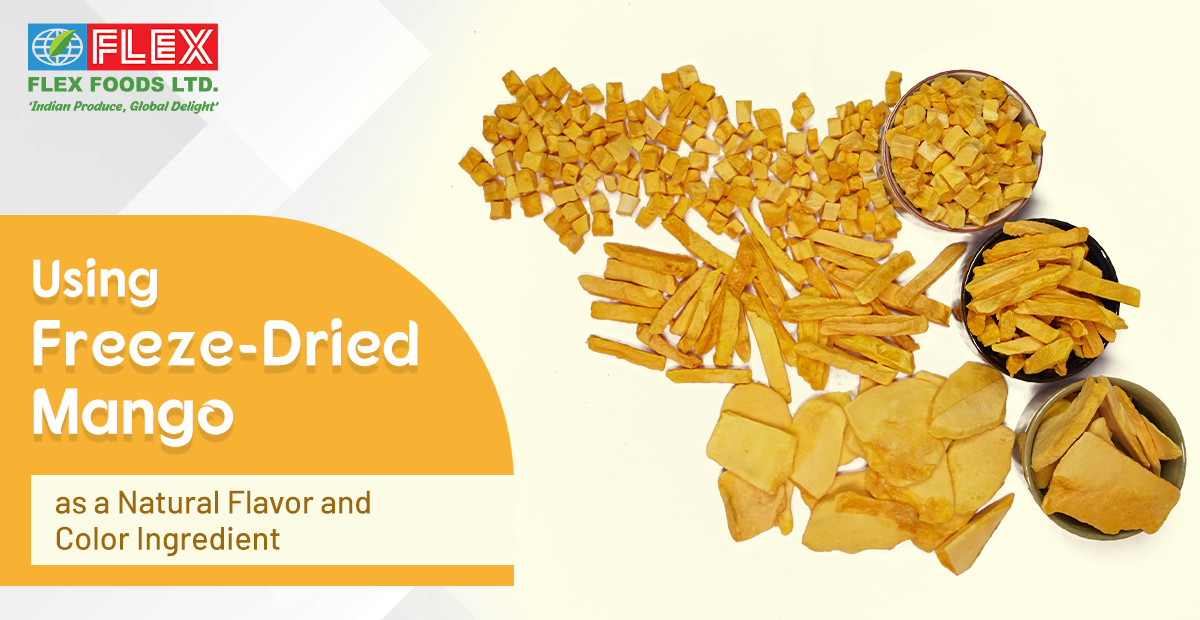
Mango offers a naturally rich flavor profile that balances sweetness with subtle acidity. Its vibrant golden-orange hue adds visual appeal without the need for synthetic coloring agents. The fruit’s universal familiarity makes it suitable for a wide range of product categories. From beverages to bakery fillings, mango integrates seamlessly into diverse formulations.
Beyond its sensory attributes, mango is associated with freshness and tropical indulgence. Consumers often perceive mango-based products as premium and wholesome. This perception enhances product positioning across retail and foodservice channels. For manufacturers, mango becomes both a flavor solution and a branding asset.
Read more : freeze dried fruit is it healthy
Understanding the Freeze-Drying Process for Mango
Freeze-drying preserves mango by removing moisture while maintaining its cellular structure. The process begins with freezing the fruit, followed by sublimation under controlled pressure. Unlike thermal drying, this method avoids heat-induced degradation. As a result, the mango retains its natural flavor compounds and color intensity.
The absence of moisture significantly improves product stability and shelf life. Nutritional components such as vitamins and antioxidants remain largely intact. The resulting ingredient can be milled into powders or used in particulate form. This versatility makes freeze-dried mango suitable for multiple formulation needs.
Flavor Integrity and Aroma Preservation
One of the key advantages of freeze drying is its ability to preserve volatile flavor compounds. Mango’s distinctive aroma is highly sensitive to heat and oxidation. Freeze-drying minimizes these risks by operating at low temperatures. The outcome is a flavor profile that closely resembles fresh fruit.
This preservation of aroma enhances the overall sensory experience of finished products. Manufacturers can achieve consistent flavor delivery across batches. It also reduces the need for added natural flavor extracts. In clean-label formulations, this simplicity is especially valuable.
Recommended Read : Are freeze dried strawberries good for you
Natural Color Enhancement Without Synthetic Additives
Color plays a critical role in consumer perception and purchase decisions. Freeze-dried mango delivers a naturally vibrant hue that remains stable during processing. This eliminates the need for artificial colorants or chemically derived alternatives. The visual appeal aligns well with clean-label and natural product claims.
Natural coloring from mango is particularly effective in applications where transparency matters. Beverages, confectionery, and dairy products benefit from its warm, inviting tone. The color integrates evenly, ensuring uniform appearance. This consistency supports brand quality standards across product lines.
Functional Benefits in Product Formulation
Freeze dried mango offers functional advantages beyond flavor and color. Its low moisture content improves formulation control and reduces water activity. This contributes to better texture stability and longer shelf life in finished products. Manufacturers gain greater flexibility during processing and storage.
The ingredient also performs well in dry blends and ready-to-mix applications. It disperses easily when properly milled and blended. This makes it suitable for powdered beverages, seasoning mixes, and snack coatings. Functional reliability simplifies scaling and commercial production.
Applications Across Food and Beverage Categories
Freeze-dried mango is widely used in beverages, including smoothies, nutritional drinks, and flavored waters. Let’s explore the use cases in detail below:
-
Beverages (Smoothies, RTD Drinks, Functional Beverages)
Freeze-dried mango is widely used in beverages for its concentrated flavor and natural sweetness. It dissolves well when powdered, delivering a consistent taste without overpowering other ingredients. The natural color also enhances visual appeal, especially in clear or lightly colored drinks. This makes it suitable for smoothies, flavored waters, and functional nutrition beverages.
-
Bakery Products (Fillings, Icings, Cakes, and Cookies)
In bakery applications, freeze-dried mango adds both flavor depth and a vibrant hue. It performs well in fillings, frostings, and glazes without introducing excess moisture. The ingredient maintains stability during baking and post-bake handling. This helps manufacturers achieve consistent quality and extended shelf life.
-
Dairy and Plant-Based Alternatives
Yogurts, ice creams, and plant-based desserts benefit from mango’s natural sweetness and aroma. Freeze-dried mango integrates smoothly into both dairy and non-dairy bases. It enhances flavor without masking the base product. Its stable color ensures visual consistency throughout the product’s shelf life.
-
Snack Foods and Nutrition Bars
Freeze-dried sweet corn and mango is commonly used in snack bars, cereals, and trail mixes. It provides a pleasant texture contrast while delivering a recognizable fruit taste. The lightweight nature of the ingredient supports efficient portion control. This makes it ideal for health-focused and on-the-go snack formats.
-
Confectionery and Chocolate Products
In confectionery, freeze-dried mango adds a natural fruity note that pairs well with chocolate and sugar-based systems. It can be used as inclusions, coatings, or flavor components. The ingredient retains its sensory properties without melting or bleeding. This ensures clean processing and appealing finished products.
-
Dry Mixes and Ready-to-Use Powders
Freeze-dried mango performs reliably in instant drink mixes, dessert powders, and seasoning blends. Its low moisture content improves flowability and storage stability. The flavor remains consistent over time. This makes it suitable for large-scale manufacturing and long distribution cycles.
Read more : What is thawing process
Supporting Clean-Label and Regulatory Compliance
Clean-label formulations require ingredients that are easy to understand and justify. Freeze-dried mango fits well into this framework due to its minimal processing perception. Ingredient lists remain short and recognizable. This supports compliance with evolving labeling regulations.
Regulatory bodies often scrutinize artificial additives more closely than natural ingredients. Using fruit-based components can reduce compliance complexity. It also facilitates smoother entry into export markets with strict standards. Manufacturers benefit from reduced reformulation risks.
Read more : Is dried parsley good for you
Shelf Stability and Supply Chain Advantages
The extended shelf life of freeze-dried mango reduces dependence on refrigerated storage. This simplifies logistics and lowers transportation costs. Products can be shipped and stored at ambient temperatures without quality loss. These efficiencies improve overall supply chain resilience.
Stable ingredients also reduce the risk of waste due to spoilage. Inventory management becomes more predictable and cost-effective. Seasonal mango availability can be balanced through year-round usage. This reliability supports consistent production planning.
Consumer Perception and Market Differentiation
Consumers increasingly associate fruit-based ingredients with health and authenticity. Freeze-dried mango supports this perception by offering real fruit benefits. Products featuring mango often stand out on shelves due to their natural appeal. This differentiation strengthens brand positioning.
Transparency in ingredient sourcing further enhances consumer trust. Brands can highlight the use of real fruit rather than artificial substitutes. This storytelling resonates with health-conscious and premium-seeking audiences. Over time, it builds stronger emotional connections with customers.
Cost Considerations and Value Optimization
While freeze-dried ingredients may have higher upfront costs, they offer long-term value. Reduced waste, improved stability, and lower logistics expenses offset initial investment. Consistent quality minimizes batch rejections and reformulation costs. These factors contribute to better cost control.
The concentrated nature of freeze-dried mango also improves yield efficiency. Smaller quantities deliver a strong sensory impact. This reduces overall ingredient usage in formulations. Manufacturers can optimize costs without compromising product quality.
Sustainability and Resource Efficiency
Using freeze-dried mango supports sustainability goals by reducing food loss. Surplus fruit can be preserved at peak ripeness instead of being discarded. This maximizes the value of agricultural output. Efficient resource use aligns with environmental responsibility.
Lower refrigeration needs also reduce energy consumption across the supply chain for products like freeze-dried kale. Packaging requirements are simplified due to ambient stability. These combined benefits lower the environmental footprint of food production. Sustainability becomes a measurable advantage rather than a marketing claim.
Future Outlook for Natural Fruit Ingredients
Demand for natural flavor and color ingredients is expected to grow steadily. Consumers continue to favor products with minimal processing and recognizable sources. Freeze-drying technology supports this trend by preserving authenticity. Mango, in particular, remains a popular choice across global markets.
Innovation in processing and application methods will further expand usage possibilities. As brands refine clean-label strategies, fruit-based ingredients will play a central role. Freeze-dried mango from Flex Foods stands out as a multifunctional solution. Its balance of flavor, color, and stability positions it well for future food innovation.
FAQs
How does particle size impact the performance of freeze-dried mango in formulations?
Particle size influences dispersion, mouthfeel, and visual appearance in finished products. Selecting the right grind helps manufacturers tailor performance for liquids, dry blends, or inclusions.
Can freeze-dried mango be blended with other natural ingredients without flavor loss?
Yes, it blends well with spices, dairy bases, and plant proteins when ratios are carefully controlled. Proper blending prevents flavor masking and ensures balanced taste profiles.
How does freeze-dried mango behave during rehydration?
When rehydrated, it regains much of its original texture and flavor. This makes it useful in applications where a fresh-like fruit experience is required after moisture addition.
Is freeze-dried mango suitable for long-term storage in varying climates?
Its low moisture content allows it to remain stable across a wide range of temperatures. With appropriate packaging, quality can be maintained even in humid or warm environments.
What quality parameters should manufacturers check when sourcing freeze-dried mango?
Key parameters include color uniformity, flavor intensity, moisture level, and microbiological stability. Consistency across batches is essential for reliable large-scale production.