International buyers sourcing organic food products need more than a supplier’s claim that a product is organic. They need evidence that production, processing, handling, storage, and documentation have been independently assessed against recognized standards. This is especially important when products move through multiple suppliers, processors, warehouses, and export channels before reaching the final market.
For buyers sourcing organic products across international markets, third-party certification can provide additional confidence in production practices, documentation, traceability, and compliance. IMO certification functions as an independent verification mechanism rather than a marketing statement. Buyers often use certification as one of several tools for evaluating supplier reliability and supply-chain transparency.
What Is IMO Organic Certification?
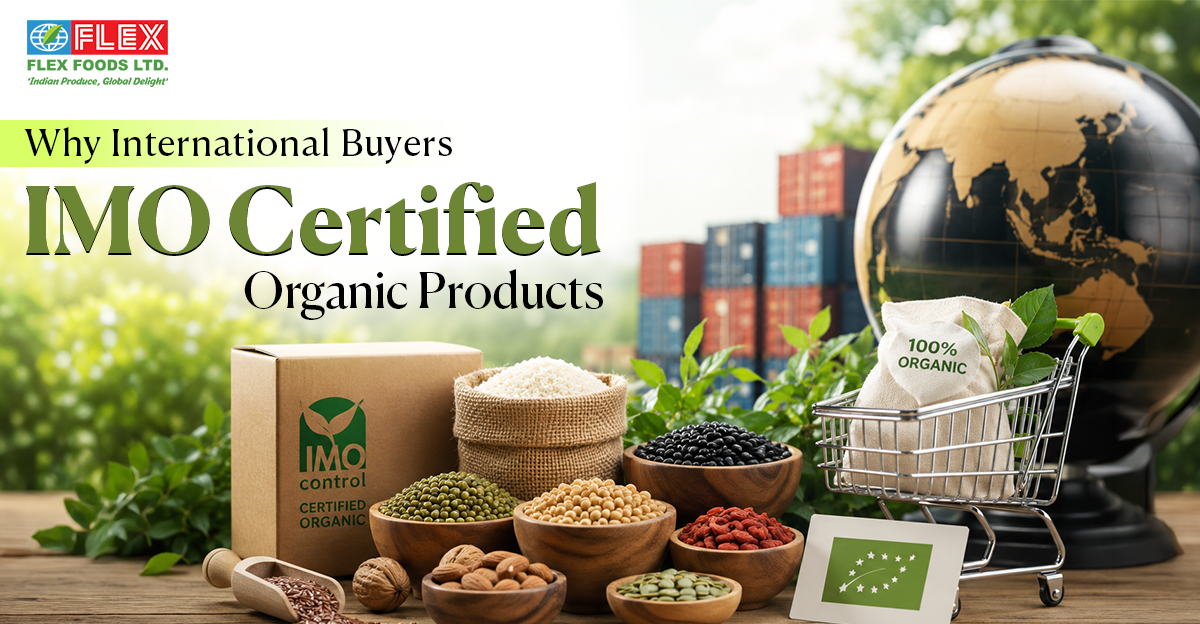
IMO Control is an independent certification and inspection organization that provides certification services under various organic standards and programmes. Organic certification involves assessment of eligible production, processing, handling, and related operations against defined certification requirements. The process includes review of operational practices, records, facilities, personnel, and supporting documentation. Inspection, traceability verification, and risk-based sampling or testing may also form part of the certification process.
Learn more about parsley vs coriander
Why Does Organic Certification Matter to International Buyers?
Organic certification matters because buyers often purchase products from suppliers located in different countries and regulatory environments. Independent certification helps reduce reliance on self-declared claims and provides a structured basis for supplier evaluation. Buyers can review certificates, inspection status, product scope, and traceability records as part of their procurement process. Certification can therefore support transparency and help reduce sourcing uncertainty.
Certification can also assist buyers in understanding whether a supplier has documented systems for organic production, processing, storage, and handling. However, certification alone does not guarantee that a product automatically satisfies every requirement of every destination market. Buyers must still confirm the applicable standard, certificate scope, import regulations, and customer-specific requirements. Regulatory compliance remains the responsibility of both the exporter and the importer.
Know more about the thawing process
7 Reasons International Buyers Value IMO Certified Organic Products
1. Independent Third-Party Verification
International buyers generally place greater confidence in claims that have been independently verified rather than self-declared. Third-party certification introduces an external review process that examines operational practices, records, facilities, and traceability systems. This independent assessment can improve credibility during supplier qualification and procurement discussions. Buyers often regard independent verification as a stronger basis for commercial evaluation.
2. Greater Confidence in Organic Production
Certification provides buyers with additional confidence that defined production and processing requirements have been evaluated within the approved certification scope. Buyers can review documented controls relating to inputs, processing, handling, storage, and record keeping. This is particularly useful when sourcing ingredients from multiple origins or production systems. Consistent documentation can support more informed purchasing decisions.
3. Better Supply-Chain Traceability
Role of traceability in modern food processing is a major concern for international food buyers because products frequently move through several stages before export. Certification systems generally require documented records that help connect raw materials, processing batches, storage, packing, and shipment information. Buyers can therefore understand how products move through the supply chain and identify relevant records when needed. Strong traceability supports procurement, quality assurance, and audit readiness.
4. Stronger Export Compliance
Different international markets may require certification under specific organic standards or recognized programmes. Recognized certification can help exporters demonstrate that their operations have been assessed against the applicable standard identified on the certificate. Buyers still need to confirm whether that certification is appropriate for the intended destination market and product category. Certification should therefore be viewed as a compliance tool, not a universal market approval.
5. Reduced Procurement Risk
International procurement teams often evaluate risks related to supplier authenticity, documentation quality, traceability, organic claims, and certification validity. Certification can provide structured documentation that assists buyers during due diligence and supplier review. It may also help identify whether a supplier maintains documented operational controls and records. Reduced uncertainty can simplify procurement assessment and supplier monitoring activities.
6. Easier Supplier Qualification
Many buyers include certification status in their supplier-qualification process. A recognized certificate can provide readily reviewable information such as certification body, standard, scope, product category, facility coverage, and validity period. Procurement teams can use this information alongside food safety, quality, and commercial evaluations. Certification can therefore streamline part of the supplier-assessment process.
7. Stronger International Market Positioning
Organic certification can strengthen the credibility of exporters competing in international markets where buyers compare multiple suppliers. Certified suppliers are often better positioned to participate in procurement enquiries that specifically request certified organic products. Certification does not guarantee international sales, but it can support supplier differentiation and buyer confidence. Commercial success still depends on quality, pricing, service, capacity, and market demand.
How IMO Certification Builds Trust Between Exporters and Buyers?
Trust in international food trade is usually built through a combination of independent verification, documented controls, and transparent communication. Certification creates a structured framework in which inspection findings, records, traceability systems, and operational procedures can be reviewed by the certification body. Buyers can then evaluate documented evidence rather than relying solely on verbal assurances. This process supports a more transparent commercial relationship.
The trust pathway can be understood as:
Certification → Independent Inspection → Documentation → Traceability → Compliance Verification → Buyer Confidence.
Each stage contributes to greater visibility into how organic products are produced, processed, stored, and exported. When documentation is clear and traceability is maintained, buyers can conduct audits and verification activities more effectively. Stronger transparency often supports longer-term supplier relationships.
What Does IMO Organic Certification Cover?
IMO certification can apply to several types of organic operations depending on the applicable programme and certification scope. Coverage may include organic agriculture, processing, export or trading activities, animal husbandry, wild collection, apiculture, and aquaculture. Buyers should review the actual certificate to confirm which activities are included for a specific supplier. Certification scope is always operation-specific.
IMO Certification vs Organic Claims
Saying a product is “organic” is not necessarily the same as being certified organic. Organic claims may be subject to specific legal, certification, and labelling requirements depending on the destination market. A self-declared claim may provide limited assurance unless supported by recognized certification and documentation. Buyers therefore often request certificates and supporting records before accepting organic claims.
Third-party certification introduces an independent verification process that examines operational controls, records, and compliance with a defined standard. Destination-market compliance is a separate consideration that may involve import regulations, equivalence arrangements, labelling rules, and buyer-specific requirements. Buyers should distinguish between a marketing claim, a valid certificate, and actual market eligibility. This distinction is essential for international procurement decisions.
Read more: What does blanching vegetables mean?
How International Buyers Can Verify an IMO Certified Supplier?
Buyers should begin by requesting a current copy of the supplier’s certificate and reviewing the certification body, standard, validity period, and product scope. The certificate should clearly identify the certified operator and the activities covered by certification. Buyers should also confirm that the relevant processing facility is included in the approved scope. Expired or incomplete certificates should be clarified before purchase.
Additional verification may include reviewing transaction certificates, traceability records, batch documentation, supplier declarations, and export-related documents where applicable. Buyers should confirm that the certified products match the products being purchased and that the certification standard is appropriate for the destination market. Where available, certified-supplier directories or verification tools may provide additional confirmation. Independent verification is particularly important for high-value organic ingredients.
What International Buyers Should Ask Organic Suppliers?
Buyers should ask suppliers which organic standard applies to the product and which certification body issued the certificate. They should also request confirmation that the certificate is currently valid and covers the specific products and facilities being supplied. Questions about processing activities, export scope, traceability documentation, and residue-testing records can provide additional assurance. Destination-market compatibility should always be confirmed before shipment.
A practical buyer checklist includes the following questions: Which standard is applicable? Who issued the certificate? Is the certificate valid? Which products are covered? Which facilities are covered? Is processing included? Is export or trading included? Can traceability records be provided? Are testing records available where applicable? Does the certification meet the requirements of the destination market? These questions help structure supplier due diligence.
Benefits of IMO Certification for Indian Food Exporters
For Indian food exporters, recognized organic certification can strengthen credibility with overseas buyers and support participation in international procurement programmes. Buyers often prefer suppliers that maintain documented organic systems, traceability records, and certification oversight. Certification can also support export positioning when competing with suppliers from other countries. Strong documentation is frequently an important commercial advantage.
Certification may be particularly useful for exporters supplying processed organic ingredients and value-added food products. Companies involved in IQF frozen vegetables, dehydrated herbs such as dehydrated parsley, and other processed organic ingredients can benefit from demonstrating documented handling and traceability controls. Exporters operating as freeze dried vegetables manufacturers in India may also use certification as part of their supplier-qualification and export positioning strategy. Commercial acceptance, however, still depends on product quality, pricing, service, and buyer requirements.
Does IMO Certification Guarantee International Market Access?
No. IMO certification does not automatically guarantee access to every international market. Buyers and exporters must confirm the certification standard, certificate scope, product category, and destination-market requirements applicable to the specific product being traded. Import regulations, equivalence arrangements, labelling rules, and buyer-specific conditions may still apply. Certification is therefore one important requirement, not a complete guarantee of market access.
Because IMO operates across multiple certification standards and programmes, exporters must identify the correct certification pathway for each target market. A certificate that is appropriate for one market may not automatically satisfy another market’s requirements. Buyers should review the applicable standard and supporting documentation before approving a supplier. Careful market-specific verification remains essential.
Why Flex Foods’ Organic Certification Matters to Global Buyers?
For global buyers, supplier certification is most useful when it is supported by current, verifiable certification documentation and clearly defined operational scope. Buyers typically review certified processing activities, product coverage, handling controls, traceability systems, and export documentation before approving a supplier. Transparent documentation and documented operational controls that Flex Foods has can support buyer confidence during supplier qualification. Current certification status should always be verified directly from the supplier’s valid certificate.
Where a supplier holds applicable organic certification for specific products or facilities, that certification can support discussions with overseas buyers regarding organic handling, processing, and export capability. Buyers should confirm the exact standard, certified products, certified facilities, and certificate validity relevant to the intended purchase. Accurate scope verification is essential before making organic procurement decisions. This approach supports a more reliable and transparent sourcing process.
FAQs
Does IMO certification cover organic processing?
Yes. IMO certification can cover organic processing activities when the processing operation is included within the approved certification scope. The certification process generally evaluates ingredient sourcing, processing controls, segregation of organic and non-organic materials, cleaning procedures, storage, packaging, labelling, traceability, and record keeping. Buyers should always verify the specific processing scope shown on the supplier’s valid certificate.
Can Indian exporters obtain IMO organic certification?
Yes. Indian exporters can obtain IMO organic certification through the applicable certification programme and certification process available for their operation and target market. Exporters must undergo inspection, provide documentation, implement organic controls, and comply with the relevant standard identified on the certificate. The approved scope, products, facilities, and export activities should be verified before international shipments are made.
Is IMO certification the same as USDA Organic certification?
No. IMO certification is not automatically the same as USDA Organic certification. IMO Control may provide certification services under different standards or programmes, but exporters must confirm the applicable USDA National Organic Program pathway and approved scope for their specific operation and products. Buyers should verify the actual certification standard listed on the certificate rather than assuming USDA Organic status.
Is IMO certification the same as NPOP certification?
No. IMO certification and NPOP certification are not identical terms. NPOP is India’s National Programme for Organic Production, while IMO Control is a certification body that may provide certification under NPOP and other organic standards where authorized. Buyers should check which standard is identified on the certificate and confirm the approved products, facilities, and activities covered by that certification scope.
What documents should an international buyer request from an organic supplier?
International buyers should request a valid organic certificate, scope certificate, product list, facility coverage details, transaction certificates where applicable, traceability records, batch or lot records, invoices, shipping documents, and any relevant testing or residue records. Buyers should also verify certificate validity, applicable organic standard, processing scope, and destination-market suitability before approving the supplier for organic procurement.
How does organic certification support supply-chain traceability?
Organic certification supports supply-chain traceability by requiring documented records that connect raw materials, suppliers, processing batches, storage, packing, and export shipments. These records help buyers trace products through the supply chain and verify product identity during audits, inspections, or investigations. Strong traceability systems improve transparency, support recall readiness, and strengthen confidence in certified organic supply chains.