The global food preservation industry has witnessed remarkable transformation over the past decade, with freeze-dried mushrooms emerging as a premium alternative to traditionally dehydrated products. As consumers increasingly demand nutrient-dense foods with extended shelf life, food processors and exporters face a critical decision: which preservation method delivers superior quality, marketability, and return on investment?
Freeze-drying and dehydration represent the two dominant preservation methods, each offering distinct advantages and limitations. Understanding these differences proves essential for manufacturers, exporters, and consumers seeking optimal nutrition, flavor, and value. This comprehensive comparison examines how these methods stack up across critical factors including nutritional retention, taste quality, shelf life, production costs, and commercial applications.
Learn more about parsley vs coriander
What Are Freeze-Dried Mushrooms?
The freeze drying process begins with carefully selected, fresh mushrooms that undergo thorough cleaning and precise slicing to ensure uniform drying. Mushrooms are then rapidly frozen at extremely low temperatures, typically between -40°C to -50°C, which creates small ice crystals that preserve cellular structure.
Once frozen solid, the mushrooms enter a vacuum chamber where pressure drops dramatically often to just 1% of normal atmospheric pressure. Under these conditions, controlled heating causes ice crystals to sublimate directly into vapor, bypassing the liquid phase entirely. This gentle process preserves the mushroom's original structure, nutrients, and flavor compounds that would otherwise degrade under conventional heat drying.
The sublimation phase continues for 20-40 hours depending on mushroom thickness and moisture content. Finally, the dried mushrooms undergo packaging in moisture-barrier containers, often with oxygen absorbers, to prevent rehydration and oxidation during storage and transportation.
Key Characteristics of Freeze-Dried Mushrooms
Freeze-dried mushrooms exhibit several distinctive qualities that set them apart from other preserved forms. Their lightweight, porous structure makes them incredibly easy to transport and store—a kilogram of fresh mushrooms typically yields just 80-100 grams of freeze-dried product. Despite dramatic weight reduction, freeze-dried mushrooms retain their original shape with minimal shrinkage, an aesthetic quality valued in premium food applications.
Rehydration occurs remarkably fast, often within 5-10 minutes in warm water, as the porous structure readily absorbs moisture. Most impressively, freeze-dried mushrooms retain 90-97% of their original nutritional content, including heat-sensitive vitamins, minerals, and bioactive compounds that contribute to their health benefits.
What Are Dehydrated Mushrooms?
Dehydration represents humanity's oldest food preservation method, relying on heat and airflow to remove moisture from food. Modern commercial dehydration uses controlled temperature and humidity in specialized equipment, but the fundamental principle remains unchanged: evaporating water through sustained heat exposure.
The Dehydration Process
Commercial mushroom dehydration begins with washing and slicing fresh mushrooms to appropriate thickness—typically 3-6mm for uniform drying. The prepared mushrooms are spread on trays and loaded into industrial dehydrators or hot air dryers.
During drying, heated air circulates around the mushrooms at temperatures ranging from 50°C to 70°C. This sustained heat causes moisture within the mushrooms to evaporate gradually over 4-8 hours. As moisture evaporates, mushrooms shrink significantly, losing 80-90% of their original weight. Once moisture content drops below 10%, the dried mushrooms are cooled and packaged in moisture-proof containers.
Key Characteristics of Dehydrated Mushrooms
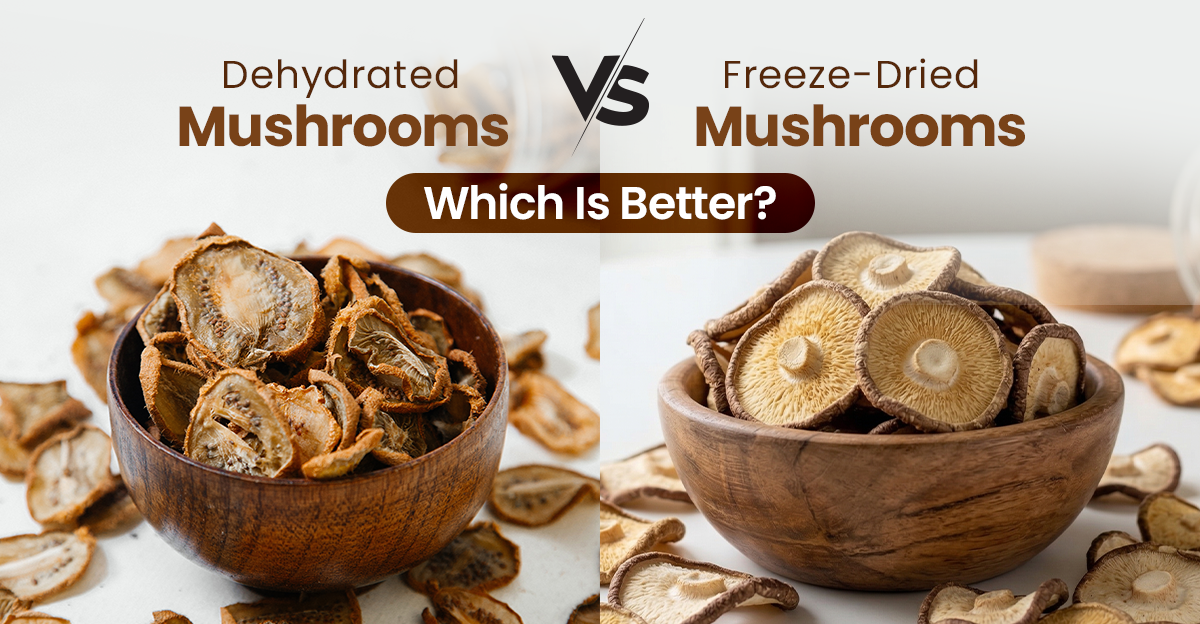
Dehydrated mushrooms display noticeably shriveled texture and darker coloration compared to their fresh or freeze-dried counterparts. The heat-induced shrinkage creates a denser, chewier product that requires longer rehydration time—typically 20-30 minutes in hot water.
While dehydration effectively extends shelf life and reduces transportation costs, the process operates at significantly lower production costs than freeze-drying. This cost advantage makes dehydrated mushrooms accessible for bulk food manufacturing and budget-conscious consumers, though with some compromise in nutritional quality and flavor preservation.
Freeze-Dried vs Dehydrated Mushrooms – Key Differences
Nutritional Value: The Critical Distinction
Nutritional retention separates freeze-drying from dehydration most dramatically. Freeze-dried mushrooms preserve 90-95% of vitamins, minerals, antioxidants, and bioactive compounds present in fresh mushrooms. The low-temperature, oxygen-free environment prevents degradation of heat-sensitive nutrients like B vitamins, vitamin C, and polyphenolic compounds that contribute to mushrooms' health-promoting properties.
Dehydration's sustained heat exposure causes significant nutrient degradation. Studies indicate that conventional dehydration reduces vitamin content by 30-50%, with particularly severe losses in thiamin, riboflavin, and ascorbic acid. Heat also degrades certain antioxidant compounds and can reduce the bioavailability of minerals. For health-conscious consumers and nutraceutical applications, this nutritional difference proves decisive.
Read more: Are frozen vegetables healthy?
Taste and Flavor Preservation
Fresh mushrooms owe their distinctive umami flavor to glutamate compounds and numerous volatile aromatic molecules. Freeze-dried mushrooms maintain these flavor compounds exceptionally well because the low-temperature process prevents chemical changes that occur during heating. When rehydrated, freeze-dried mushrooms deliver a taste remarkably similar to fresh mushrooms.
Dehydrated mushrooms develop more concentrated flavor as moisture removal intensifies taste compounds. However, heat exposure also triggers chemical reactions that alter flavor profiles, sometimes creating slightly caramelized or cooked notes. While some chefs appreciate this concentrated, altered flavor in specific applications, it differs noticeably from fresh mushroom taste.
Texture and Appearance
Texture dramatically influences consumer perception and culinary applications. Freeze-dried mushrooms, like frozen vegetables in India, maintain their original shape with minimal structural collapse because ice crystals sublimate without creating the cellular damage caused by liquid water movement. This preservation of cellular structure means freeze-dried mushrooms look remarkably similar to fresh mushrooms, making them ideal for applications where appearance matters.
Dehydrated mushrooms shrink substantially as heat causes cell walls to collapse and moisture migrates outward. The resulting product appears darker, denser, and noticeably shriveled. While this doesn't affect flavor significantly, the altered appearance makes dehydrated mushrooms less suitable for dishes where visual presentation is paramount.
Rehydration Quality
Rehydration speed and quality directly impact culinary convenience. Freeze-dried mushrooms rehydrate quickly and evenly because their porous structure readily absorbs water. Within 5-10 minutes in warm water, they regain nearly original texture and appearance. This rapid rehydration suits instant meals, camping foods, and quick-preparation dishes.
Dehydrated mushrooms require 20-30 minutes of soaking in hot water due to their dense, collapsed structure. Even after extended soaking, they may not fully regain the tender texture of fresh mushrooms, instead retaining a slightly chewier consistency. For slow-cooked dishes like soups and stews, this difference becomes negligible, but it matters for quick-cooking applications.
Shelf Life Comparison
Properly stored freeze-dried mushrooms can maintain quality for 20-25 years when kept in airtight, moisture-proof packaging with oxygen absorbers. This exceptional shelf life results from the near-complete moisture removal (typically below 2% moisture content) and the absence of oxidative damage during processing.
Dehydrated mushrooms offer respectable shelf life of 1-3 years under proper storage conditions, though they retain higher residual moisture (8-12%) that limits long-term stability. While adequate for most commercial applications and home use, this shorter shelf life requires more frequent rotation in inventory systems.
Cost and Production Economics
Freeze-drying equipment requires substantial capital investment—industrial freeze-dryers cost hundreds of thousands to millions of dollars. The process also consumes significant energy and time, with cycles lasting 24-48 hours. These factors make freeze-dried products considerably more expensive, typically 3-5 times the cost of dehydrated equivalents.
Dehydration equipment is relatively simple and affordable, with industrial dehydrators available at a fraction of freeze-dryer costs. The faster processing time and lower energy consumption translate to significantly reduced production costs. This economic advantage makes dehydrated mushrooms the practical choice for price-sensitive markets and bulk food manufacturing.
Nutritional Comparison Table
| Feature | Freeze-Dried Mushrooms | Dehydrated Mushrooms |
|---|---|---|
| Nutrient Retention | 90-97% | 50-70% |
| Texture | Natural, porous | Shrunken, dense |
| Rehydration Speed | 5-10 minutes | 20-30 minutes |
| Shelf Life | 20-25 years | 1-3 years |
| Production Cost | High | Low |
| Flavor | Fresh-like | Concentrated, altered |
| Weight Reduction | 90-95% | 80-90% |
| Appearance | Original shape | Shriveled |
Which Is Better for Commercial Food Production?
Freeze-Dried Mushrooms Excel In
Premium food brands leverage freeze-dried mushrooms to differentiate products through superior quality. Instant meals and soups benefit from rapid rehydration and fresh-like taste that consumers expect from convenience foods. The nutraceutical industry particularly values freeze-dried mushrooms for supplements and functional foods, where nutritional integrity justifies premium pricing.
High-value export markets in developed countries increasingly demand freeze-dried products. Health-conscious consumers willing to pay premium prices for nutrient-dense foods drive this trend. The exceptional shelf life also benefits disaster preparedness markets and military food supplies requiring decades-long stability.
Dehydrated Mushrooms Dominate In
Bulk food processing relies heavily on dehydrated mushrooms where cost efficiency outweighs marginal quality differences. Restaurant supply chains purchase dehydrated mushrooms for incorporation into sauces, seasonings, and prepared dishes where cooking processes further transform texture and flavor. Budget-friendly food products targeting price-sensitive consumers depend on dehydration's economic advantages.
Many traditional food manufacturers continue using dehydration because existing infrastructure, established supply chains, and consumer acceptance make transition costs prohibitive. For applications where mushrooms undergo significant additional processing, dehydration's nutritional compromises become less consequential.
Recommended Read : Benefits of blanching vegetables
Advantages of Freeze-Dried Mushrooms
Superior nutrient retention makes freeze-dried mushrooms the clear choice for health-focused applications. The preservation of vitamins, minerals, and bioactive compounds means consumers receive nutritional benefits comparable to fresh mushrooms. The lightweight nature dramatically reduces transportation costs—a particularly important factor for air freight and long-distance shipping where weight-based pricing applies.
The exceptional 20-25 year shelf life eliminates waste from spoilage while enabling manufacturers to maintain stable inventory without frequent rotation. Premium market positioning allows higher profit margins that can justify the elevated production costs. Finally, excellent rehydration quality ensures consumer satisfaction and repeat purchases, building brand loyalty in competitive markets.
Advantages of Dehydrated Mushrooms
Lower production costs make dehydrated mushrooms accessible to budget-conscious manufacturers and consumers. The simple processing method requires minimal technical expertise and can be implemented with basic equipment, enabling small-scale producers to enter the market. Suitability for bulk manufacturing allows economies of scale that further reduce per-unit costs.
Wide availability makes dehydrated mushrooms the default choice in many markets, particularly in developing regions. The established supply chains, consumer familiarity, and proven track record reduce market entry risks. For applications where extreme nutritional preservation isn't critical, dehydration delivers acceptable quality at competitive prices.
Common Uses of Freeze-Dried and Dehydrated Mushrooms
Freeze-dried mushrooms dominate instant soup formulations where rapid rehydration and fresh taste are essential. Ready-to-eat meals, particularly camping foods and emergency rations, rely on freeze-dried ingredients for lightweight portability and long shelf life. The snack food industry increasingly incorporates freeze-dried mushrooms as healthy, crispy additions to trail mixes and vegetable chips. Nutritional supplement manufacturers use freeze-dried mushroom powders in capsules and functional food formulations.
Much like freeze dried mango has revolutionized the healthy snack market by offering intense flavor and nutrition in shelf-stable form, freeze-dried mushrooms are creating new product categories. The technology's ability to preserve delicate flavors and nutrients while creating unique textures has inspired innovation across food categories.
Dehydrated mushrooms find their primary application in sauces and gravies where they're cooked extensively, making rehydration speed irrelevant. Seasoning blends incorporate dehydrated mushroom powder for umami enhancement in spice mixes and bouillon cubes. The powdered food ingredients industry uses dehydrated mushrooms in everything from instant noodle seasoning packets to powdered soup bases. Restaurants regularly stock dehydrated mushrooms for incorporation into dishes during cooking, where the extended cooking time naturally rehydrates them.
Conclusion
Freeze-dried mushrooms from Flex Foods offer demonstrably superior nutrition, texture, flavor preservation, and shelf life compared to dehydrated alternatives. These advantages position them ideally for premium food brands, health-focused consumers, and applications where quality justifies higher costs. The technology's ability to preserve mushrooms' nutritional integrity while creating shelf-stable products addresses modern consumer demands for convenient, healthy foods.
Freeze-drying represents the future of premium mushroom products as consumer health consciousness and purchasing power grow globally. However, dehydration remains essential for large-scale food processing where affordability and adequate quality meet market needs. Understanding each method's strengths and limitations enables informed decisions that align preservation technology with business objectives and customer expectations.
Frequently Asked Questions (FAQ)
Are freeze-dried mushrooms healthier than dehydrated mushrooms?
Yes, freeze-dried mushrooms retain 90-97% of vitamins, antioxidants, and bioactive compounds compared to 50-70% retention in dehydrated mushrooms. The low-temperature freeze-drying process prevents degradation of heat-sensitive nutrients like B vitamins, vitamin C, and polyphenolic antioxidants. For health-conscious consumers or nutraceutical applications, this nutritional superiority makes freeze-dried mushrooms the better choice despite higher costs.
Do freeze-dried mushrooms last longer?
Yes, properly stored freeze-dried mushrooms can maintain quality for 20-25 years in airtight packaging with oxygen absorbers, compared to 1-3 years for dehydrated mushrooms. The near-complete moisture removal (below 2%) and oxygen-free processing environment prevent spoilage, oxidation, and nutrient degradation over decades of storage.
Can dehydrated mushrooms replace fresh mushrooms in recipes?
Yes, once rehydrated in hot water for 20-30 minutes, dehydrated mushrooms can substitute for fresh mushrooms in soups, sauces, stir-fries, and slow-cooked dishes. The texture will be slightly chewier and the flavor more concentrated, but they perform adequately in most cooked applications. Reserve the rehydration liquid for added flavor in soups and sauces.
Why are freeze-dried mushrooms more expensive?
The freeze-drying process requires advanced vacuum equipment costing hundreds of thousands to millions of dollars, consumes significant energy, and takes 24-48 hours per batch. These high capital costs, energy expenses, and longer processing times increase production costs substantially—typically 3-5 times more than dehydration, which uses simpler equipment and faster processing.
Can I freeze-dry mushrooms at home?
While home freeze-dryers exist (costing $2,000-$5,000), most home preservation enthusiasts use dehydrators due to cost constraints. Home freeze-dryers produce excellent results for small batches but require significant investment and 24+ hour processing cycles. Dehydrators cost $50-$500 and complete drying in 4-8 hours, making them more practical for most home users.
Which preservation method is better for medicinal mushrooms?
Freeze-drying is superior for medicinal mushrooms like reishi, lion's mane, cordyceps, and turkey tail because it preserves heat-sensitive bioactive compounds including beta-glucans, terpenoids, and polysaccharides that provide health benefits. The low-temperature process maintains these compounds' molecular structure and biological activity better than heat dehydration.
Do freeze-dried mushrooms taste the same as fresh?
When properly rehydrated, freeze-dried mushrooms taste remarkably similar to fresh mushrooms because the low-temperature process preserves volatile flavor compounds and prevents chemical changes. Dehydrated mushrooms have a more concentrated, slightly altered flavor due to heat-induced chemical reactions during drying.
How should I store freeze-dried and dehydrated mushrooms?
Store both types in airtight containers in cool, dark, dry locations. Freeze-dried mushrooms benefit from oxygen absorber packets and moisture-proof packaging to maintain their 20+ year shelf life. Dehydrated mushrooms require similar storage but need replacement every 1-3 years. Avoid exposure to moisture, light, and temperature fluctuations that accelerate degradation.
Can I use freeze-dried mushrooms without rehydrating them?
Yes, freeze-dried mushrooms can be added directly to soups, sauces, and dishes with sufficient liquid—they'll rehydrate during cooking. They also work as crispy additions to salads, trail mixes, or as standalone snacks. Dehydrated mushrooms generally require pre-soaking due to their denser structure and slower rehydration.