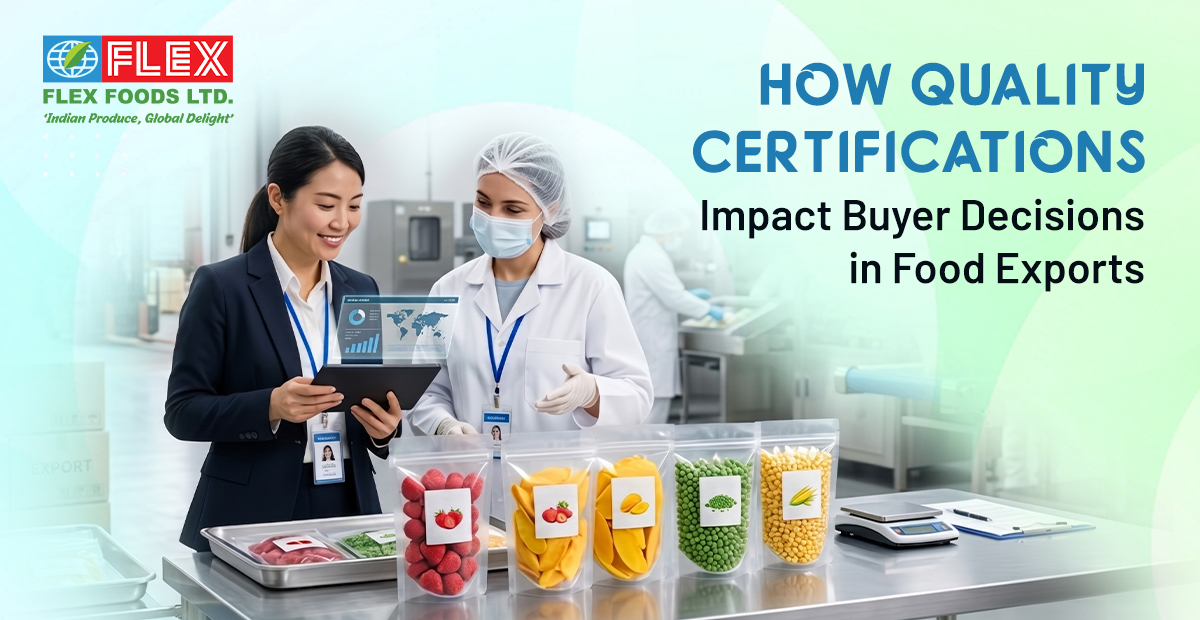
The pressure to ensure food quality becomes stronger as global food safety standards tighten every year. Buyers fear contamination issues, legal penalties, damaged brand reputation, and customer complaints. A single unsafe batch can create massive financial losses for retailers and distributors. This makes importers extremely selective about whom they partner with. Certifications like HACCP, BRC, ISO, and FSSAI become more than formal documents. They act as trust signals that reassure buyers before the first purchase order is even signed.
Quality certifications solve this trust gap by showing that exporters follow strict safety, hygiene, and production practices consistently. They create confidence, simplify international trade approvals, and strengthen long-term business relationships. For food exporters, certifications are no longer optional advantages. They directly influence buyer decisions, market access, and export growth.
Learn more about parsley vs coriander
Why Certifications Matter in Global Food Exports?
Food recalls and contamination incidents have surged globally, creating a crisis of consumer confidence that reverberates through entire supply chains. Regulatory bodies including the FDA, EFSA, FSSAI, and GCC authorities have responded with increasingly stringent enforcement mechanisms and testing protocols. These heightened standards emerge from documented cases where inadequate safety measures led to public health emergencies, product recalls costing millions, and irreparable brand damage. Consumers now demand complete transparency about sourcing practices, manufacturing conditions, and safety verification processes before purchasing any food product.
International food authorities continue tightening import requirements, making certifications the baseline expectation rather than a competitive advantage. The regulatory environment has shifted dramatically, with authorities implementing real-time monitoring systems and enhanced inspection protocols at borders. Suppliers without proper certifications face immediate rejection, lengthy customs detentions, and potential bans from future trade. This enforcement intensity reflects governments' unwillingness to compromise on public health, regardless of commercial pressures or supply chain disruptions.
Read more: thawing meaning
Different Types of Food Quality Certifications
HACCP Certification
Hazard Analysis and Critical Control Points (HACCP) represents a systematic preventive approach identifying physical, chemical, and biological hazards throughout food production processes. Rather than relying on end-product testing alone, HACCP establishes monitoring procedures at critical control points where hazards can be prevented, eliminated, or reduced to acceptable levels. This proactive methodology has become fundamental to modern food safety management. Export-ready food manufacturers recognize HACCP certification as the minimum credible standard for entering international markets.
ISO 22000 Certification
ISO 22000 provides a comprehensive Food Safety Management System framework that integrates HACCP principles with broader management system requirements. This standard addresses interactive communication throughout the supply chain, recognizing that food safety depends on coordination between suppliers, processors, distributors, and retailers. The certification encompasses prerequisite programs, operational prerequisite programs, and HACCP planning within a continuous improvement structure. Organizations achieving ISO 22000 certification demonstrate capability to consistently provide safe products meeting both customer and regulatory requirements.
BRCGS Certification
The British Retail Consortium Global Standard (BRCGS) stands as one of the most recognized and demanded certifications for suppliers targeting UK and European markets. Developed by retailers themselves, BRCGS reflects the exact quality and safety expectations of major supermarket chains and food brands. The certification covers product safety, quality, operational criteria, and the implementation of HACCP systems within a framework specifically designed for retail supply chains. UK and EU buyers frequently make BRCGS certification a contractual requirement rather than a preferred qualification.
FSSC 22000 Certification
Food Safety System Certification 22000 (FSSC 22000) has gained prominence through its recognition by the Global Food Safety Initiative (GFSI), an industry-driven organization that benchmarks food safety schemes. This GFSI recognition means that FSSC 22000 certification is accepted by major retailers and manufacturers worldwide, eliminating the need for multiple audits against different standards. The certification builds on ISO 22000 while adding sector-specific prerequisite programs and additional requirements that enhance supply chain transparency and food fraud prevention. Multinational corporations increasingly prefer FSSC 22000-certified suppliers because the standard's global recognition streamlines their vendor management processes.
FDA Registration for USA Food Exports
Facilities exporting food products to the United States must register with the Food and Drug Administration (FDA), a requirement that represents the entry threshold for accessing American markets. Beyond registration, compliance with the Food Safety Modernization Act (FSMA) demands that facilities implement preventive controls based on hazard analysis—essentially mandating HACCP-style systems. The Foreign Supplier Verification Program (FSVP) places responsibility on U.S. importers to verify that their foreign suppliers produce food according to processes and procedures that provide the same level of public health protection as FSMA's preventive controls regulations. Understanding these interlocking requirements is essential for successful USA export operations.
Organic Certifications
The organic certification landscape involves multiple standards depending on target markets, with USDA Organic, EU Organic, and India's NPOP (National Programme for Organic Production) representing the primary frameworks. Each standard maintains specific requirements regarding prohibited substances, production practices, handling procedures, and labeling restrictions. Achieving organic certification requires comprehensive documentation of inputs, detailed record-keeping of production practices, and regular inspections by accredited certification bodies. The certification process typically takes several years as facilities transition from conventional to organic production methods.
Halal and Kosher Certifications
Religious and ethical food compliance extends market access beyond consumers practicing Islam and Judaism, as these certifications increasingly appeal to broader consumer segments seeking ethical food production. Halal certification requires that products meet Islamic dietary laws, involving specific slaughter methods for meat, prohibition of certain ingredients, and maintenance of separation from non-halal products throughout processing. Kosher certification similarly involves rabbinical supervision, ingredient compliance with Jewish dietary law, and specific production controls. Both certifications require deep understanding of religious requirements and ongoing oversight by qualified religious authorities.
GlobalG.A.P. Certification
GlobalG.A.P. (Good Agricultural Practices) focuses on agricultural production and traceability from farm to consumer, establishing standards for sustainable farming that address food safety, environmental protection, and worker welfare. The certification applies primarily to fresh produce, aquaculture, and livestock operations, ensuring that farm-level practices meet international buyer expectations. Agricultural traceability requirements under GlobalG.A.P. enable complete tracking from field to final product, a capability increasingly demanded by retailers and consumers concerned about production origins. Farm-to-fork quality assurance becomes verifiable rather than claimed when GlobalG.A.P. certification is maintained.
Sustainable sourcing expectations continue intensifying as environmental concerns shape purchasing decisions across consumer segments and geographic markets. GlobalG.A.P. certification demonstrates commitment to practices that minimize environmental impact while maintaining economic viability and social responsibility. Buyers sourcing agricultural products like IQF frozen vegetables or fresh produce increasingly require Global G.A.P. certification as proof that farming operations meet environmental stewardship standards. The certification's comprehensive approach—covering pesticide management, water usage, biodiversity protection, and worker safety—provides buyers with confidence that agricultural suppliers operate responsibly.
How Buyers Evaluate Food Export Suppliers in 2026?
Food Safety Compliance
Supplier audit checklists used by professional procurement teams have become remarkably detailed, covering everything from facility design and equipment maintenance to employee hygiene practices and cleaning protocols. These checklists reflect accumulated learning from quality failures across the industry and incorporate best practices from multiple certification standards. Buyers conduct preliminary desktop audits reviewing documentation before committing resources to facility visits, meaning suppliers must maintain comprehensive, organized records accessible for buyer review. Quality assurance systems must demonstrate not just the existence of policies but evidence of consistent implementation and continuous monitoring.
Traceability Systems
Batch tracking capabilities enable rapid response when quality issues emerge, allowing precise identification of affected products without requiring broad recalls that destroy customer confidence. Modern traceability systems link raw material lots to production batches to finished goods, creating complete chains of custody that satisfy regulatory requirements and buyer expectations. Supply chain visibility extends beyond individual facilities to encompass raw material suppliers, co-manufacturers, and logistics partners in comprehensive tracking networks. Advanced buyers now expect suppliers to provide traceability information within hours of requests, not days.
Product Consistency
Standardized quality maintenance across production runs, seasons, and raw material variations separates professional manufacturers from inconsistent operators that create ongoing problems for buyers. Buyers sourcing ingredients like dehydrated parsley expect identical color, flavor profile, and moisture content whether they order in February or September, regardless of harvest timing differences. This consistency requires sophisticated production controls, properly calibrated equipment, and deep technical understanding of how processing parameters affect final product characteristics. Buyers conducting incoming inspections quickly identify suppliers whose products drift in quality from shipment to shipment.
Documentation and Transparency
Certificates of Analysis (COA) for every production batch represent standard expectations in professional food trade, documenting that products meet agreed specifications for physical, chemical, and microbiological parameters. COAs must come from accredited laboratories and include sufficient detail for buyers to assess compliance with their quality standards and regulatory requirements. Product specifications should define all relevant parameters including moisture content, particle size, color values, microbial limits, and allergen status with clear acceptance criteria. Audit reports from third-party certification bodies provide additional verification that facilities maintain claimed quality standards.
Sustainability and ESG Standards
Ethical sourcing expectations now extend beyond basic legal compliance to encompass fair labor practices, community impact, and responsible raw material procurement. Buyers face increasing pressure from their customers and stakeholders to demonstrate that supply chains don't involve exploitation or environmental destruction. Eco-friendly manufacturing practices including energy efficiency, waste reduction, and water conservation increasingly influence buyer supplier selections as corporate sustainability commitments filter through supply chains. Sustainable packaging requirements reflect consumer and regulatory pressure to reduce plastic waste and improve recyclability.
Are frozen vegetables healthy?
Certifications That Matter Most by Export Market
USA Market Requirements
FDA registration establishes the fundamental legal basis for food exports to American markets, but registration alone doesn't convey competitive advantage since all serious suppliers maintain this baseline credential. FSMA compliance represents the differentiating factor, with buyers increasingly requiring documented preventive control plans that demonstrate sophisticated hazard analysis and control measures. HACCP importance remains high in U.S. markets despite FSMA's broader preventive controls framework because HACCP principles underpin the entire American food safety regulatory structure. Suppliers targeting the USA must understand that American buyers expect comprehensive documentation proving FSMA compliance rather than mere registration certificates.
European Union Market Requirements
BRCGS certification has achieved such widespread acceptance in European markets that many buyers automatically disqualify suppliers lacking this credential regardless of other qualifications. IFS Food (International Featured Standards) represents an alternative GFSI-recognized standard popular with German and French retailers, creating a dual-certification landscape where suppliers may need both credentials to maximize European market access. Organic certifications carry particular weight in European markets where consumers demonstrate strong preferences for organic products and willingness to pay significant premiums. Sustainability compliance extends beyond organic certification to encompass carbon footprinting, ethical sourcing verification, and circular economy participation.
Middle East Market Requirements
Halal certification stands as the absolute non-negotiable requirement for most food products entering Middle Eastern markets, particularly in GCC nations where religious compliance carries legal force beyond consumer preference. The certification must come from recognized Islamic authorities acceptable to importing country regulators, creating complexity as different nations maintain different approved certifier lists. GCC food labeling regulations impose specific requirements for ingredient declarations, nutritional information, and language use that suppliers must understand and implement correctly. Non-compliance with labeling requirements triggers customs rejections even when products carry proper Halal certification.
Asia-Pacific Market Expectations
ISO 22000 enjoys particularly strong recognition across Asia-Pacific markets where this international standard aligns with regional quality management philosophies and regulatory frameworks. Food traceability systems receive intense scrutiny from Asia-Pacific buyers who have experienced significant food safety scandals that elevated public awareness and regulatory enforcement. Import safety documentation requirements vary considerably across Asia-Pacific nations, requiring suppliers to research specific destination country regulations rather than assuming uniform standards. Australia and New Zealand maintain particularly stringent biosecurity requirements that extend beyond conventional food safety to address environmental protection concerns.
Retail vs Bulk Buyer Certification Priorities
Retail chains demand stricter certifications because their brand reputations depend on consumer trust that can evaporate rapidly following quality incidents or safety violations. Supermarket vendor qualification systems typically require GFSI-recognized certifications like BRCGS or FSSC 22000 as non-negotiable entry requirements before considering product-specific evaluations. Ingredient buyers sourcing bulk commodities for further processing focus more heavily on consistency and testing results than retail-oriented certifications. These B2B ingredient buyers evaluate suppliers based on analytical specifications, batch-to-batch variation, and technical support capabilities rather than consumer-facing credentials.
How Certifications Increase Export Opportunities?
Access to Premium Retail Chains
Supermarkets and foodservice brands maintain vendor approval systems that effectively require recognized certifications before suppliers can even submit product samples for evaluation. These qualification gatekeeping systems reflect retailers' risk-averse approaches to supplier selection and their need to protect brand reputations from potential safety incidents. Premium retail positioning commands higher prices and provides stable demand patterns that make these channels highly attractive despite stringent qualification requirements. Certified suppliers gain access to procurement opportunities that non-certified competitors can't approach regardless of pricing or product innovation.
Expansion into High-Value Export Markets
The USA market's combination of high purchasing power, massive consumption volumes, and premium price points makes it intensely attractive to food exporters worldwide. However, accessing American markets requires comprehensive compliance with FDA and FSMA requirements that certified suppliers can demonstrate readily while non-certified competitors struggle. UK buyers demand BRCGS certification so consistently that this single credential effectively unlocks access to Britain's sophisticated food import market. Germany's position as Europe's largest food market and its buyers' preference for IFS Food or BRCGS certification creates similar certification-gated opportunities.
Higher Buyer Retention Rates
Long-term contracts with compliant suppliers provide buyers with supply security and predictable quality that simplifies their operations and reduces their ongoing supplier management burden. Buyers who invest time and resources qualifying certified suppliers demonstrate strong preference for maintaining these relationships rather than repeatedly incurring qualification costs with new suppliers. Reduced supplier switching benefits certified manufacturers through stable demand volumes and opportunities to optimize production planning around committed contracts. The relationship of stickiness certifications creates competitive moats protecting established suppliers from price-only competition.
Premium Pricing Advantages
Organic and certified products command higher margins because these credentials enable suppliers to access buyer segments willing to pay for verified production standards and quality assurance. Premium pricing power stems from reduced price sensitivity among quality-focused buyers who prioritize safety, consistency, and compliance over lowest-cost sourcing. Certified suppliers can maintain pricing discipline during market downturns because their buyers recognize switching costs and quality risks associated with moving to cheaper alternatives. This pricing stability translates into better profitability and cash flow compared to commodity suppliers facing volatile margin pressure.
Increased Private Label Opportunities
Retailers developing private label products prefer manufacturing partners who carry minimal quality risk since private label products carry the retailer's own brand reputation. Certified suppliers inherently present lower risk profiles than non-certified alternatives, making them preferred partners for private label development projects. Private label opportunities often provide stable, predictable demand volumes with multi-year contract commitments that enable capacity planning and capital investment confidence. The margins on private label manufacturing may be thinner than branded product sales, but the volume stability and relationship depth create valuable business foundations.
Recommended Read : Freeze dried vegetables
Conclusion
The transformation of quality certifications from optional differentiators to mandatory requirements reflects the global food export industry's maturation and increasing sophistication. International buyers now use certifications as primary benchmarks for safety, reliability, and operational excellence because these credentials provide verifiable, third-party validation that words and promises cannot deliver. The investment required to achieve and maintain recognized certifications pays dividends through better market access, faster procurement approvals, and premium pricing power that compounds over time. Companies that embrace compliance and transparency as core strategic advantages rather than regulatory burdens position themselves to lead global food exports through 2026 and beyond.
Partner with globally compliant food manufacturers like Flex Foods that meet international quality and safety standards for successful food exports.FAQs
Why are food quality certifications important for export buyers?
Food quality certifications assure buyers about safety, hygiene, compliance, and consistent standards, reducing risks while improving trust in international food trade partnerships.
Which certification is best for food exports?
The best certification depends on the target market, but BRCGS, ISO 22000, HACCP, and FSSC 22000 are widely accepted globally.
Does BRCGS certification help increase exports?
Yes, BRCGS certification improves buyer confidence, supports retailer approvals, and increases access to international supermarket and distribution networks.
What certifications are required for exporting food to the USA?
FDA registration, HACCP compliance, FSMA requirements, and product-specific certifications are commonly required for exporting food products to the USA.
How does ISO 22000 improve buyer trust?
ISO 22000 demonstrates structured food safety management, helping buyers trust the exporter’s quality control, risk management, and compliance systems.
Why do supermarket chains require certified suppliers?
Supermarkets prefer certified suppliers to reduce food safety risks, maintain brand reputation, ensure compliance, and meet strict consumer expectations.
What is the difference between HACCP and ISO 22000?
HACCP focuses on hazard control, while ISO 22000 combines HACCP principles with a complete food safety management system framework.
Are organic certifications necessary for premium food exports?
Organic certifications are important for premium markets because they attract health-conscious buyers and support higher product value and export pricing.
How do certifications reduce food import rejection risks?
Certifications ensure compliance with international safety standards, reducing documentation issues, contamination risks, and customs rejections during food imports.
Which certifications are most important for freeze-dried food exports?
BRCGS, HACCP, ISO 22000, FSSC 22000, Organic certification, and FDA compliance are highly important for freeze-dried food exports globally.