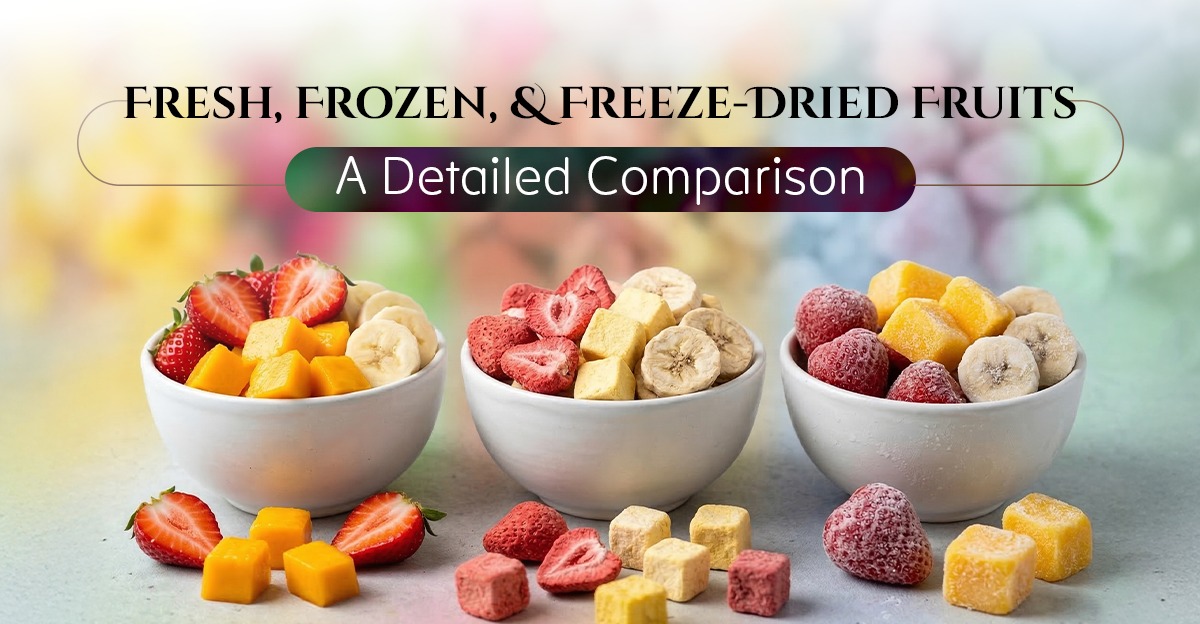
Fruits are essential for daily nutrition, packed with vitamins, minerals, and antioxidants that keep our bodies functioning optimally. However, fresh produce doesn't always fit into modern lifestyles. Preservation methods have evolved to extend shelf life and improve year-round availability. Today, consumers can choose between fresh, frozen, and freeze dried fruits—each offering distinct advantages in nutrition, storage, taste, and convenience. This blog compares these three fruit formats to help you make informed choices for your health, budget, and lifestyle.
What Are Fresh Fruits?
Fresh fruits are harvested and sold without major preservation processes. They're consumed within a short time after harvest, offering the most natural eating experience. These fruits retain their natural taste and aroma while maintaining high water content that provides essential hydration. However, they come with a short shelf life and require refrigeration to prevent rapid spoilage.
Common examples include apples, mangoes, berries, bananas, and citrus fruits. While fresh produce is ideal for immediate consumption, it demands quick usage and careful storage to prevent waste. The challenge with fresh fruits lies in their perishability, which can make them less practical for long-term planning or situations where refrigeration isn't readily available.
Read more: Are frozen vegetables healthy?
What Are Frozen Fruits?
Frozen fruits are preserved through rapid freezing techniques applied soon after harvesting. This method locks in freshness and nutrients effectively, making them a practical alternative to fresh produce. The process begins with harvesting ripe fruits, followed by washing and sorting to ensure quality. The fruits are then cut or sliced before undergoing flash freezing using IQF (Individual Quick Freezing) technology, which minimizes ice crystal formation. Finally, they're packaged and stored in cold conditions.
The technology behind frozen vegetables in India and frozen fruits has improved dramatically over recent years. Flash freezing preserves texture and nutritional value better than traditional freezing methods, making frozen produce nearly equivalent to fresh in terms of health benefits. These products retain most nutrients, offer a longer shelf life than fresh fruits, and remain convenient for smoothies, desserts, and cooking applications. Best of all, they're available year-round regardless of season, eliminating the frustration of waiting for your favorite fruits to come into season.
What Are Freeze-Dried Fruits?
Freeze drying, scientifically known as lyophilization, is an advanced preservation technique that removes moisture while maintaining the fruit's structure and nutrients. The process begins by freezing fruit at extremely low temperatures, then removing moisture through sublimation in a vacuum chamber. This technique maintains the original shape and cellular structure before packaging in moisture-proof containers.
Freeze dried fruits possess several distinctive characteristics that set them apart. They're extremely lightweight, making them perfect for travel and outdoor activities. They boast an extended shelf life that can reach decades with proper storage. The process retains shape, flavor, and nutrients remarkably well, while creating a distinctive crunchy texture that many consumers find appealing. Freeze dried fruits have become increasingly popular in health food markets worldwide, offering concentrated nutrition in a portable, shelf-stable format that fits seamlessly into busy lifestyles.
Freeze dried vs dehydrating vegetables
Fresh vs Frozen vs Freeze-Dried Fruits: Key Differences
Nutritional Value
Fresh fruits contain natural nutrients in their most bioavailable form, providing vitamins and minerals exactly as nature intended. However, they begin losing nutritional value within days of harvest, especially when stored improperly or transported over long distances. The "fresh" apple you buy at the supermarket might have been in storage for weeks, gradually losing vitamin C and other sensitive nutrients.
Frozen fruits preserve nutrients remarkably well because freezing happens within hours of harvesting. Studies consistently show frozen produce can contain equal or higher nutrient levels than "fresh" fruits that have traveled long distances or sat in storage. The rapid freezing process stops enzymatic activity that would otherwise degrade vitamins.
Freeze dried fruits maintain most vitamins and antioxidants through the sublimation process. The low-temperature technique prevents nutrient degradation that occurs with heat-based preservation methods like canning or dehydrating. This makes them nutritionally comparable to fresh fruits while offering superior shelf stability. Similarly, freeze dried herbs retain their essential oils and medicinal compounds far better than air-dried alternatives.
Shelf Life
The difference in longevity is dramatic and worth considering carefully. Fresh fruits last anywhere from a few days to a couple of weeks depending on the variety and storage conditions. Berries might spoil within days, while apples can last weeks when refrigerated properly.
Frozen fruits extend shelf life significantly, lasting 6–12 months in the freezer without major quality loss. This makes them excellent for reducing food waste and ensuring you always have fruit available for smoothies or cooking.
Freeze dried fruits can last 20+ years with proper packaging, making them ideal for emergency food supplies, long-term storage, and export markets. This extraordinary shelf life results from removing nearly all moisture, which eliminates the conditions bacteria and mold need to grow. The same principle applies to frozen vegetables in India and globally, though their shelf life is measured in months rather than decades.
Taste and Texture
Fresh fruits offer juicy, natural texture and flavor that's hard to beat. Nothing quite replicates biting into a perfectly ripe mango or crisp apple. The sensory experience of fresh fruit—the burst of juice, the natural sweetness, the satisfying crunch—represents the gold standard.
Frozen fruits become softer after thawing due to ice crystal formation that breaks down cell walls during the freezing process. While this texture change makes them less appealing for eating raw, they work excellently in smoothies and cooked dishes where texture matters less. Many people can't tell the difference between fresh and frozen berries in a blended smoothie.
Freeze dried fruits deliver an intensely concentrated flavor with a satisfying crunch. The removal of water concentrates natural sugars and flavors, creating a more intense taste experience. Many people enjoy them as healthy snacks straight from the package, appreciating the crispy texture and portability they offer.
Convenience and Storage
Fresh fruits demand refrigeration and quick consumption, limiting how much you can stock up without risking waste. You need to plan shopping trips carefully and use fruits before they spoil. This can be challenging for busy households or those living far from grocery stores.
Frozen fruits require freezer space but offer significant flexibility. You use what you need and keep the rest frozen, drawing from your supply as needed without worry about spoilage. However, freezer space is often at a premium in many households.
Freeze dried fruits shine brightest in convenience. They're stored at room temperature, need no refrigeration, and remain shelf-stable for years. Perfect for camping, travel, office snacks, or pantry stocking, they eliminate the anxiety of spoilage entirely. This same convenience applies to freeze dried herbs, which maintain potency far longer than fresh herbs wilting in your refrigerator.
Transportation and Export
Fresh fruits require sophisticated cold chain logistics with strict temperature control throughout the entire journey from farm to consumer. This increases costs substantially and limits availability in remote areas. Any break in the cold chain can result in rapid spoilage and total product loss.
Frozen vegetables in India and frozen fruits need refrigerated transport, adding complexity and cost but remaining more manageable than fresh produce distribution. The frozen format allows for bulk shipping and longer transit times than fresh products can tolerate.
Freeze dried fruits are lightweight and stable, making them the easiest to export across continents. This explains their growing presence in international health food markets, where consumers are willing to pay premium prices for convenience and nutritional density. The reduced weight also means lower shipping costs and smaller carbon footprints per serving.
Comparison at a Glance
Looking at these preservation methods side by side reveals clear trade-offs. Fresh fruits offer short shelf life but require refrigeration and boast high initial nutrient retention with juicy texture. However, transportation is difficult and costs remain moderate. Frozen fruits provide medium shelf life, need freezer storage, maintain high nutrients, and have soft texture after thawing. Transportation is moderately challenging with moderate costs. Freeze dried fruits deliver very long shelf life, store at room temperature, retain very high nutrients, and provide crunchy texture. Transportation is easy but costs are higher due to processing intensity.
Is frozen dried fruit healthy?
Health Benefits of Different Fruit Forms
- Fresh fruits provide natural hydration through their high water content, which helps with satiety, digestion, and overall bodily functions. They're rich in vitamins, minerals, and dietary fiber in their most natural state. The act of eating fresh fruit also tends to slow consumption, helping with portion control and mindful eating habits.
- Frozen fruits serve as excellent alternatives when fresh options aren't available or are out of season. They maintain essential nutrients and make it easier to consume diverse fruits year-round without paying premium out-of-season prices. The convenience factor also increases overall fruit consumption, as people are more likely to use frozen fruits in smoothies than let fresh fruits spoil.
- Freeze dried fruits offer highly concentrated nutrients in compact form, packing more nutrition per gram than their fresh counterparts. They're ideal for healthy snacking, hiking, and situations where weight and portability matter. The concentrated nature means you consume more fruit solids per serving, potentially increasing fiber and antioxidant intake.
- Freeze dried herbs retain concentrated flavors and nutrients, making them valuable for cooking and herbal supplements. The same preservation technology applies across produce categories, maintaining essential oils, flavonoids, and other beneficial compounds.
- Frozen vegetables in India are becoming increasingly popular as awareness grows about their nutritional equivalence to fresh produce. They reduce food waste, provide consistent quality, and make healthy eating more accessible across different seasons and regions.
Learn more about how to make frozen vegetables taste good
Popular Uses Across Different Fruit Formats
Fresh fruits work best when texture and appearance matter most. They're perfect for fruit salads where you want crisp apples and juicy oranges. Fresh juices benefit from the high water content and bright flavors. Smoothie bowls topped with fresh berries create visual appeal. Dessert garnishes require the aesthetic quality only fresh fruits provide.
Frozen fruits excel in applications where texture is less critical. Blended smoothies are perhaps their most popular use, as the frozen nature eliminates the need for ice while providing thickness. Ice creams and sorbets benefit from pre-frozen fruit. Baking applications like muffins, pies, and cobblers work beautifully with frozen berries or peaches. Sauces and compotes cook down anyway, making frozen fruits economical and practical choices.
Freeze dried fruits are perfect for situations requiring shelf stability and portability. Healthy snack products increasingly feature freeze-dried strawberries, mangoes, and apples as consumers seek alternatives to chips and candy. Breakfast cereals and granola incorporate them for concentrated fruit flavor without added moisture. Energy bars and trail mixes benefit from their light weight and nutrition density. Nutritional supplements often use freeze dried fruits and freeze dried herbs to deliver concentrated phytonutrients in capsules or powders.
Which Type Is Best for Export Markets?
Export considerations vary significantly based on preservation method and target market. Fresh fruits demand fast logistics and strict temperature control throughout the supply chain. They're viable primarily for nearby markets or premium segments willing to pay for air freight. The risk of spoilage during transport limits fresh fruit exports to high-value products like premium mangoes or berries.
Frozen vegetables in India and frozen fruits are widely exported to bulk food industries worldwide. They balance preservation with reasonable shipping costs, making them popular in food manufacturing sectors. Indian frozen produce reaches markets across the Middle East, Europe, and Asia, where it's used in everything from ready meals to restaurant kitchens.
Freeze dried fruits are experiencing explosive demand growth in health food and premium snack markets across the USA, Europe, Middle East, and Asia. Their lightweight nature and stability make them economically viable for long-distance shipping, even by ocean freight. The freeze-dried segment particularly appeals to health-conscious consumers seeking clean-label products, outdoor enthusiasts needing portable nutrition, emergency preparedness markets stocking long-term supplies, and premium food manufacturers creating innovative products.
The global market for freeze dried products continues expanding as more consumers discover their benefits. Countries with advanced food processing infrastructure are investing heavily in freeze-drying capacity to meet both domestic and export demand.
Factors to Consider When Choosing
Your ideal choice depends on several practical factors that align with your specific situation. Shelf life requirements should guide your decision significantly. If you need long-term storage for emergency preparedness or infrequent access to stores, choose freeze-dried options. If you're using produce within weeks, fresh works fine and costs less per serving.
Nutritional needs matter, though all three formats retain nutrients well when properly handled. Freeze dried fruits offer the most concentrated nutrition per gram, making them efficient for situations where weight and volume matter. Athletes, hikers, and travelers often prefer this concentrated nutrition.
Storage capacity represents a real constraint for many households. Limited freezer space makes freeze-dried options attractive, as they store in regular pantry conditions. Ample refrigeration and freezer capacity favors fresh or frozen produce, allowing you to buy in bulk when prices drop.
Transportation costs become critical for businesses or individuals shipping products. For bulk shipping or exports, freeze-dried products minimize freight expenses dramatically. The weight difference between fresh and freeze-dried fruit can be tenfold or more.
Intended use should drive your decision practically. Snacking suits freeze-dried formats perfectly—grab a bag and go. Smoothies work with any format, though frozen eliminates ice needs. Cooking often prefers frozen or fresh, depending on the recipe. Baking can use any format, adjusted for moisture content.
Future Trends in Fruit Preservation
The food preservation landscape continues evolving rapidly with consumer preferences and technology advancing together. Freeze dried fruit snacks are experiencing rapid market growth as consumers seek healthier alternatives to chips and candy. The category appeals to parents looking for wholesome kids' snacks, athletes needing portable energy, and health enthusiasts avoiding processed foods.
Clean-label foods are rising in demand across all demographics. Consumers want minimal processing and no artificial additives—something freeze-drying delivers naturally. The process uses no chemicals, preservatives, or artificial ingredients, aligning perfectly with clean-label trends.
Plant-based and healthy diets are expanding globally, driving increased demand for all preserved fruit formats. This increases demand for preserved fruits that maintain nutritional integrity while fitting modern lifestyles. Freeze dried herbs and vegetables are following similar growth trajectories.
Frozen vegetables in India are seeing increased domestic and export demand as middle-class consumption patterns shift. More Indian households own refrigerators and freezers, making frozen produce practical. Working families appreciate the convenience and reduced waste compared to fresh vegetables that spoil quickly in tropical climates.
Global freeze-drying technology is expanding beyond developed markets. More manufacturers in Asia, Africa, and Latin America are adopting this preservation method, making products more accessible and affordable. As equipment costs decrease and expertise spreads, freeze-dried products will become mainstream rather than premium offerings.
Conclusion
Each preservation method serves distinct purposes in modern food systems, and understanding these differences empowers better choices. Fresh fruits offer natural taste and hydration that remains unmatched for immediate consumption. The sensory pleasure of biting into ripe, fresh fruit represents summer at farmers' markets and simple healthy eating.
Frozen fruits provide convenience and year-round availability without significant nutritional compromise. They bridge the gap between fresh and shelf-stable options, reducing waste while maintaining quality. For families trying to eat more fruits and vegetables, frozen options remove barriers of spoilage and seasonal unavailability.
Freeze dried fruits from Flex Foods deliver long shelf life, portability, and concentrated nutrition in formats that fit modern mobile lifestyles. They represent the cutting edge of food preservation technology while maintaining nutritional integrity that earlier preservation methods sacrificed.
The best choice depends on your specific lifestyle, storage conditions, and food applications. Someone living in a remote area might rely heavily on freeze-dried and frozen options. Urban dwellers with daily market access might prefer fresh. Outdoor enthusiasts choose freeze-dried for backpacking. Busy parents mix all three formats strategically.
Consider your priorities—taste, nutrition, cost, convenience, shelf life—and choose accordingly. You might use fresh fruits for daily snacking, frozen for smoothies, and freeze dried fruits for travel and emergencies. There's no single right answer, only the right answer for your circumstances. The abundance of choices reflects food technology's success in making nutrition more accessible across seasons, geographies, and lifestyles.
FAQs
Are freeze-dried fruits healthier than fresh fruits?
Freeze-dried fruits retain most nutrients but lack the water content found in fresh fruits. They're more concentrated nutritionally per gram but don't provide the hydration benefits of fresh produce. Both can be part of a healthy diet.
Are frozen fruits as nutritious as fresh fruits?
Yes, frozen fruits can retain similar or even higher nutrient levels because they're frozen within hours of harvesting. Fresh fruits may lose nutrients during transport and storage, while frozen fruits lock in nutrition immediately.
Why are freeze-dried fruits more expensive?
Freeze-drying requires advanced equipment and longer processing time compared to freezing or selling fresh. The energy-intensive process and specialized machinery drive costs higher, though prices are decreasing as technology becomes more widespread.
Can freeze-dried fruits be rehydrated?
Yes, they can be rehydrated with water and used in recipes similarly to fresh fruits. Simply soak them for 5-10 minutes, and they'll absorb water and soften, though texture won't be identical to fresh.